5 Ways Televisit Vitals Improve Health Equity in 2026
Camera-based televisit vitals remove hardware barriers, allowing health systems to improve health equity and clinical access for underserved populations.
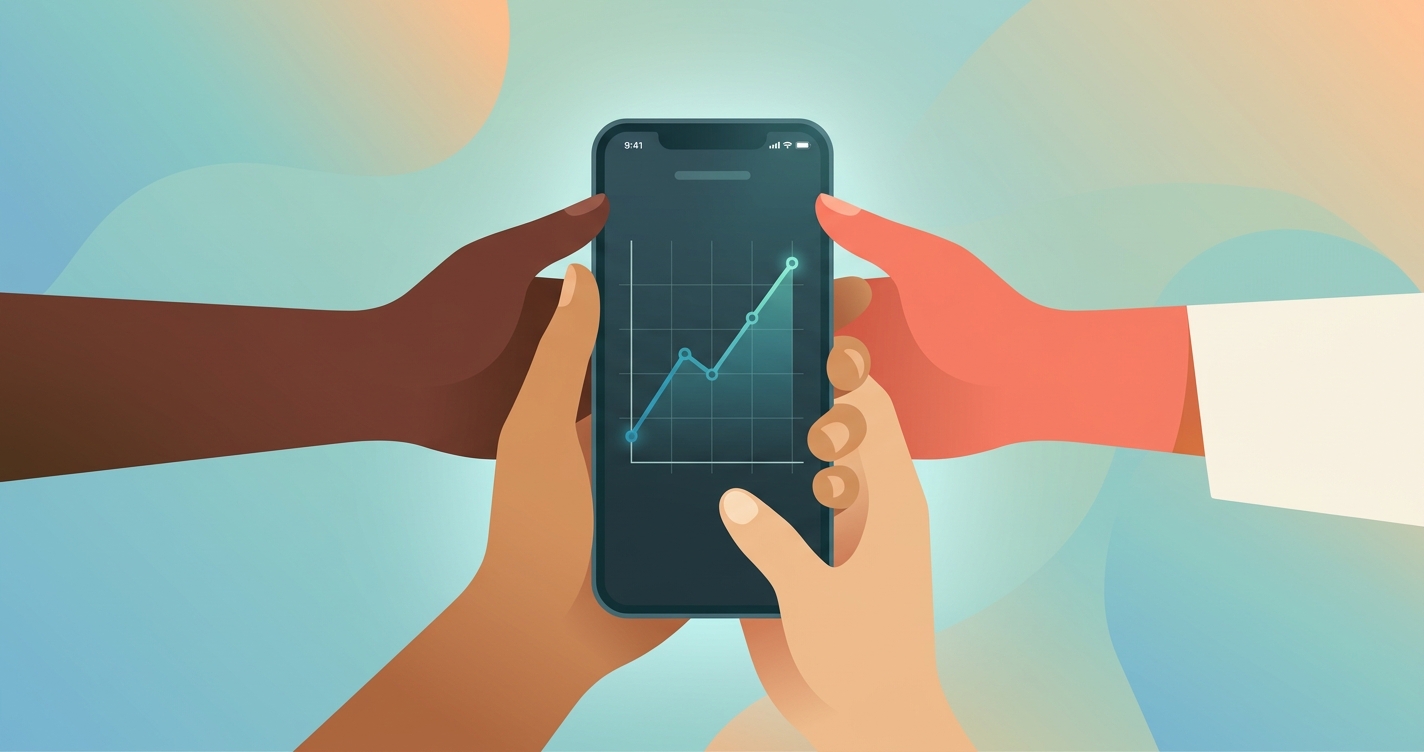
The expansion of remote care delivery has exposed a structural flaw in modern population health strategy: the tools designed to expand access often inadvertently restrict it. While video infrastructure connects clinicians to patients regardless of geography, the physiological data required to make clinical decisions remains tethered to physical hardware. When health systems rely on patient-purchased blood pressure cuffs, pulse oximeters, and wearables to supply remote vital signs, they impose financial and logistical barriers that disproportionately impact underserved populations. By transitioning to software-based measurement models, clinical informatics leaders are realizing that televisit vitals health equity is not merely an abstract policy goal, but a measurable outcome of removing the hardware requirement from the patient entirely.
"An equity analysis of remote patient monitoring programs unveils assumptions on digital health equity, revealing that reliance on patient-acquired technology inherently limits adoption among vulnerable populations and risks widening existing care gaps. Equitable program design requires anticipating and mitigating these access barriers."
- Ibukun-Oluwa Omolade Abejirinde, Dalla Lana School of Public Health, 2023
The path to televisit vitals health equity
When virtual care program directors evaluate infrastructure for 2026, the focus has shifted from video connectivity to clinical parity. However, achieving parity using conventional remote patient monitoring hardware introduces friction. Patients must possess the disposable income to purchase medical devices, the digital literacy to pair them via Bluetooth, and the broadband stability to transmit the data. This digital divide results in an inverse relationship between clinical need and data availability. Patients in high vulnerability tracts are statistically less likely to be enrolled in or successfully utilize device-based monitoring programs.
To achieve true televisit vitals health equity, health systems must adopt a device-less monitoring framework. Camera-based clinical vitals extract physiological metrics, such as heart rate and respiratory rate, directly from the patient's existing smartphone or laptop camera using remote photoplethysmography (rPPG). This architectural shift moves the technological burden from the patient's living room to the enterprise server, decoupling vital sign capture from socioeconomic status.
| Equity Factor | Hardware-Dependent RPM | Camera-Based Televisit Vitals | | :--- | :--- | :--- | | Financial Barrier | High (Requires purchasing cuffs or oximeters) | Zero (Uses existing consumer devices) | | Digital Literacy | High (Bluetooth pairing, separate app navigation) | Low (Passive capture during the video call) | | Logistical Friction | High (Shipping, maintenance, battery replacement) | Zero (Browser-based execution) | | Data Standardization | Low (Varies significantly by device manufacturer) | High (Standardized algorithmic extraction) |
Enterprise applications for equitable care
1. removing the financial barrier to clinical depth
Health disparities are frequently compounded by out-of-pocket healthcare costs. When a cardiology or chronic care program requires a $50 to $100 peripheral device to monitor baseline metrics, low-income populations, including Medicaid beneficiaries, often opt out. Virtual visit vitals capture via software eliminates this barrier completely. By analyzing the subtle color changes in the facial microvascular bed during a standard video encounter, the provider acquires clinical data without asking the patient to subsidize the medical equipment. This shifts the financial model from patient-funded hardware to enterprise-funded software, ensuring access regardless of income.
2. bypassing setup and digital literacy hurdles
A significant driver of the digital divide is the assumption of technical fluency. RPM devices require pairing procedures, account creation, and troubleshooting. For older adults, non-native speakers, or patients experiencing cognitive load due to illness, these steps represent hard barriers to care. By utilizing camera-based clinical vitals that run passively within the existing telehealth browser interface, health systems remove the user interface barrier entirely. The patient simply clicks the link to join the visit, and the virtual care vital signs are captured automatically, minimizing abandoned sessions due to technical frustration.
3. addressing hardware-induced algorithmic bias
Conventional clinical hardware, particularly peripheral pulse oximeters, has well-documented failure rates in patients with darker skin tones due to light absorption assumptions calibrated on homogenous populations. Hardware sensors use fixed LED wavelengths that struggle to penetrate varying levels of melanin accurately. Modern camera-based rPPG systems have the computational capacity to utilize advanced color space processing to isolate the pulsatile signal across diverse melanin levels. Research into equitable optical sensors demonstrates that multi-channel extraction techniques can significantly reduce the racial biases historically embedded in physical sensors, ensuring accurate assessments for all demographic groups.
4. expanding access in rural care deserts
Rural populations face dual challenges: distance from physical clinics and unreliable broadband infrastructure. Shipping hardware to rural addresses is expensive, and cellular remote monitoring devices are costly to deploy at an enterprise scale. Software-based vitals extraction can be optimized for variable bandwidths, allowing for functionality even in digital redlining zones. By capturing the data during the scheduled video or audio-video encounter, providers maximize the clinical value of a single connection, reducing the need for patients to travel hours for basic physiological assessments.
5. standardizing population health data
Inconsistent data collection limits the efficacy of Social Determinants of Health (SDOH) initiatives. If only affluent patients upload vital signs, machine learning models and risk stratification algorithms train on skewed datasets. Implementing a universal, device-less monitoring standard ensures that physiological data is captured continuously across the entire patient panel. This uniform integration directly into the Electronic Health Record (EHR) allows population health directors to build accurate, unbiased predictive models for chronic kidney disease, hypertension, and heart failure.
Core requirements for equitable infrastructure
To ensure technology reduces health disparities rather than amplifying them, clinical informatics teams must prioritize platforms that align with the following architectural principles:
- Zero-footprint applications that require no downloads or account creation.
- Algorithmic transparency regarding demographic training data and skin tone accuracy.
- Seamless EHR integration to prevent manual data entry errors and workflow disruption.
- Low-bandwidth optimization to support rural and subsidized cellular networks.
Current research and evidence
The academic consensus around remote care is increasingly focused on the intersection of technology and equity. A 2023 equity analysis of digital health programs by researchers at the Dalla Lana School of Public Health highlighted that relying on patient-owned devices fundamentally limits the reach of virtual care interventions. Furthermore, specific research into optical sensor accuracy has prompted a reevaluation of vital sign capture entirely.
Studies conducted by researchers such as Rutendo Jakachira at Brown University (2024) have investigated dual-wavelength wearables and advanced signal processing to correct for melanin-induced measurement errors. Similarly, research by Krish Kabra (2023) on diverse remote photoplethysmography models indicates that software-driven camera analysis can achieve high accuracy across varying skin tones when algorithms are trained on representative datasets. These findings support the transition from static hardware to dynamic, software-based extraction as a mechanism to improve health equity without compromising clinical validity.
The future of virtual care vital signs
By 2026, the definition of a complete virtual visit will mandate the inclusion of physiological data regardless of the patient's socioeconomic status. Health systems will increasingly view camera-based vitals not merely as a convenience feature, but as a compliance tool for meeting health equity benchmarks. Regulatory bodies and payers will begin requiring demographic parity in telehealth outcomes, forcing organizations to abandon models that artificially restrict remote patient monitoring to affluent cohorts. The trajectory points entirely toward software-defined infrastructure, where the clinical capabilities of a telehealth encounter are determined by enterprise algorithms rather than patient-purchased hardware.
Frequently asked questions
How do camera-based vitals reduce health disparities?
By eliminating the need for patients to purchase, configure, and maintain medical hardware at home, camera-based technology removes financial and digital literacy barriers. This allows anyone with a smart device to transmit physiological data during a virtual visit, creating equal access to clinical depth.
Can rPPG technology accurately measure vitals across different skin tones?
Modern remote photoplethysmography software utilizes advanced color space processing and multi-channel signal extraction to account for varying melanin levels. Ongoing research and diverse dataset training are actively mitigating the racial biases historically present in traditional hardware oximeters.
Does device-less monitoring require high-speed internet?
While video visits require a baseline connection, optimized camera-based vitals software is designed to function effectively on standard cellular networks and broadband speeds, ensuring viability for patients in rural or underserved urban areas where internet access may be limited.
How does this technology integrate into existing clinical workflows?
Camera-based vitals operate seamlessly within the browser-based video encounter. The extracted data is transmitted directly into the provider's dashboard and the health system's Electronic Health Record, requiring zero additional steps from the patient or the clinician.
Health systems cannot build equitable care models on infrastructure that inherently limits participation. By adopting device-less, camera-based physiological measurement, clinical informatics teams can close the data gap for vulnerable populations and deliver standard of care remote consultations. Circadify is directly addressing this space by equipping provider organizations with the tools to capture vital signs natively within the virtual encounter. To understand the operational and financial impact of equitable data capture, read our comprehensive business case on telehealth workflows at https://circadify.com/solutions/telehealth.