Are vitals from a video visit accurate enough to trust?
A research-based analysis of virtual care vital signs accuracy, comparing camera-based measurements to traditional clinical standards for health system leaders.
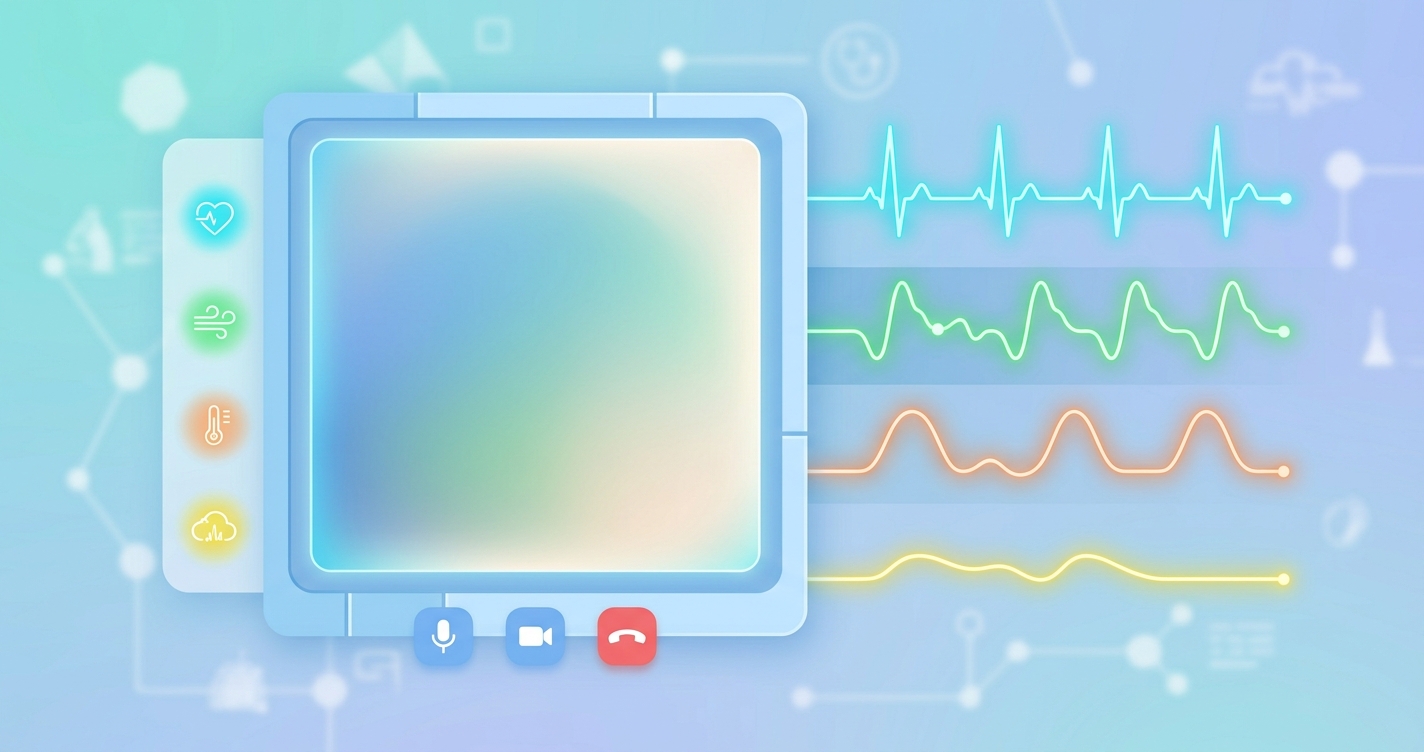
The strategic shift to virtual care is creating a new challenge for health system leaders: how to bridge the data gap between a remote patient and a clinically informed provider. While video consultations have improved access, they have historically lacked the objective physiological data necessary for comprehensive clinical assessment. The emergence of camera-based vital sign capture-using technology known as remote photoplethysmography (rPPG)-presents a potential solution. This raises a critical question for CIOs, clinical informaticists, and virtual care program directors: is the data derived from a patient's smartphone or laptop camera accurate enough for clinical decision-making? Understanding the current state of virtual care vital signs accuracy is essential for any health system looking to deepen the clinical utility of its telehealth offerings.
"A key requirement for validation under the ANSI/AAMI/ISO 81060-2 standard is that the mean difference between the test device and reference blood pressure measurements should be ≤5 mmHg with a standard deviation (SD) of ≤8 mmHg for both systolic and diastolic blood pressure."
Analyzing virtual care vital signs accuracy
The core technology enabling contactless vitals, remote photoplethysmography (rPPG), works by detecting subtle, imperceptible changes in light reflected from a person's skin. These changes correspond to the blood volume pulse, from which vital signs can be calculated. While the concept is straightforward, achieving clinical-grade accuracy is a complex scientific and engineering challenge.
The accuracy of these systems is not a simple yes or no answer; it is a function of the specific vital sign being measured, the quality of the algorithms, the hardware (the camera), and the environmental conditions. For health system leaders, the crucial task is to look past marketing claims and evaluate solutions based on their performance against established clinical benchmarks. Factors that can influence accuracy include poor lighting, patient motion, and variations in skin tone, all of which must be addressed by a robust system.
| Feature | Camera-Based Vitals (rPPG) | Traditional Methods (Cuffs, etc.) | Patient-Reported Vitals | | :--- | :--- | :--- | :--- | | Accuracy | High for HR; emerging for BP. Dependent on algorithm quality and adherence to validation standards. | Gold standard for BP and SpO2 when calibrated and used correctly. | Low; prone to user error, transcription mistakes, and lack of verification. | | Data Workflow | Fully automated; data can be directly integrated into the EHR during the virtual visit. | Manual entry required; creates workflow friction and potential for data entry errors. | Manual reporting by patient; requires manual entry by staff into the EHR. | | Patient Burden | Near-zero; measurement is captured passively during the video call. | Requires patient to own, find, and correctly use a separate medical device. | Requires patient to have a device and know how to use it and report the reading. | | Data Quality | Consistent and structured data; captured in real-time. | Variable; depends on device calibration and patient usage. | Highly variable and subjective; no quality assurance. | | Clinical Scalability| High; software-based solution deployable across entire patient population via existing telehealth platform. | Low; dependent on distributing and managing a fleet of hardware devices. | Moderate; relies on patient's ability and willingness to participate. |
- Heart Rate (HR): Generally, heart rate is the most mature and accurate measurement derived from rPPG. Multiple studies have shown a high degree of correlation with ECG and pulse oximeter readings.
- Blood Pressure (BP): This is a more complex vital sign to measure without a cuff. While still an evolving area, some advanced rPPG systems are beginning to show results that fall within the accuracy requirements set by international standards.
- Respiratory Rate (RR): Can be derived from the same rPPG signal, offering another key data point for clinical assessment.
- Heart Rate Variability (HRV): Provides insights into autonomic nervous system function and stress, offering significant value for behavioral health and cardiology.
Industry Applications
Triage and virtual intake
Integrating automated vital signs capture into the virtual intake process provides clinicians with objective data before the consultation even begins. This allows for more efficient triage, helping to route patients to the appropriate level of care and equipping providers with a baseline understanding of the patient's physiological state.
Chronic disease management
For patients with conditions like hypertension or heart failure, regular monitoring is key. Camera-based vitals allow for objective data collection during routine telehealth follow-ups without the need for patients to purchase or manage separate remote patient monitoring (RPM) devices. This lowers the barrier to entry for longitudinal monitoring and improves program adherence.
Post-Discharge Follow-Up
Virtual follow-up visits after a hospital discharge can be significantly enhanced with the inclusion of vital signs. A clinician can quickly assess a patient's recovery, identify early signs of decompensation (e.g., a rising heart rate), and intervene before a costly readmission is necessary.
Current research and evidence
The validation of virtual care vital signs accuracy is a highly active area of research. Academic and commercial researchers use standardized methodologies to compare rPPG measurements against clinical gold standards.
A foundational standard for non-invasive blood pressure measurement is ANSI/AAMI/ISO 81060-2. This standard, designed for automated cuff devices, stipulates that to be considered accurate, a device's mean measurement difference must be less than or equal to 5 mmHg, with a standard deviation of 8 mmHg or less, compared to a reference device.
While this standard was developed for cuff-based technology, it is the benchmark against which new contactless methods are often evaluated. For instance, a 2022 study published in JMIR mHealth and uHealth assessed a smartphone-based rPPG application and found its performance for blood pressure satisfied the accuracy criteria of the AAMI/ESH/ISO protocol. Specifically, one such technology demonstrated a mean difference of -0.4 ± 6.7 mmHg for systolic blood pressure and 1.2 ± 7.0 mmHg for diastolic blood pressure.
For heart rate, multiple studies have found the mean absolute error (MAE) of rPPG to be between 1 and 3 beats per minute (bpm) compared to ECG, which is well within the range of clinical acceptability for most use cases. Researchers like W. J. G. Schuurmans and his team have contributed to the growing body of evidence supporting the feasibility of these technologies in real-world settings. However, bodies like AAMI and the European Society of Hypertension have also noted that as cuffless technologies mature, new validation protocols specifically designed for them will be required to ensure robust evaluation.
The future of televisit vitals accuracy
The trajectory of contactless vital signs technology points toward increasing accuracy and an expanded range of measurements. As machine learning algorithms are trained on more diverse and extensive datasets, their resilience to variables like motion and low light will continue to improve. The future of virtual care vital signs accuracy will likely involve a multi-modal approach, where data from the video stream is fused with other information to create a more holistic and reliable picture of patient health. We can anticipate the technology expanding to measure parameters like oxygen saturation (SpO2) with greater fidelity, further closing the data gap between virtual and in-person care. This evolution will be critical as health systems prepare for updated CMS quality measures that will increasingly tie reimbursement to the clinical quality of virtual visits.
Frequently asked questions
Q: How does this technology's accuracy compare to cuff-based Remote Patient Monitoring (RPM)? A: Cuff-based RPM devices are considered a gold standard for accuracy when properly calibrated and used. The best camera-based solutions are now achieving accuracy that meets the same AAMI/ISO standards for blood pressure. The primary difference is in workflow and scalability. Camera-based vitals require no hardware logistics and integrate directly into the virtual visit, whereas RPM is an asynchronous process that requires managing and distributing physical devices.
Q: What are the primary sources of error in camera-based measurements? A: The most significant factors are poor lighting, excessive patient motion, and improper camera framing (e.g., the patient is not facing the camera). Advanced systems use algorithmic checks to validate the quality of the environment and the signal before taking a measurement, and they guide the user to correct any issues.
Q: What validation standards are most important when evaluating a solution? A: For blood pressure, look for validation against the ANSI/AAMI/ISO 81060-2 standard, which requires a mean difference of ≤5 mmHg and a standard deviation of ≤8 mmHg. For heart rate, results should be compared against an ECG or pulse oximeter reference, with a Mean Absolute Error of less than 3 bpm being a strong indicator of quality. It is also important to ensure the validation studies include a diverse population that represents a real-world patient mix.
The challenge of capturing objective data during virtual visits is a critical barrier to advancing telehealth from a convenient alternative to a clinically robust care modality. As camera-based sensing technology matures and its accuracy is validated against established medical standards, health systems have a clear opportunity to enhance the quality and utility of every virtual encounter. Circadify is at the forefront of addressing this space, developing solutions to seamlessly integrate clinical-grade data into telehealth workflows. To learn more about implementing these capabilities within your health system, explore our clinical workflow solutions at circadify.com/solutions/telehealth.