
Beyond Vitals: What Cameras Will See in a 2026 Televisit
Explore the future of televisit vitals as AI and camera analysis evolve to assess pain, stress, and digital biomarkers without wearables.
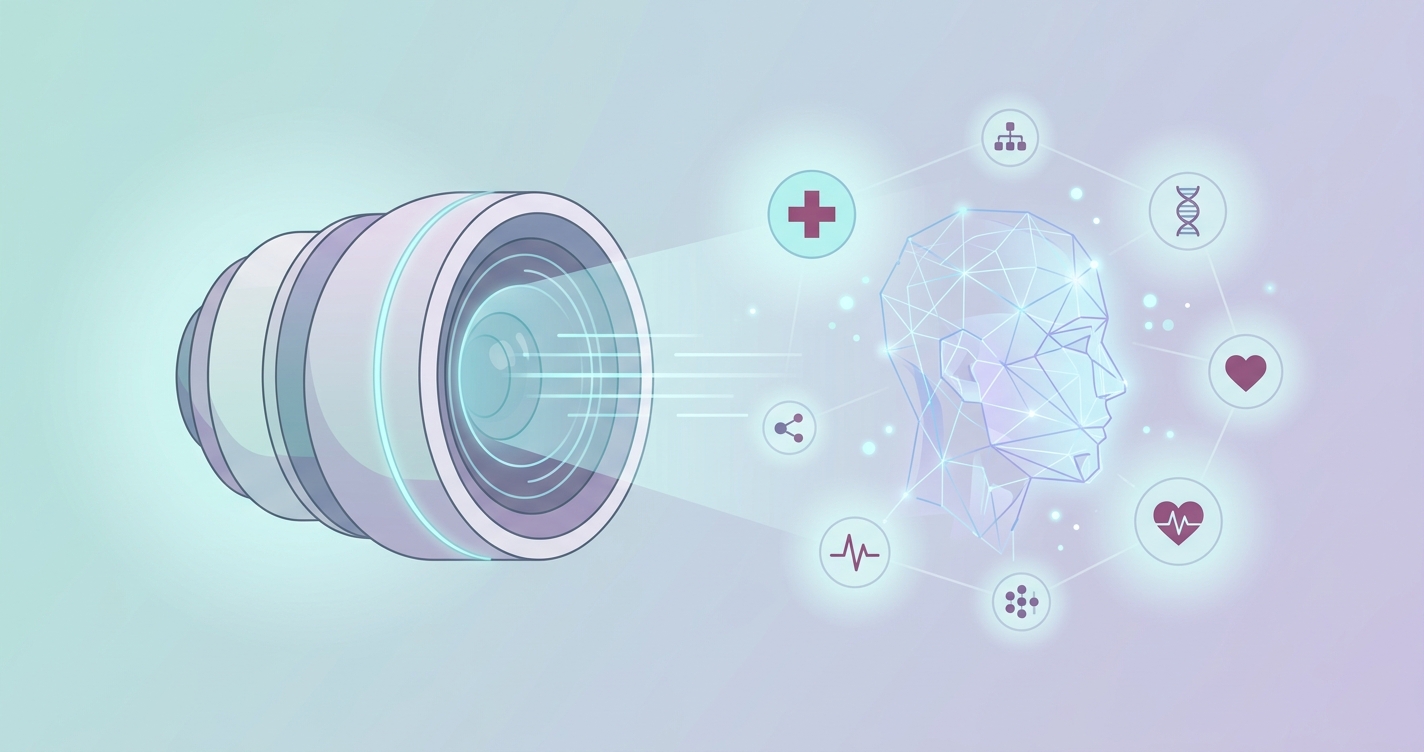
The standard telehealth encounter is built around the spoken word and self-reported symptoms, a framework that leaves major physiological gaps in patient assessment. Today, remote photoplethysmography (rPPG) is closing those gaps by allowing providers to capture basic clinical-grade metrics using the patient's smartphone or laptop camera. But as health system CIOs and clinical informatics teams map their infrastructure investments for the next three years, the future of televisit vitals represents a fundamental shift in remote care architecture. Rather than just capturing a baseline set of numbers, camera-based clinical assessment is evolving to detect complex digital biomarkers that were previously restricted to physical clinical settings. By 2026, the lens on a patient's device will function as a sophisticated diagnostic sensor, capable of quantifying invisible physiological states like pain intensity and autonomous nervous system stress. This transition from basic connectivity to advanced clinical depth solves the structural limitations of early virtual care platforms, ensuring that remote encounters can support high-acuity decision-making without requiring the deployment of expensive, difficult-to-manage peripheral hardware.
"AI-powered facial micromovement analysis can map pain severity by tracking minute muscular changes linked to erratic heart rate variability, aligning with objective clinical scales 88 percent of the time." - 2023 ANESTHESIOLOGY Annual Meeting Research Data
Assessing the future of televisit vitals
Health systems have largely solved the video connectivity challenge. The new frontier is clinical depth. The future of televisit vitals depends on shifting from reactive symptom reporting to real-time physiological measurement. For years, the industry relied on wearables and peripheral devices to bridge the gap between the patient's living room and the provider's screen. However, these hardware-centric models have struggled with patient adherence, logistics, and prohibitive supply chain costs. Camera-based clinical assessment eliminates these barriers by utilizing the hardware the patient already owns.
In the next evolution of this technology, rPPG and artificial intelligence models will process more than just the pulse wave to calculate a heart rate. They will analyze micro-expressions, localized skin color variations, and ocular data to map a multidimensional clinical profile. The goal is to recreate the observational power of an in-person exam. When a physician looks at a patient in a clinic, they instinctively process signs of distress, breathing effort, and neurological state. Computer vision models are being trained to perform this exact function, but with quantitative precision that removes human bias. By standardizing these measurements across diverse populations, clinical informatics teams can feed objective data directly into the electronic health record, creating a more complete longitudinal record for each patient.
| Capability | Current State (2024) | Expected State (2026) | Clinical Impact | | :--- | :--- | :--- | :--- | | Vital Signs | Heart rate, breathing rate | Continuous multi-parameter vital signs | Replaces spot-checks with dynamic baselines | | Pain Assessment | Subjective 1-10 patient scale | Objective facial micromovement tracking | Removes bias, aids non-communicative patients | | Stress (HRV) | Point-in-time calculation | Continuous autonomic nervous system monitoring | Improves behavioral health and cardiac screening | | EHR Integration | Post-visit discrete data entry | Real-time clinical decision support | Streamlines virtual physical exam workflows |
Expanding the virtual physical exam
As algorithms mature, the scope of a virtual visit broadens. Clinical informatics teams should anticipate several core advancements:
- Autonomic Nervous System Tracking: Heart rate variability (HRV) calculations derived from facial video will measure sympathetic arousal, objectively quantifying physiological stress. This metric provides a window into how the body is balancing the sympathetic and parasympathetic nervous systems, offering critical data for both behavioral health evaluations and cardiac monitoring.
- Pain Quantification: AI systems will identify facial micromovements around the eyes and mouth that correlate with pressure and pain, providing an objective score without requiring the patient to self-report. This is particularly transformative for non-communicative patients, pediatric populations, or patients with cognitive decline who cannot accurately articulate their pain levels.
- Hemodynamic Monitoring: Advanced pulse transit time estimations from facial video will enable proxy measurements for blood pressure trends over time. While cuffless blood pressure measurement remains a complex scientific challenge, the ability to track relative changes in vascular resistance through video will give cardiologists early warning signs of hypertensive events.
- Respiratory Effort and Mechanics: Beyond a simple respiratory rate, future camera algorithms will analyze chest wall excursions and shoulder movements to assess the work of breathing. This allows pulmonologists to detect the early signs of respiratory distress in chronic obstructive pulmonary disease (COPD) or asthma patients before intervention is required.
- Neurological State Evaluation: Beyond cardiovascular and respiratory metrics, camera analysis is moving toward neurological screening. By tracking eye speed, blink rates, and facial symmetry during a standard conversation, AI models can assist in detecting the early signs of stroke, assessing concussion recovery, or monitoring the progression of neurodegenerative diseases. This turns a simple video check-in into a comprehensive neurological baseline capture.
Industry Applications in 2026
When standard consumer cameras can extract complex digital biomarkers, multiple service lines benefit from the increased clinical depth. Health system CIOs can consolidate multiple single-use remote monitoring programs into a unified camera-based infrastructure.
Behavioral health and psychiatry
Telepsychiatry relies heavily on verbal interaction and visual observation. By integrating continuous HRV monitoring via the patient's camera, clinicians gain an objective measure of physiological stress and sympathetic arousal during the session. This data stream allows providers to see how a patient physically reacts to specific conversational triggers in real time. For conditions like post-traumatic stress disorder or severe anxiety, having a quantified metric for autonomic arousal helps clinicians validate the efficacy of specific therapies and adjust treatment plans based on physiological data rather than subjective recall.
Post-operative and perioperative care
Managing surgical recovery at home requires accurate pain assessment. Subjective scales often fail to capture the true nature of a patient's discomfort, leading to either under-medication and readmissions or over-medication and dependency risks. Using automated AI pain recognition through facial micromovements, care teams will objectively track a patient's pain trajectory over successive virtual check-ins. This allows for more precise medication titration and early detection of complications, such as surgical site infections, which often present with a sudden spike in physiological stress and unarticulated pain.
Chronic disease management
For cardiology and pulmonology patients, the ability to trend cardiovascular metrics through daily video check-ins alters the management model. Providers will See resting heart rate. How these parameters fluctuate under different cognitive or conversational loads, all captured effortlessly through an integrated virtual physical exam workflow. This continuous stream of contextualized data allows health systems to shift from episodic chronic care to a truly continuous model, catching exacerbations early and keeping complex patients out of the emergency department.
Current research and evidence
The shift toward multimodal digital biomarkers is grounded in rigorous clinical validation. In 2023, researchers Dr. Elizabeth Torres and Mona Elsayed at Rutgers University demonstrated that artificial intelligence could track invisible, high-speed facial micromovements to objectively measure pain. Their study showed that these microscopic facial motor fluctuations are directly linked to heart rate variability and physiological responses to pain, offering a scientifically validated alternative to the subjective 1-10 pain scale. Their work proved that what the human eye perceives as a neutral expression often contains thousands of rapid muscle adjustments that accurately reflect the body's internal state.
Furthermore, international research initiatives like the AI4Pain Grand Challenge in 2024 have accelerated the development of algorithms that use facial video recordings to automate acute pain recognition. These initiatives gather data from diverse populations to ensure that computer vision models recognize pain signals across all demographic profiles, preventing algorithmic bias in clinical tools.
In parallel, clinical trials are standardizing how these algorithms extract complex health data across diverse skin tones and lighting conditions. A prime example is the 2024 multicenter validation study NCT07491978, which evaluates AI-based rPPG facial scans for multimodal health assessment. These large-scale validations prove that telehealth innovation is moving decisively toward software-based physiological sensors, establishing the evidence base required for enterprise-wide adoption by major health systems.
Overcoming technical and structural barriers
To realize the full potential of camera-based digital biomarkers, health systems must address several technical hurdles. First, video compression algorithms used by standard telehealth platforms can negatively influence rPPG measurements. When video feeds are heavily compressed to maintain a connection over low-bandwidth cellular networks, the small color changes in the skin necessary for accurate estimation are often reduced or eliminated. Clinical informatics teams must work closely with vendors to ensure that diagnostic data is processed on the edge (directly on the patient's device) rather than relying entirely on cloud processing over unstable connections. Edge computing allows the AI models to analyze the raw, uncompressed video feed locally, transmitting only the encrypted numerical outputs back to the provider.
Second, the industry must prioritize algorithmic equity. Historically, early optical sensors struggled with diverse skin tones because they were trained on limited datasets. The 2026 standard for camera-based vitals demands that algorithms are validated across the entire Fitzpatrick scale. Procurement teams must demand transparency from technology vendors regarding their training data and real-world performance metrics across diverse patient populations. Ensuring that these tools work equally well for all patients is a fundamental requirement for health equity in virtual care.
The future of televisit vitals
The trajectory of virtual care infrastructure is clear: hardware is becoming software. Over the next two years, the camera will transition from a communication tool into a primary diagnostic instrument. Health systems that prepare their electronic health records and clinical workflows for this influx of objective data will be uniquely positioned to deliver care that matches the in-person standard. The future of televisit vitals is not just about replacing the blood pressure cuff or the pulse oximeter; it is about extracting deeper physiological insights that were previously invisible during a standard consultation.
To capitalize on this technological shift, technology leaders must evaluate solutions based on interoperability, algorithmic fairness, and seamless EHR integration. The platforms that succeed will be those that operate quietly in the background, requiring no extra steps from the patient while delivering a wealth of validated digital biomarkers directly into the physician's workflow. This reduces the cognitive burden on providers, allowing them to focus entirely on patient communication while the software handles the physiological assessment.
Frequently asked questions
What is remote photoplethysmography (rPPG)? rPPG is a contactless technology that uses a standard camera to measure vital signs. It detects microscopic changes in light absorption on the patient's skin with each heartbeat, calculating metrics like heart rate and respiratory rate without requiring physical sensors.
How can a camera measure a patient's pain level? Advanced AI models analyze facial video to track invisible, high-speed micromovements, particularly around the eyes. These tiny muscular responses correlate directly with changes in the autonomic nervous system, allowing algorithms to assign an objective pain score.
Why is heart rate variability (HRV) important in virtual visits? HRV measures the variation in time between consecutive heartbeats and serves as a key indicator of autonomic nervous system function. In telehealth, capturing HRV through a camera provides clinicians with an objective measurement of a patient's physiological stress and physical resilience.
Do patients need special hardware for these assessments? No. The primary advantage of camera-based clinical vitals is that they utilize the existing smartphone, tablet, or laptop camera the patient is already using for the video visit, removing the need to ship or maintain peripheral hardware.
As healthcare delivery continues to decentralize, capturing reliable physiological data remotely remains a top priority for clinical informatics teams. Circadify is actively building the infrastructure to support this next generation of virtual care, ensuring that every remote encounter carries the clinical depth of an in-person visit. To see how these workflows integrate seamlessly into your existing electronic health records, explore our technology roadmap at circadify.com/solutions/telehealth.