Can my doctor measure my blood pressure over a video call?
Exploring the feasibility of virtual visit blood pressure measurement using camera-based rPPG technology and what it means for health systems.
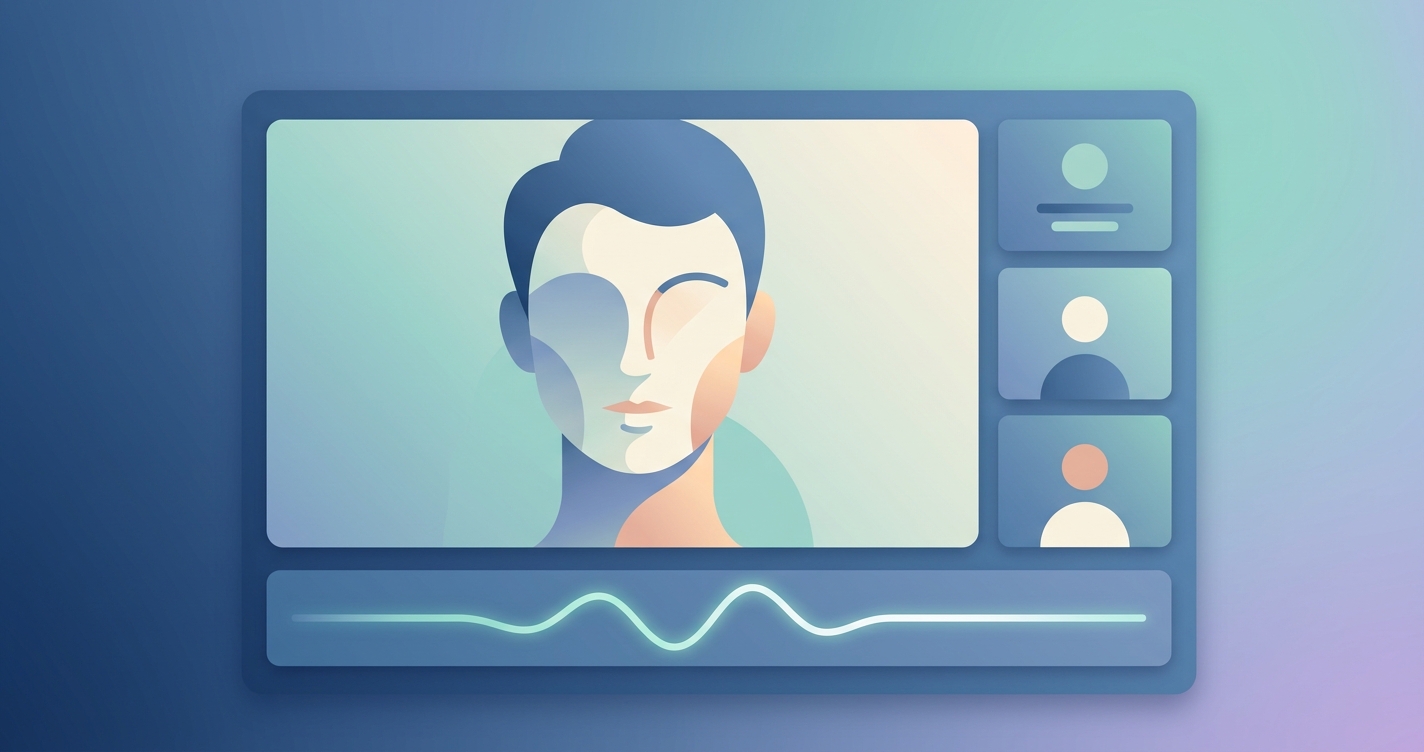
The rapid shift to virtual care has fundamentally changed patient-provider interactions, but the clinical depth of these encounters has often been limited by a lack of real-time data. While video calls are effective for conversational consultations, they have historically lacked the ability to capture fundamental vital signs. For health system leaders and virtual care directors, the key question has been how to bridge this data gap to make virtual visits more clinically robust. The measurement of blood pressure, a cornerstone of cardiovascular assessment, has been a primary focus, leading to significant research and development in camera-based, contactless technologies. The ability to conduct a virtual visit blood pressure reading could transform the quality and scope of remote care.
"Initial studies on the accuracy of camera-based blood pressure estimation have shown promising results, with some achieving a mean absolute error of less than 5 mmHg, which is the benchmark set by the Association for the Advancement of Medical Instrumentation (AAMI) for traditional blood pressure cuffs." - As reported in studies analyzed by multiple research teams in 2023.
The state of virtual visit blood pressure assessment
The core technology enabling virtual visit blood pressure measurement is remote photoplethysmography (rPPG). This technique uses a standard digital video camera, like the one in a patient's smartphone or laptop, to detect subtle changes in the color of their skin. These changes, invisible to the human eye, correspond to the "tidemark" of blood volume pulsing through the vessels with each heartbeat. Advanced signal processing algorithms analyze this data to calculate a pulse waveform, from which physiological parameters like heart rate, heart rate variability, and, more recently, blood pressure can be derived.
For health systems, the appeal of this technology is its potential to seamlessly integrate vital signs capture into existing telehealth platforms without requiring patients to own or use any special hardware. This "zero-hardware" approach removes significant logistical and financial barriers associated with deploying peripheral devices like Bluetooth-enabled blood pressure cuffs. It allows for the collection of objective clinical data in any virtual encounter, moving beyond patient-reported information to a more reliable, clinician-driven measurement process. The primary challenge lies in ensuring these measurements are accurate and reliable enough for clinical decision-making.
| Technology | Implementation Model | Patient Requirement | Clinical Workflow Integration | | :--- | :--- | :--- | :--- | | Traditional Cuffs | Patient self-reports reading during visit. | Patient must own a calibrated BP cuff. | Manual entry by clinician; risk of transcription error. | | RPM (Bluetooth Cuffs) | Asynchronous monitoring; data sent to care team. | Patient issued a specific device; requires setup. | Data flows into RPM platform, may be separate from EHR. | | rPPG (Camera-Based) | Real-time capture during a standard virtual visit. | Standard smartphone or laptop camera. | Direct integration into the telehealth platform and EHR. |
Industry applications and use cases
The ability to measure blood pressure during a virtual visit opens up numerous applications across the care continuum. Health system leaders are exploring how this capability can enhance clinical workflows and improve patient outcomes.
Use cases for virtual visit blood pressure:
- Routine Primary Care: For regular check-ins and medication management for patients with hypertension, a virtual visit blood pressure reading can provide the necessary data to adjust treatment plans without requiring an in-person visit.
- Post-Discharge Monitoring: Patients recovering from cardiac events or surgery can be monitored more frequently and conveniently, allowing for early detection of potential complications.
- Specialty Care: In cardiology, nephrology, and endocrinology televisits, real-time blood pressure data is critical for managing complex chronic conditions.
- Urgent Care Triage: A virtual visit blood pressure reading can help triage nurses and urgent care providers make more informed decisions about whether a patient needs to be seen in person or can be managed remotely.
Current research and evidence
The clinical validation of rPPG for blood pressure measurement is an area of active and intense research. The central question is whether a camera-based reading can be as accurate and reliable as a traditional cuff-based measurement. A growing body of evidence suggests that it is becoming feasible, though context and conditions are key.
A 2023 review published by OAE Publishing Inc. on camera-based blood pressure measurement highlights the significant progress and remaining challenges. Studies have demonstrated that under controlled conditions, rPPG algorithms can achieve high levels of accuracy. For example, researchers have reported mean absolute errors approaching the 5 mmHg AAMI standard. However, performance can be affected by factors like:
- Lighting conditions: Poor or fluctuating light can interfere with the camera's ability to detect the subtle skin color changes.
- Patient movement: The patient must remain still for the duration of the reading, typically 30-60 seconds.
- Skin tone: Algorithms must be trained on diverse datasets to ensure accuracy across all skin tones, a challenge the industry is actively working to solve.
- Clinical state: A study published in News-Medical.Net in 2023 noted that accuracy can decrease at elevated heart rates, indicating more research is needed for use in acute settings.
A study in the Journal of the American Medical Informatics Association (JAMIA) by an international team of researchers (2022) emphasized the importance of calibration. Most current rPPG models for blood pressure are "uncalibrated," meaning they estimate BP without a reference reading. Newer models are exploring hybrid approaches, where an initial cuff reading is used to calibrate the rPPG algorithm for that specific patient, significantly improving personalized accuracy over time.
The future of virtual visit blood pressure
The trajectory for contactless vital signs is pointed toward broader clinical adoption, but the path is paved with continued research and a focus on specific use cases. For health systems, the future of virtual visit blood pressure is not about replacing cuff-based measurements entirely, but augmenting them. The technology's greatest value may be in longitudinal monitoring, tracking a patient's blood pressure trends over time in their natural environment. This can provide a more holistic view of a patient's cardiovascular health than a single, in-clinic reading, which can be prone to "white coat" hypertension.
Future developments will likely focus on:
- AI-powered algorithms: Machine learning models will become more sophisticated, improving accuracy and reducing sensitivity to environmental factors.
- Sensor fusion: Combining rPPG data with other sensor data, such as from a smartphone's accelerometer, could help correct for patient movement.
- Regulatory clearance: As the technology matures, companies will seek and obtain FDA and other regulatory body clearances for specific clinical claims, which will be a critical step for widespread health system adoption.
Frequently asked questions
Q: Is virtual visit blood pressure measurement accurate? A: The accuracy of camera-based blood pressure measurement is a key area of research. Current technology is showing high promise in controlled settings, with some studies meeting medical device standards. However, factors like lighting, patient movement, and skin tone can impact accuracy. It is not yet a direct replacement for a traditional cuff in all situations but is advancing rapidly.
Q: Does a patient need any special equipment? A: No. The primary advantage of rPPG technology is that it uses the standard camera on the patient's existing smartphone, tablet, or laptop. No additional hardware or wearables are required.
Q: How does this fit into a clinical workflow? A: The technology can be integrated directly into a health system's existing telehealth platform. During a virtual visit, the clinician can initiate a reading. The patient is guided to position their face correctly in the camera view, and the measurement is taken over 30-60 seconds. The result can then be automatically documented in the patient's electronic health record (EHR).
Q: Is the technology ready for enterprise-wide deployment in a health system? A: Deploying this technology enterprise-wide requires a strategic approach. It involves technical integration with the EHR and telehealth platform, designing clinical workflows for specific use cases (e.g., primary care vs. specialty care), and provider training. Many health systems are starting with pilot programs in specific departments to build the governance and clinical evidence needed for a broader rollout.
As health systems continue to build out their virtual care infrastructure, the integration of objective clinical data is the next logical frontier. Technologies that enable virtual visit blood pressure capture are a key part of this evolution, promising to enhance the quality, scope, and clinical value of remote healthcare. Circadify is at the forefront of addressing this space, providing solutions that integrate seamlessly into existing clinical workflows. To learn more about implementing camera-based vital signs in your health system, explore our solutions for telehealth at circadify.com/solutions/telehealth.