
Can my kid's pediatrician check vitals over video when fever strikes at midnight?
Learn how camera-based vital signs are enabling pediatricians to conduct more thorough and data-driven virtual visits, even for urgent after-hours care.
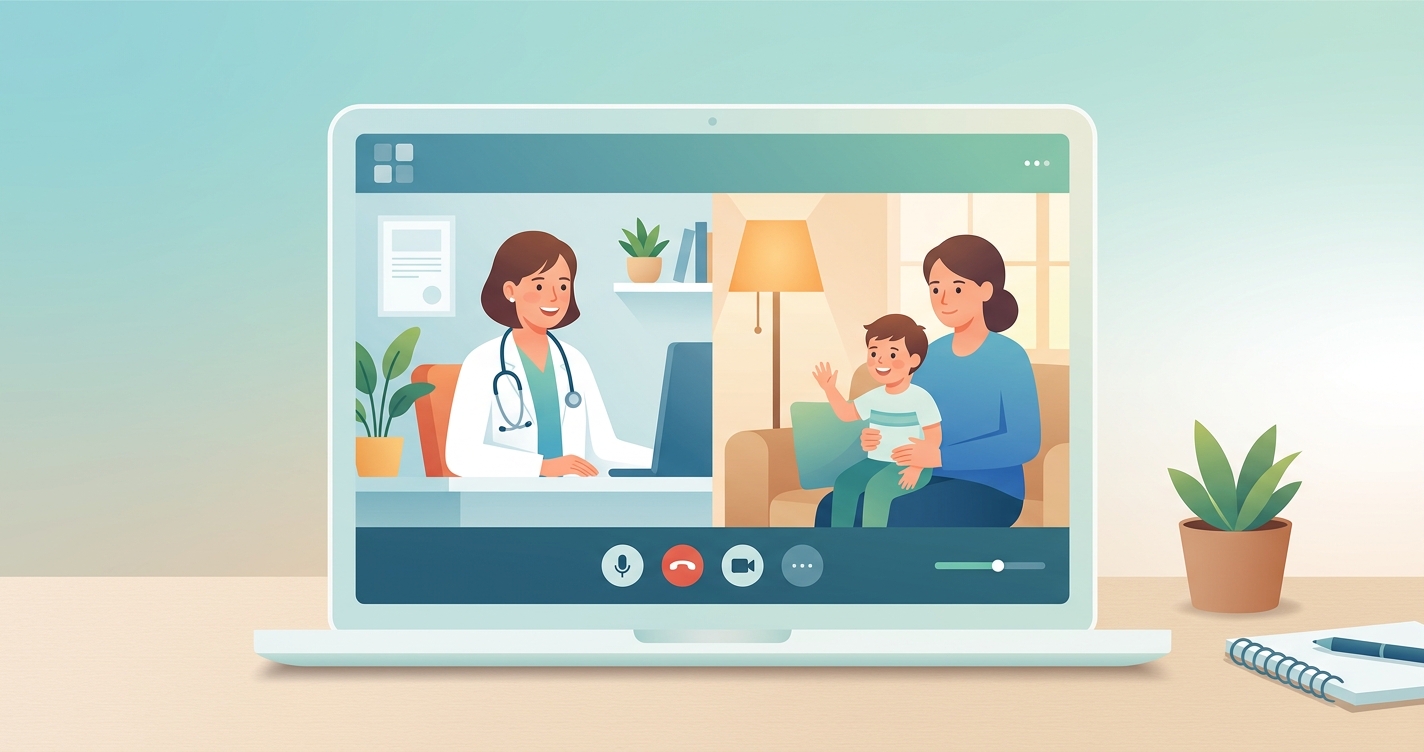
It's a scenario every parent knows: a child wakes up crying, hot to the touch, and the pediatrician's office is closed for the night. The rise of telehealth has made after-hours consultations possible, but for parents and clinicians alike, the inability to gather basic objective data like vital signs has been a significant limitation. A verbal description of a fever is subjective; a temperature reading is data. This gap has raised urgent questions for health systems about the clinical utility of virtual visits, especially in pediatrics. Now, advances in camera-based technology are enabling the remote capture of pediatric telehealth vital signs, transforming a simple video call into a more clinically substantive encounter.
"In a study of 519 children, remote monitoring of heart rate via a smartphone camera showed a high degree of accuracy compared with standard hospital monitors, with a mean difference of just 1.3 beats per minute." - Dr. Warren-Gash, University College London, 2021.
The challenge of pediatric remote assessments
Assessing a sick child requires objective data, yet telehealth has historically relied almost entirely on subjective observation and parental reporting. Is the child breathing rapidly? How high is their heart rate? These are critical inputs for clinical decision-making, from ruling out sepsis to deciding if a trip to the emergency department is warranted. Without this data, pediatricians are often forced to make conservative recommendations, potentially leading to unnecessary emergency visits or, conversely, missing signs of a more serious condition.
The core of the problem is the lack of clinical-grade tools in the home that can be easily used on a distressed child in the middle of the night. While some parents own pulse oximeters or digital thermometers, many do not. Even when present, using them correctly on a fussy, non-cooperative child can be difficult. The need for a contactless, frictionless method to capture pediatric telehealth vital signs has become a key focus for innovation, aiming to bridge the data gap between the remote clinician and the patient.
This technology uses a technique called remote photoplethysmography (rPPG). It analyzes subtle, imperceptible changes in light reflected from the skin to measure blood flow dynamics. From these patterns, algorithms can calculate heart rate, respiratory rate, and heart rate variability. The technology requires no special hardware beyond the camera already present in a standard smartphone, tablet, or laptop, making it universally accessible for virtual visits.
| Technology | How It Works | Common Pediatric Use Cases | Limitations | |---|---|---|---| | Remote Photoplethysmography (rPPG) | Video analysis of skin pixels to detect blood volume changes. | Contactless heart rate and respiratory rate for febrile children. | Requires good lighting, minimal patient motion, and a quality camera. | | Wearable Biosensors | ECG/PPG sensors in patches or watches. | Continuous monitoring for chronic conditions (e.g., congenital heart disease). | Can cause skin irritation; requires patient/parent to wear and manage the device. | | Parent-Operated Devices | Digital thermometers, pulse oximeters. | Spot-checking temperature, oxygen saturation. | Can be difficult to use on a non-cooperative child; data quality varies. | | Subjective Clinician Assessment | Visual observation of work of breathing, skin color. | Standard in all telehealth visits. | Lacks objective numerical data; highly dependent on provider experience. |
Industry Applications
Health systems are beginning to integrate camera-based vital signs into their pediatric telehealth workflows to enhance clinical decision support and improve patient outcomes.
Urgent care triage
For after-hours pediatric urgent care, remote vital signs provide the triage nurse or physician with critical objective data. An elevated heart rate or respiratory rate can help stratify risk and determine the appropriate level of care. This data, captured and documented in the EHR, provides a more robust clinical record than a simple subjective note, supporting clinical judgment and reducing liability.
Post-Hospitalization Follow-up
Following a hospital stay, particularly for respiratory illnesses or cardiac conditions, remote monitoring can help ensure a child is recovering as expected. A quick virtual check-in that includes vital signs allows a clinician to confirm stability without requiring the family to travel back to the hospital, improving convenience and adherence to follow-up care.
Chronic condition management
For children with chronic conditions that may affect cardiovascular or respiratory function, regular remote check-ins with vital sign measurement can provide valuable trend data. This allows clinicians to manage conditions proactively, adjusting treatment plans based on objective physiological data collected over time.
Current research and evidence
The validation of camera-based vital signs for pediatric use is an active area of research. A 2023 study published in the journal npj Digital Medicine by researchers at the University of South Australia demonstrated that smartphone-based rPPG could accurately measure heart and respiratory rates in newborns. Similarly, research from The Hospital for Sick Children (SickKids) in Toronto has focused on developing and validating AI models to measure vital signs from facial video, showing promising results that correlate closely with standard-of-care monitors.
These studies, and others like them, are crucial for building clinical confidence. They consistently highlight the importance of specific conditions for accuracy, such as adequate, stable lighting and minimizing patient movement for the 30-60 seconds required for a reading. As the technology matures, algorithms are becoming more robust in handling the real-world challenges of wiggling toddlers and variable home lighting environments.
The future of pediatric telehealth vital signs
The future of pediatric telehealth vital signs is moving toward integration and automation. As the technology becomes a standard feature within major telehealth platforms and EHR systems, the process of capturing vitals will become a seamless part of the virtual visit workflow. Future iterations may include the ability to measure blood pressure and oxygen saturation via camera, further expanding the clinical depth of remote assessments.
For health system leaders, this technology represents a significant step toward making virtual care a true clinical equivalent to an in-person visit for many common pediatric complaints. It empowers clinicians, reassures parents, and ensures that even at midnight, care decisions are guided by data.
Frequently asked questions
How accurate are camera-based vital signs for children compared to traditional methods? Research indicates that remote photoplethysmography (rPPG) can achieve clinical-grade accuracy for heart rate and respiratory rate in pediatric populations when measured under appropriate conditions. Studies have shown high correlation with standard devices like ECG and pulse oximeters. Accuracy depends on factors like adequate lighting, minimal patient movement, and the quality of the camera, all of which are being addressed in current clinical validation protocols for enterprise deployments.
What are the privacy and security considerations for capturing a child's image for vital sign analysis? Patient data privacy is critical. The technology operates by analyzing pixels from a video stream in real-time; the video feed is not typically recorded or stored. All data processing and transmission must be HIPAA-compliant, using secure, encrypted channels. Health systems should ensure any deployed solution follows strict data governance policies, where the vital sign data is treated as protected health information (PHI) and integrated securely into the electronic health record (EHR).
Can this technology be integrated into our existing telehealth platform and EHR system? Yes, enterprise-grade solutions for pediatric telehealth vital signs are designed for integration. They are typically available as SDKs or APIs that can be embedded into a health system's existing virtual care platform and patient portal. The extracted vital sign data can then be seamlessly transmitted to the organization's EHR, such as Epic or Cerner, mapping to the appropriate fields in the patient's chart to support standard clinical workflows.
The ability to capture objective clinical data during a pediatric telehealth visit is no longer a future concept but a present-day reality. For virtual care program directors and clinical informatics leaders, integrating camera-based vital signs is a critical step in elevating the quality and clinical utility of remote encounters, especially for urgent after-hours consultations. As health systems look to build more robust and data-driven virtual care programs, addressing the pediatric vital signs gap is essential. Circadify is actively working with leading health systems to solve this challenge by integrating clinical-grade, camera-based vitals into pediatric telehealth workflows. To learn more about how to incorporate this capability into your organization's strategy, explore our solutions for telehealth at circadify.com/solutions/telehealth.