Can a virtual visit replace an in-person blood pressure check?
A research-based comparison of virtual vs. in-person vital signs capture for health system leaders, analyzing the accuracy, workflows, and future of remote blood pressure measurement.
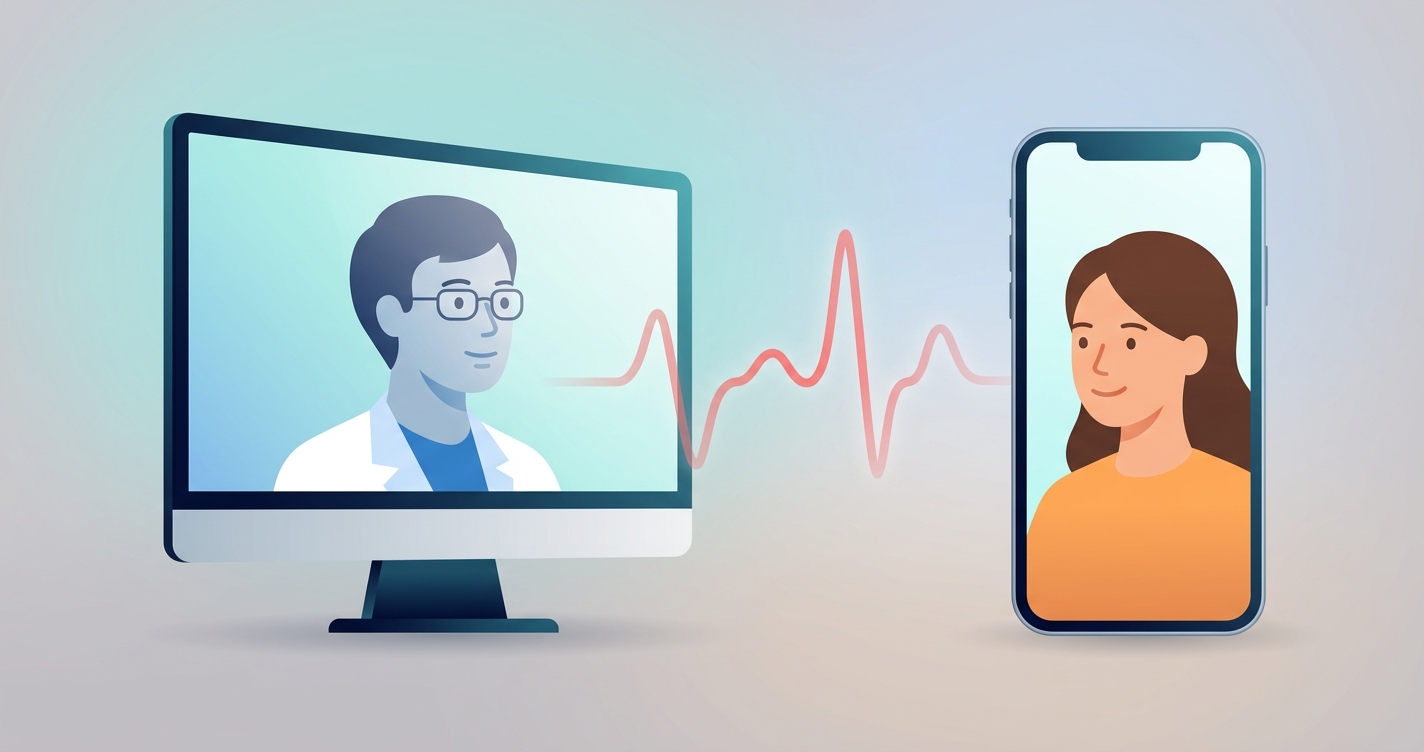
The rapid scaling of virtual care has moved from a crisis response to a core component of health system strategy. For CIOs and clinical informatics leaders, the conversation is no longer about if virtual visits should be offered, but how to improve their clinical depth and data integrity. A central challenge in this evolution is the gap in objective clinical data, most notably vital signs. While a video call can replace a conversation, it cannot replace a physical measurement-or can it? This brings forth a critical question for the future of telehealth: can a virtual visit truly replace an in-person blood pressure check, and what is the difference in clinical value when comparing virtual vs in person vitals?
"A retrospective cohort study published in the Journal of the American Medical Informatics Association found that increased telemedicine visit use was associated with poorer performance on the Controlling High Blood Pressure quality measure, primarily due to a lack of recorded blood pressure during virtual visits." (He, et al., 2022)
The data divide: virtual vs. in-person vitals
The primary distinction between a virtual and an in-person visit lies in the type and source of clinical data. An in-person check provides objective, calibrated, and clinician-captured data. A standard virtual visit relies on subjective patient reporting or requires the patient to own and correctly use a peripheral device. This creates a significant data divide. The in-person encounter captures a rich dataset-blood pressure, heart rate, respiration, temperature-under controlled conditions. The virtual encounter often captures none, forcing clinical decisions to be made with incomplete information. The core of the virtual vs in person vitals debate is not about replacing one with the other, but about how to bridge this data gap to make virtual encounters more clinically robust. New technologies using remote photoplethysmography (rPPG) are emerging to address this, aiming to turn a standard video call into a source of objective clinical measurement without requiring patient-owned hardware.
| Feature | In-Person Vitals Capture | Virtual Vitals Capture (Camera-Based) | | --- | --- | --- | | Method | Auscultatory or oscillometric cuff | Remote Photoplethysmography (rPPG) | | Equipment | Calibrated sphygmomanometer, stethoscope | Patient's existing device camera (smartphone, laptop) | | Patient Burden | Travel to clinic, wait times | None; integrated into virtual visit | | Data Source | Objective, clinician-measured | Objective, software-measured | | Workflow Integration | Manual or integrated EHR entry by staff | Direct, automated EHR integration via API | | Scalability | Limited by physical space and staff | Highly scalable across the enterprise | | Accuracy | Gold standard, but prone to "white coat" syndrome | Requires clinical validation; accuracy depends on conditions |
Industry Applications
As camera-based vital sign capture technology matures, health systems are exploring its integration into various clinical workflows to enhance data collection and improve the quality of virtual care.
### chronic care management
For patients with conditions like hypertension, regular monitoring is key. Integrating contactless blood pressure measurement into routine telehealth follow-ups allows for more frequent data points without the burden of office visits. This enables clinicians to track trends, assess medication efficacy, and intervene earlier, improving management between appointments.
### acute and urgent care triage
In virtual urgent care or triage scenarios, objective vital signs are critical for risk stratification. A patient's heart rate, respiratory rate, and blood pressure can help a remote clinician determine the urgency of the situation and direct the patient to the appropriate level of care, preventing both under-triage of serious conditions and over-triage of minor ones.
### post-discharge follow-up
The transition from hospital to home is a vulnerable period. Virtual follow-up visits that include vital sign measurement can help clinical teams monitor for signs of deterioration, such as elevated heart rate or blood pressure, potentially reducing readmission rates.
Current research and evidence
The technology enabling vital sign measurement from a simple video camera is remote photoplethysmography (rPPG). It works by detecting subtle, imperceptible changes in the reflection of light from skin, which correspond to the pulsing of blood through underlying vessels. While the concept is established, its application for clinical-grade blood pressure measurement is a focus of intensive research.
A 2023 review in Hypertension by leading researchers examined the landscape of camera-based BP measurement. The authors, including biomedical engineers from institutions like the University of Toronto and Oxford, noted that while no solution has yet received FDA clearance as a full replacement for cuff-based devices, the technology shows significant promise for risk stratification and trend monitoring.
Studies have focused on validating these algorithms against medical-grade standards. For example, research published in Scientific Reports (Jeong, et al., 2022) demonstrated that deep learning models could estimate blood pressure from facial video with a mean absolute error that approached the standards set by the Association for the Advancement of Medical Instrumentation (AAMI). However, researchers consistently note that performance can be affected by factors like:
- Lighting conditions
- Patient motion
- Skin tone diversity
- Camera quality
Current evidence suggests that while rPPG may not yet replace an in-clinic reading for initial diagnosis, it serves as a powerful tool for gathering data where none existed before, significantly enhancing the clinical utility of a virtual visit.
The future of contactless vitals in health systems
The trajectory of virtual care points toward encounters that are not just conversational but also diagnostic. As health systems look to 2026 and beyond, the integration of passive, contactless data capture will be a defining feature of market-leading virtual care programs. The ability to capture blood pressure, heart rate, and respiratory rate from a video feed addresses a fundamental weakness in today's telehealth platforms. For CIOs, this technology represents a move from a simple communication tool to a true clinical platform. It offers a path to improve virtual visit quality metrics, justify reimbursement, and provide clinicians with the objective data they need to make informed decisions remotely. The future state is a hybrid model where the choice is not virtual vs in person vitals, but a continuum of care where data flows from any patient location directly into the EHR.
Frequently asked questions
Q: Can this technology replace our in-clinic blood pressure cuffs? A: Not for every use case. Currently, camera-based blood pressure measurement is best viewed as a tool for capturing vital signs during a virtual visit where a reading would otherwise be absent. It provides critical data for triage and trend monitoring. In-person, calibrated devices remain the standard for diagnosis and medication titration, though the technology is advancing rapidly.
Q: How does this data integrate with our existing EHR system? A: Secure, API-based integration is the standard for enterprise-grade solutions. The vital signs data captured during the virtual visit should be structured to flow directly into the patient's chart in the EHR (such as Epic or Cerner), appearing alongside other clinical data without requiring manual transcription by the provider.
Q: What is the clinical validation process for a technology like this? A: A robust validation process involves large-scale studies comparing the technology's measurements against gold-standard medical devices across diverse patient populations, skin tones, ages, and health conditions. Health systems should look for vendors who publish their validation data in peer-reviewed journals and adhere to established protocols from organizations like the AAMI or ISO.
Q: What are the primary factors that affect the accuracy of a camera-based reading? A: The most significant factors are poor lighting, excessive patient movement during the scan, and an obstructed view of the patient's face. Enterprise platforms are designed with clear on-screen guidance for the patient to mitigate these factors and ensure a high-quality, clinically useful measurement.
As health systems continue to build and refine their virtual care strategies, the absence of clinical data in most televisits remains the primary barrier to quality and scale. The ability to capture vital signs through the patient's own device camera addresses this core challenge. Circadify is at the forefront of developing these solutions, helping provider organizations enhance the clinical depth of every virtual encounter. To learn more about designing clinical workflows for camera-based vitals, explore our solutions for health systems at circadify.com/solutions/telehealth.