How to Capture Vitals From a Patient's Phone Camera
A plain-language technical overview of how to capture vitals from phone camera during a virtual visit, what patients need, and how the signal works.
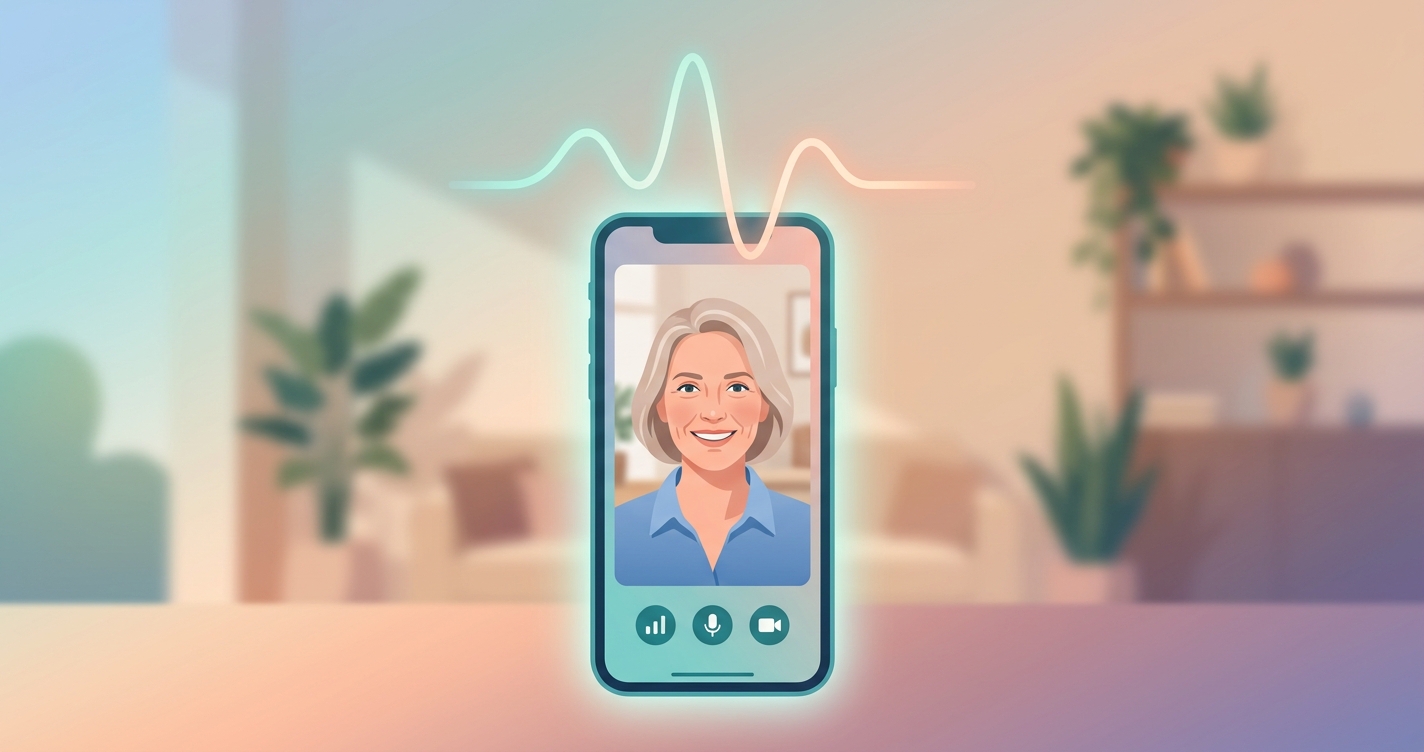
The video call resolved one half of the virtual visit a long time ago. The other half, the physiological data that a clinician relies on to make a decision, has lagged behind. For most of telehealth's history, a provider could see and hear a patient but could not read a single objective number from the encounter without asking the patient to buy and operate a separate device. That gap is now closing. The ability to capture vitals from phone camera input during a live visit has matured from a laboratory curiosity into a deployable clinical workflow, and for clinical informatics teams the relevant question has shifted from whether it works to how it works, what patients need on their end, and how the data lands in the record.
A 2024 validation study of a contactless telehealth portal reported a respiratory rate average absolute difference of 0.86 breaths per minute and a mean absolute percentage difference of 4.72%, inside the commonly accepted clinical threshold of plus or minus 3 breaths per minute. (Source: JMIR Formative Research, 2024)
What it actually means to capture vitals from a phone camera
The underlying technique is remote photoplethysmography, usually shortened to rPPG. When blood pulses through the capillaries just beneath the skin of the face, it changes how much light the skin absorbs and reflects. Those changes are far too subtle for the human eye, but a standard smartphone camera samples them many times per second. Software isolates the tiny color fluctuations in the green, red, and blue channels across a region of skin, filters out noise from movement and lighting, and reconstructs a pulse waveform. From that waveform the system derives heart rate, and from related signal features it estimates respiratory rate, heart rate variability, and in some implementations blood pressure trends and oxygen saturation.
The key practical point for an informatics team is that no contact and no peripheral hardware is required. The patient does not strap on a sensor or press a finger to a lens. They sit in front of the same front-facing camera already running the visit. This is the structural difference between camera-based clinical vitals and the home-device model, where the patient must own, charge, calibrate, and correctly operate a cuff, a pulse oximeter, or a wearable.
The signal chain has four stages worth understanding:
- Capture: the camera records raw video of an exposed skin region, usually the face.
- Region selection: software identifies stable skin areas and rejects regions affected by hair, glasses, or shadow.
- Signal extraction: color variation over time is converted into a pulsatile waveform.
- Inference: validated models translate the waveform into discrete vital sign values, with quality flags when the signal is too weak to trust.
How camera capture compares to other virtual vitals methods
For program directors weighing architecture, the trade-offs are clearest in a direct comparison. The table below frames the three dominant approaches to getting a vital sign into a virtual encounter.
| Factor | Phone camera (rPPG) | Patient home devices | In-person measurement | | --- | --- | --- | --- | | Patient hardware needed | None beyond the phone | Cuff, oximeter, or wearable | None, but travel required | | Setup friction | Low, runs in the visit | Moderate to high | High, requires a trip | | Vitals available | HR, RR, HRV, BP trend, SpO2 trend | Depends on devices owned | Full clinical set | | Data into EHR | Automated at capture | Manual entry or sync gaps | Staff documented | | Equity of access | Even across patients with a phone | Skews to those who can buy devices | Limited by mobility and distance | | Best clinical fit | Routine and triage visits | Chronic disease with daily logs | Acute and confirmatory care |
No single method wins outright. Camera capture removes the device-ownership barrier and produces structured data at the moment of the visit, which is why it suits high-volume routine and triage encounters. Home devices remain valuable for longitudinal chronic-disease tracking. In-person measurement stays the confirmatory standard for acute decisions. The realistic posture for most health systems is a layered one, with camera capture as the default floor for every visit.
Industry applications
Primary care and triage
The largest volume opportunity sits in routine primary care and nurse triage, where a heart rate and respiratory rate often change the disposition of a call. Contactless heart rate from video lets a triage nurse anchor a subjective complaint to an objective number without asking the patient to find equipment. This matters most in the encounters that were previously data-free by default.
Specialty follow-up
Cardiology and pulmonary follow-up visits benefit from trend data captured the same way at every appointment. Because the patient needs nothing but the phone, adherence does not depend on whether they remembered to charge a device, which reduces the missing-data problem that undermines remote monitoring programs.
Behavioral health
Heart rate variability and stress markers derived from the same rPPG signal give behavioral health clinicians a physiological reference during a video session, adding an objective layer to an otherwise conversation-only modality.
Current research and evidence
The evidence base for smartphone vitals in telehealth has grown quickly. A 2024 scoping review of contact-based smartphone photoplethysmography found good to very strong agreement with electrocardiography for resting heart rate in healthy subjects, while noting that most of that agreement was established under controlled conditions. The reviewers published a reporting checklist specifically to standardize how acquisition conditions are documented, a signal that the field is professionalizing.
On the contactless side, the 2024 JMIR Formative Research validation of a telehealth portal reported that the system met predefined accuracy cutoffs for heart rate, blood pressure, oxygen saturation, and respiratory rate against approved medical devices, with the respiratory rate figures noted above. A separate evaluation of a camera-based monitoring solution against regulated devices found good agreement for heart rate, respiratory rate, and oxygen saturation, but flagged large deviations in blood pressure at extreme values, which is the honest current limit of the technology.
Google Research has reported a passive monitoring approach using the front-facing camera that achieved a mean absolute error under 5 beats per minute for resting heart rate across all skin tones compared with wearable trackers, an important result given that early optical methods underperformed on darker skin. A 2023 rPPG smartphone study in normotensive adults reported predictive accuracy of roughly 94% for systolic and 93% for diastolic blood pressure, though performance outside the normotensive range remains the open research frontier.
The consistent theme across this literature is a tiered confidence picture. Heart rate and respiratory rate are well supported. Heart rate variability and oxygen saturation are advancing. Blood pressure is promising but condition-dependent, and ambient lighting, skin tone, and patient motion remain the variables that most affect any rPPG reading. Responsible deployment means surfacing signal-quality flags rather than presenting every reading as equally trustworthy.
The future of capturing vitals from a phone camera
Three trajectories are visible. First, model robustness is improving as deep-learning approaches handle motion artifacts and lighting variation that defeated earlier signal-processing methods, which widens the range of real-world conditions where a reading is reliable. Second, the measurable vital set is expanding from the well-validated core toward blood pressure and oxygenation as larger and more diverse validation cohorts close the gaps that current studies expose. Third, integration is becoming the differentiator. A camera reading only changes care if it flows into the EHR as structured, flag-annotated data at the moment of capture, where a clinician can act on it inside the existing workflow.
For clinical informatics teams, the planning work is less about the optics and more about governance: defining which vitals are clinical-grade enough to drive decisions today, how quality flags are represented, and how camera-derived values are labeled in the record so downstream users understand provenance.
Frequently asked questions
What does a patient need to capture vitals from a phone camera?
A smartphone or tablet with a working front-facing camera, adequate lighting on the face, and a brief moment of sitting still. No cuff, oximeter, wearable, or extra app hardware is required, which is the main reason the method scales across a diverse patient population.
Which vitals are most reliable from camera capture today?
Heart rate and respiratory rate have the strongest validation evidence, with multiple 2024 studies showing agreement inside accepted clinical thresholds. Heart rate variability and oxygen saturation are advancing, while blood pressure shows promise in normal ranges but still deviates at extreme values.
Does skin tone affect the accuracy of contactless heart rate from video?
It can, because the method reads light reflected from skin. Early systems underperformed on darker skin, but recent work, including a Google Research method reporting under 5 bpm mean absolute error across all skin tones, shows the gap is being addressed through better models and more diverse training data.
How does camera-captured data reach the medical record?
Mature implementations write values directly into the EHR as structured data at the time of capture, ideally with quality flags. This avoids the manual-entry and sync gaps that affect patient-owned home devices.
Circadify is building toward this layer of virtual care, where clinical-grade vital signs are captured in the visit itself and delivered into the record without patient wearables. Clinical informatics teams evaluating camera-based vitals can request a technical briefing and health system demo, including clinical workflows, at circadify.com/solutions/telehealth.