
How to Launch Televisit Vitals Across 5 Clinics in 90 Days
A 90-day roadmap to deploy televisit vitals across 5 clinics, covering phased rollout, EHR integration, clinical workflows, and go-live metrics.
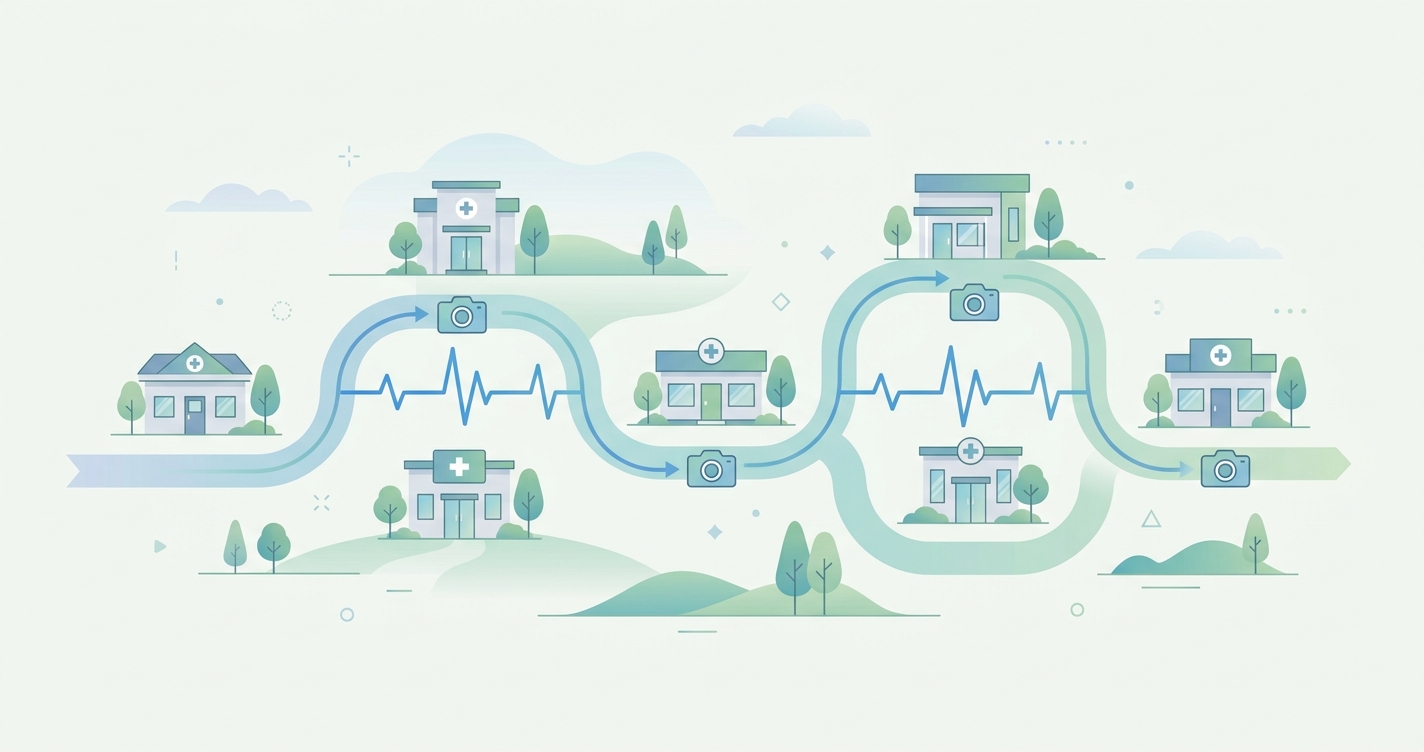
Most health systems treat camera-based vital sign capture as a procurement decision when the harder problem is sequencing. The technology selection matters, but the difference between a program that stalls in pilot purgatory and one that reaches five clinics on schedule comes down to how the rollout is staged, who owns each phase, and which metrics gate the move from one site to the next. Virtual care program directors who want to deploy televisit vitals quickly are not short on vendor options. They are short on a credible operational plan that survives contact with clinical reality across multiple sites.
This roadmap compresses a multi-site telehealth vitals deployment into 90 days by treating the first clinic as a controlled reference implementation and the remaining four as repeatable replications. The constraint is real: research from health system digital transformation teams suggests the average organization takes far longer than a quarter to scale a new digital tool. A disciplined 90-day plan works only because it front-loads the integration and validation work, then refuses to reinvent it at each site.
"On average, it can take hospitals approximately 23 months from identifying a digital innovation need to scaling a digital solution.", American Medical Association, Telehealth Implementation Playbook (2024)
How to Deploy Televisit Vitals on a 90-Day Timeline
The reason a quarter is achievable, despite the 23-month industry baseline, is that camera-based vitals using remote photoplethysmography (rPPG) ride on infrastructure most health systems already own: the existing video visit platform, the patient device, and the EHR. There is no hardware to ship to patients, no wearable inventory to manage, and no home-device reimbursement question to resolve. That removes the slowest steps from a conventional telehealth rollout. What remains is integration, clinical workflow design, validation, training, and staged go-live.
The 90 days break into three 30-day blocks, each with a clear exit gate:
- Days 1 to 30, Foundation: integration architecture, EHR mapping, governance sign-off, and a single reference clinic configured.
- Days 31 to 60, Reference site and validation: go-live at clinic one, workflow refinement, and the clinical evidence review that authorizes expansion.
- Days 61 to 90, Replication: clinics two through five brought live in a staggered cadence using the locked reference configuration.
The discipline is in the gates. A site does not advance because the calendar says so. It advances because the prior phase met its exit criteria.
| Phase | Days | Primary Owner | Key Deliverable | Exit Gate | | --- | --- | --- | --- | --- | | Foundation | 1-30 | Clinical informatics | EHR integration mapped, governance approval, reference clinic built | Vitals flow to a test patient chart | | Reference go-live | 31-45 | Virtual care director | Clinic one live, provider workflow documented | 50+ visits with vitals captured | | Validation review | 46-60 | Clinical + quality | Accuracy and capture-rate review against protocol | Capture rate and agreement thresholds met | | Replication wave 1 | 61-75 | Site champions | Clinics two and three live | Each site hits capture-rate floor | | Replication wave 2 | 76-90 | Site champions | Clinics four and five live | All five sites reporting to dashboard |
The three phases of a virtual visit vitals rollout
Phase One: Foundation (Days 1 to 30)
The first 30 days are an integration and governance exercise, not a clinical one. Clinical informatics teams map how a captured heart rate, respiratory rate, or estimated blood pressure enters the chart. The dominant pattern routes measurements as discrete, codified observations rather than free-text or PDF attachments, so the values become trendable and trigger clinical decision support. This is where a camera vitals implementation timeline most often slips, because integration is treated as an afterthought rather than the gating dependency it is.
Foundation-phase work includes:
- Confirming the integration method between the vitals engine and the EHR, including authentication and patient-context handoff.
- Mapping each captured parameter to the correct observation code and units.
- Defining the data governance rules for what a screening-grade measurement is and is not allowed to do in the record.
- Standing up a single reference clinic configuration that every later site will clone.
The exit gate is concrete: a test vital sign captured during a simulated visit lands in the correct field of a test patient chart. Until that works, no clinic goes live.
Phase Two: Reference Site and Validation (Days 31 to 60)
Clinic one is the reference implementation. It is chosen for engaged clinical leadership and reasonable visit volume, not for being the largest site. The goal is to generate enough real encounters to refine the provider workflow and produce the evidence that authorizes expansion.
During go-live, the workflow detail that determines adoption is who initiates the measurement and when. Successful programs fold the capture into the existing rooming or intake rhythm so it does not feel like an extra task. The reference site also surfaces the environmental factors that affect rPPG quality. Published reviews note that patient movement, ambient lighting, and skin tone all influence measurement reliability, so the workflow should include simple framing and lighting guidance for patients before capture.
The validation review at the end of this phase is the most important gate in the entire rollout. It is not a marketing claim review. It is an internal check of capture rate and measurement agreement against the protocol the quality team set in phase one. Only after this gate clears does the program replicate.
Phase Three: Replication (Days 61 to 90)
Replication is deliberately boring. The reference configuration is locked, and clinics two through five inherit it. Staggering the four sites into two waves of two preserves the support team's ability to respond, and gives site champions at later clinics a working peer to learn from.
- Each new site gets a named champion responsible for local training.
- Training is short and role-specific: providers, nurses, and front-desk staff each get only what their step requires.
- A shared dashboard tracks capture rate per site so a lagging clinic is visible within days, not at quarter end.
Current research and evidence
The clinical foundation for a vitals capture deployment has matured. A 2024 review from the University of St Andrews on remote photoplethysmography for heart rate and blood oxygenation reported strong agreement for heart rate and SpO2 under controlled conditions, while noting blood pressure estimation remains the harder problem. Validation work published in MDPI on rPPG-enabled contactless pulse rate monitoring in cardiovascular disease patients reported mean absolute error for heart rate near 1 bpm in favorable conditions, with accuracy degrading under movement and poor lighting.
Two implications follow for a multi-site deployment. First, the variation across conditions is exactly why a reference-site validation gate matters: it measures performance in your patient population and your lighting, not in a lab. Second, the maturity gradient across parameters argues for sequencing what you trust clinically. Heart rate and respiratory rate are the strongest candidates for early decision support, while estimated blood pressure is best positioned as a screening signal that prompts confirmation rather than a standalone diagnostic value.
On the operational side, the AMA Telehealth Implementation Playbook (2024) frames implementation as a staged process of kick-off, clinical program strategy, technology assessment, and go-live preparation. The 90-day model maps onto that structure, with the key adaptation that camera-based vitals remove the equipment-distribution and patient-device steps that lengthen conventional telehealth timelines.
The future of multi-site telehealth vitals
The next phase of this market moves from single-visit capture to longitudinal trend. Once five clinics report screening-grade vitals into a common record, the data becomes a population asset: hypertension screening at the point of every virtual encounter, respiratory trend tracking for chronic disease cohorts, and earlier escalation signals for nursing triage. The federal telehealth flexibilities extended through the end of 2027 give health systems a stable reimbursement window to build these programs without betting on annual policy reversals.
The deployment pattern itself will standardize. As integration approaches converge on codified observation data and EHR-native display, the foundation phase that consumes the first 30 days today will shorten. The differentiator will shift from whether a health system can capture vitals in a video visit to how reliably it does so across every site, every clinician, and every patient population it serves.
Frequently asked questions
How realistic is a 90-day timeline to deploy televisit vitals across five clinics?
It is realistic when the program treats clinic one as a reference build and clinics two through five as replications of a locked configuration. The schedule depends on completing EHR integration and a validation gate in the first 60 days. Camera-based capture compresses the timeline because there is no patient hardware to distribute, which removes the slowest steps from a conventional telehealth rollout.
What is the biggest risk to a multi-site telehealth vitals rollout?
Integration debt and skipped validation. If vitals land as free text or PDFs instead of codified observations, they cannot trend or trigger decision support, and later sites inherit the problem at scale. The second risk is advancing sites on calendar rather than on exit gates such as capture rate and measurement agreement.
How accurate is camera-based vitals capture for clinical use?
Peer-reviewed reviews report strong agreement for heart rate and oxygen saturation under good conditions, with reliability affected by patient movement, lighting, and skin tone. Blood pressure estimation is less mature and is best treated as a screening signal. Each program should validate performance in its own patient population during the reference-site phase rather than relying on external claims.
Who should own a virtual visit vitals rollout?
Ownership is shared across clinical informatics, which leads the foundation and integration phase, and the virtual care program director, who owns go-live and replication. The quality team owns the validation gate, and each replication site needs a named local champion for training and capture-rate accountability.
Circadify is building toward this multi-site deployment problem directly, with EHR-integrated vitals capture and clinical workflow design for health systems planning a phased rollout. To map a 90-day plan against your sites, integration environment, and validation requirements, book an implementation planning session at circadify.com/solutions/telehealth.