Do telehealth visits work without a blood pressure cuff at home?
The reliance on patient-owned devices creates significant data gaps in virtual care. A review of camera-based vital signs technology for telehealth without cuffs.
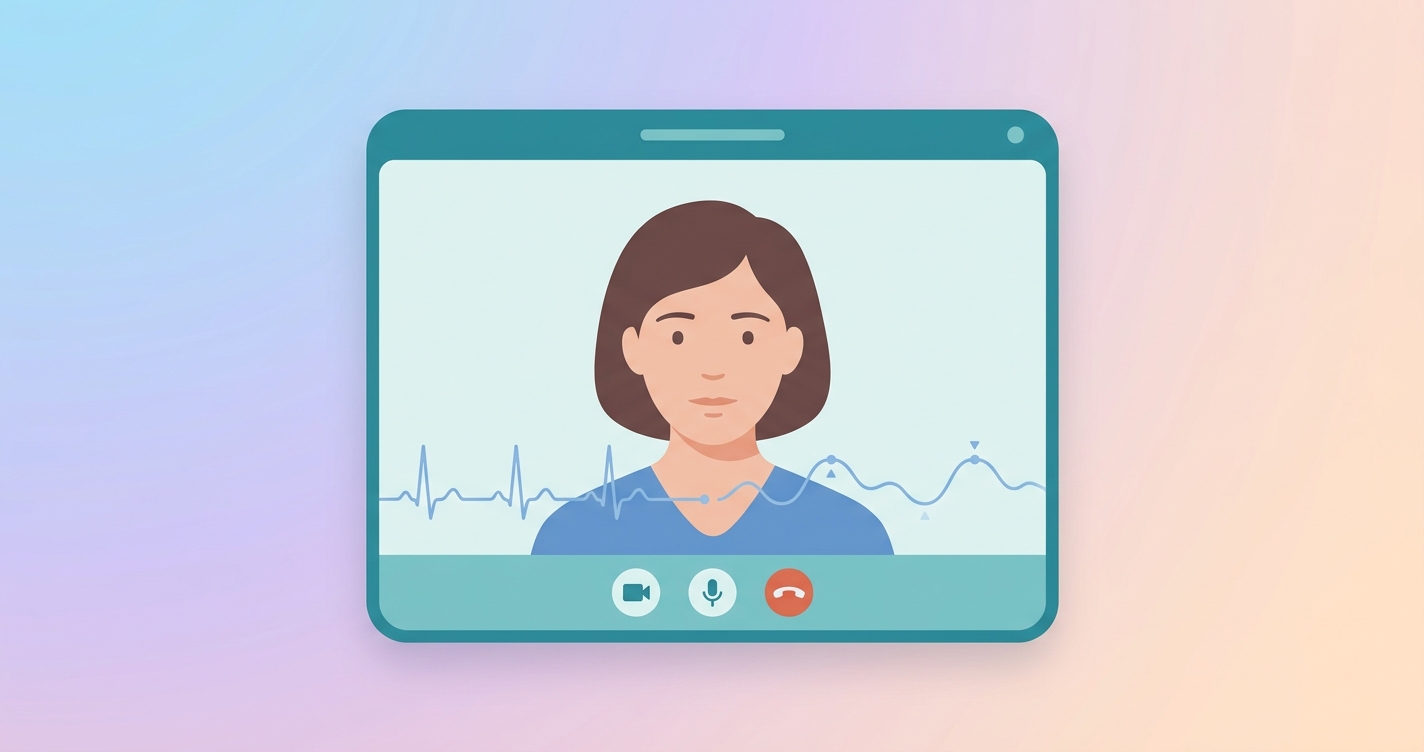
The strategic importance of telehealth has evolved from a crisis response to a core component of modern healthcare delivery. Health systems have invested heavily in the infrastructure to connect with patients remotely. However, the clinical depth of these virtual encounters is often limited by a fundamental data gap: the absence of real-time, objective patient vital signs. Without a reliable way to measure key indicators like blood pressure during a video visit, providers are left to rely on subjective patient self-reporting, which can compromise diagnostic accuracy and treatment planning. This challenge has brought a critical question to the forefront for virtual care program directors and clinical informatics teams: How can we make telehealth visits clinically robust, especially for managing chronic conditions like hypertension, without requiring every patient to own and operate a medical device at home?
"A retrospective cohort study published in JMIR found that during the COVID-19 pandemic, blood pressure measurements were missing in over 85% of telehealth visits for hypertension, compared to just 8.2% of in-office visits." - (Al-Risha et al., 2022)
The data deficit: telehealth without cuff-based measurement
The problem of missing vital signs is a significant impediment to the advancement of virtual care quality. For the nearly half of U.S. adults with hypertension, regular blood pressure monitoring is essential. When this data is absent from a clinical encounter, the provider's ability to manage medication, assess risk, and make informed decisions is severely hampered. The concept of telehealth without cuff requirements aims to solve this, but understanding the challenge requires looking at the current, imperfect methods of data collection.
- Patient Self-Reporting: The most common method is also the least reliable. Patients may not know how to describe their symptoms, may guess or estimate readings, or may not have any objective data at all. This introduces a high degree of uncertainty and subjectivity into the clinical record.
- Bring Your Own Device (BYOD): The next level involves patients using their own blood pressure cuffs. While better than no data, this approach is fraught with issues. There are significant health equity concerns, as not all patients can afford or access these devices. Furthermore, consumer-grade devices vary widely in quality and calibration, leading to inconsistent and potentially inaccurate readings being entered into the EHR. Providers have no way to verify the quality of the patient's device or the methodology used.
- Device-Free Assessment: The ideal state is the ability to capture necessary clinical data seamlessly within the virtual visit itself, without placing an additional burden on the patient. This is where camera-based technologies, which use remote photoplethysmography (rPPG), are creating a new paradigm for data acquisition in telehealth.
| Data Collection Method | Accuracy & Reliability | Health Equity & Access | Clinical Workflow Integration | | :--- | :--- | :--- | :--- | | Patient Self-Report | Low; highly subjective and prone to error. | High; no device needed. | Poor; data is unstructured and unverified. | | Patient-Owned Cuff | Variable; depends on device quality and user skill. | Low; requires patient to purchase a device. | Moderate; requires manual data entry by patient or provider. | | Camera-Based Vitals | High for screening & trends; requires clinical validation. | High; uses patient's existing device (smartphone/laptop). | Excellent; data is captured and structured within the visit. |
Industry applications for device-free vital signs
For health system CIOs and virtual care directors, the integration of device-free vital signs capture is not just a technological upgrade; it is a strategic move to improve clinical quality, operational efficiency, and patient equity.
Chronic disease management
For conditions like hypertension, congestive heart failure, and diabetes, longitudinal monitoring of vital signs is critical. Camera-based measurement allows for consistent and objective data collection during routine telehealth follow-ups, providing a clearer picture of a patient's status between in-person visits without the friction of device logistics.
Virtual triage and urgent care
In on-demand virtual urgent care and nurse triage workflows, an objective heart rate, respiratory rate, and blood pressure reading can significantly enhance the clinician's ability to assess patient acuity. This data provides a crucial input for determining whether a patient can be treated remotely or needs to be escalated to a higher level of care.
Closing health equity gaps
By removing the requirement for patients to own separate medical devices, camera-based technology democratizes access to clinically meaningful virtual care. Patients in rural areas, low-income households, or with limited mobility can participate more fully in their care, using the smartphones and computers they already possess.
Current research and evidence
The core technology enabling telehealth without cuff is remote photoplethysmography (rPPG). rPPG works by using a standard digital video camera to detect the tiny, imperceptible changes in light reflection from the skin surface that occur as blood flows through the vessels. These signals can then be processed by sophisticated algorithms to calculate vital signs like heart rate, heart rate variability, respiratory rate, and, more recently, blood pressure.
A systematic review and meta-analysis published in the journal Sensors (O'Donoghue et al., 2023) examined numerous studies on rPPG for blood pressure measurement. The findings indicate a moderate to high correlation between rPPG-derived measurements and traditional cuff-based readings, particularly for tracking blood pressure trends over time. Researchers like W. A. C. van den Heuvel and colleagues from Maastricht University (2022) have also highlighted the potential for rPPG, while emphasizing the need for robust validation against medical-grade standards and across diverse patient populations, accounting for variables like skin tone, lighting conditions, and movement. While the technology is not yet a replacement for regulatory-approved diagnostic tools, its accuracy as a screening and monitoring tool is rapidly advancing.
The future of telehealth without cuffs
The trajectory of camera-based vital signs is moving from academic research toward real-world clinical integration. For health systems, the strategic implication is that the telehealth platforms of the near future will be expected to have this capability built-in. The ability to capture vital signs will be a key differentiator, transforming a simple video call into a data-rich clinical assessment. As machine learning algorithms improve and validation studies expand, the accuracy and reliability of these systems will continue to increase, paving the way for broader applications in risk stratification, population health, and remote diagnostics. Health system leaders should be planning their virtual care roadmaps with this evolution in mind, considering platforms that are architected to incorporate this class of clinical data.
Frequently asked questions
How can a camera measure my blood pressure?
The technology, called remote photoplethysmography (rPPG), analyzes video of a person's face. It detects subtle changes in the color of the skin as blood pulses underneath. Advanced algorithms process these signals to calculate blood volume changes, which can then be used to estimate blood pressure and other vital signs.
Is telehealth without a cuff as accurate as a traditional cuff?
Current camera-based technology is primarily intended for screening and monitoring trends, not for diagnostic use. It provides clinically valuable data when a cuff is unavailable. A meta-analysis of studies shows a strong correlation with cuff readings, but the technology is still evolving. For a formal diagnosis or calibration, an approved medical device is still the standard.
What are the primary benefits for a health system?
The main benefits are closing the clinical data gap in virtual visits, improving health equity by removing device ownership barriers, and enhancing clinical workflows. It allows for more consistent and objective data collection for chronic disease management and more informed triage decisions, improving the overall quality and efficiency of the virtual care program.