How do I get my vitals checked without leaving home?
Explore the technologies enabling remote vitals capture in telehealth. Understand how health systems are using camera-based and device-based solutions for virtual visits.
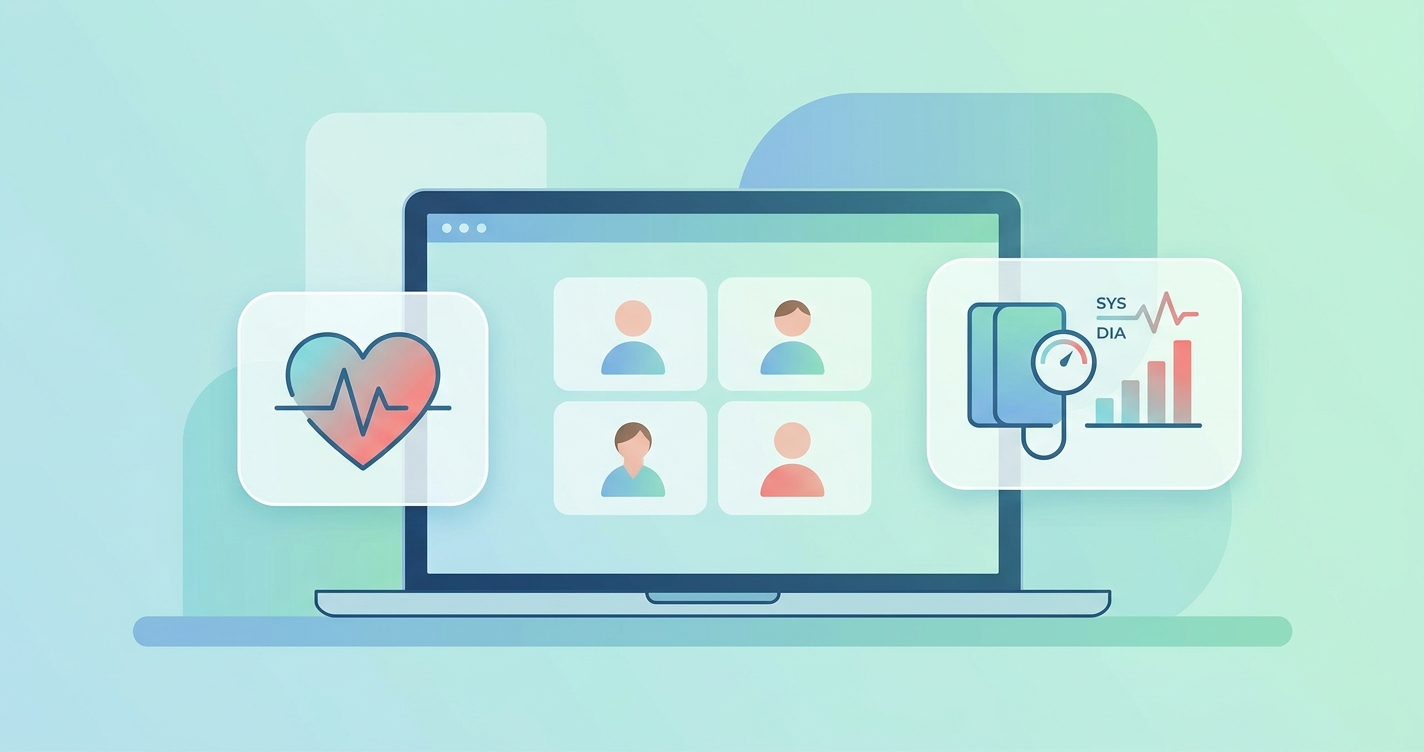
The widespread adoption of virtual care has fundamentally altered healthcare delivery, but the clinical depth of these remote encounters often falls short of in-person visits. While video calls have solved the access problem, they have created a new one: a clinical data gap. Providers can speak with and see their patients, but they are missing the objective physiological data needed for comprehensive assessment. The solution lies in the growing field of remote vitals telehealth technology, which encompasses a range of methods for checking a patient's vital signs from the comfort of their home, directly within a virtual care session. For health systems, bridging this data gap is the next critical step in maturing telehealth from a convenient alternative into a clinically robust care modality.
"Between 2019 and 2023, the utilization of Remote Patient Monitoring (RPM) services in the United States saw an increase of over 3,334%, with corresponding payments rising by 2,887%." - National Institutes of Health (2023)
The evolution of remote vitals in telehealth
Historically, obtaining vitals during a telehealth visit relied on the patient. They would manually report numbers from their own consumer-grade devices like a blood pressure cuff or thermometer. This approach, while better than nothing, presents significant challenges for health systems regarding data integrity, workflow integration, and patient adherence. The data is unverified, inconsistently available, and requires manual entry into the EHR.
The evolution of remote vitals telehealth is about moving from inconsistent, patient-reported data to verified, clinically relevant data streams that can be captured systematically. This involves two primary pathways: deploying connected health devices to the patient's home or using software-based solutions that use the patient's own device, such as a smartphone or laptop camera. The goal for virtual care program directors is to implement a solution that minimizes patient friction while maximizing clinical utility and integrating seamlessly into existing provider workflows.
| Feature | Patient Self-Reporting (Manual) | Connected Devices (RPM Kits) | Contactless Vitals (Camera-Based) | | :--- | :--- | :--- | :--- | | Patient Requirement | Owns and uses personal devices | Uses provider-supplied kit | Has a device with a camera | | Data Transmission | Verbal or manual text entry | Automatic via cellular/Bluetooth | Automatic via software | | Clinical Workflow | Manual data entry into EHR | Automated data flow to EHR/platform | Automated data flow to EHR/platform | | Data Verification | Unverified | Verified from a known device | Verified through software | | Scalability | High (no hardware) | Low (logistics and cost-intensive) | High (software-only deployment) | | Typical Use Case | Low-acuity, informational visits | High-risk chronic disease management | General virtual visits, pre-triage |
Industry applications for remote vitals
The integration of vital signs capture is not a one-size-fits-all solution. Its application varies based on the clinical context and patient population.
Chronic care management
For patients with conditions like hypertension, heart failure, or COPD, regular vitals monitoring is crucial. While traditional RPM programs that ship device kits have proven effective, they are often reserved for the highest-risk patients due to cost and logistics. Integrating remote vitals telehealth capture into routine virtual follow-up visits allows for more frequent data collection from a broader population, enabling earlier intervention.
Post-Discharge Monitoring
The transition from hospital to home is a vulnerable period. Remote vitals checks during post-discharge virtual visits can help clinicians identify early signs of complications, potentially reducing readmission rates. This provides a crucial data point that is otherwise missing between the hospital stay and the first in-person follow-up appointment.
Virtual triage and urgent care
In on-demand virtual care settings, objective data is essential for accurate triage. A patient's heart rate, respiratory rate, and heart rate variability can provide immediate insight into their level of distress and acuity. Capturing this data at the start of a virtual urgent care visit allows nurses and providers to more effectively route patients to the appropriate level of care.
Current research and evidence
The technology underpinning contactless, camera-based vital signs measurement is known as remote photoplethysmography (rPPG). It works by using a standard digital camera to detect subtle, imperceptible changes in the color of light reflected from a person's skin. These changes correspond to the volumetric fluctuations of blood in the microvascular tissue, allowing algorithms to calculate pulse, respiration, and other physiological parameters.
- Foundational academic work in the field was conducted by researchers like Poh, McDuff, and Picard at the MIT Media Lab around 2010, demonstrating the feasibility of measuring heart rate from webcam video.
- Since then, the technology has advanced significantly. A 2023 clinical study published in the Journal of Medical Internet Research by Theofanis et al. validated a software-based rPPG solution for pulse rate monitoring in cardiovascular disease patients, finding a mean absolute error of just 1.06 bpm compared to ECG.
- The application is expanding beyond heart rate. A 2022 meta-analysis of remote monitoring for respiratory conditions found that the practice was associated with improved health outcomes.
- Researchers are actively using deep learning and advanced signal processing to improve accuracy across diverse skin tones, low-light conditions, and instances of patient motion.
The future of at-home vitals capture
The trajectory for at-home vitals is moving toward seamless, integrated, and multi-modal data collection. For health systems, this means embedding data capture capabilities directly into the virtual care platforms their clinicians and patients already use. The focus will be on "invisible" measurement that does not require the patient to find, operate, or connect a separate peripheral device.
Camera-based rPPG technology is at the forefront of this trend. While heart rate, respiratory rate, and heart rate variability are widely available, ongoing research is intensely focused on bringing camera-based blood pressure measurement to a level of accuracy required for clinical use. As these software-only solutions mature, they offer a path to deploying vitals capture enterprise-wide without the logistical and financial burdens of hardware distribution, making objective data a standard component of every virtual visit.
Frequently asked questions
Q: Is this the same as Remote Patient Monitoring (RPM)? A: Not exactly. RPM typically refers to specific programs where health systems provide patients with a kit of medical devices (like BP cuffs, scales, glucometers) to monitor a chronic condition from home over a longer period. Getting vitals checked during a single virtual visit is a more episodic, real-time application designed to inform that specific encounter. Camera-based solutions can serve both use cases.
Q: What technology is used to check vitals through a phone or computer camera? A: The technology is called remote photoplethysmography (rPPG). It analyzes video from a standard camera to detect minute changes in skin color caused by blood flow. Advanced algorithms and AI process this signal to calculate vital signs like heart rate, respiratory rate, and heart rate variability.
Q: How does this data get into the health system's EHR? A: Leading solutions are designed for enterprise use and offer secure integration with major EHR systems like Epic and Cerner. The vital signs data is captured within the telehealth platform and can be configured to flow directly into the patient's chart, typically via standard interoperability protocols like FHIR or HL7v2, eliminating the need for manual transcription.
As health systems strategize to enhance the clinical value of their virtual care offerings, integrating objective patient data is the clear next step. Circadify is actively working with provider organizations to embed clinical-grade data capture directly into virtual visit workflows. To learn more about designing and deploying camera-based vitals programs, explore our solutions for health systems at circadify.com/solutions/telehealth.