How Specialty Clinics Use Televisit Vitals for Remote Follow-Up
Specialty clinics are leveraging televisit vitals to enhance remote follow-up appointments, improving patient outcomes and operational efficiency.
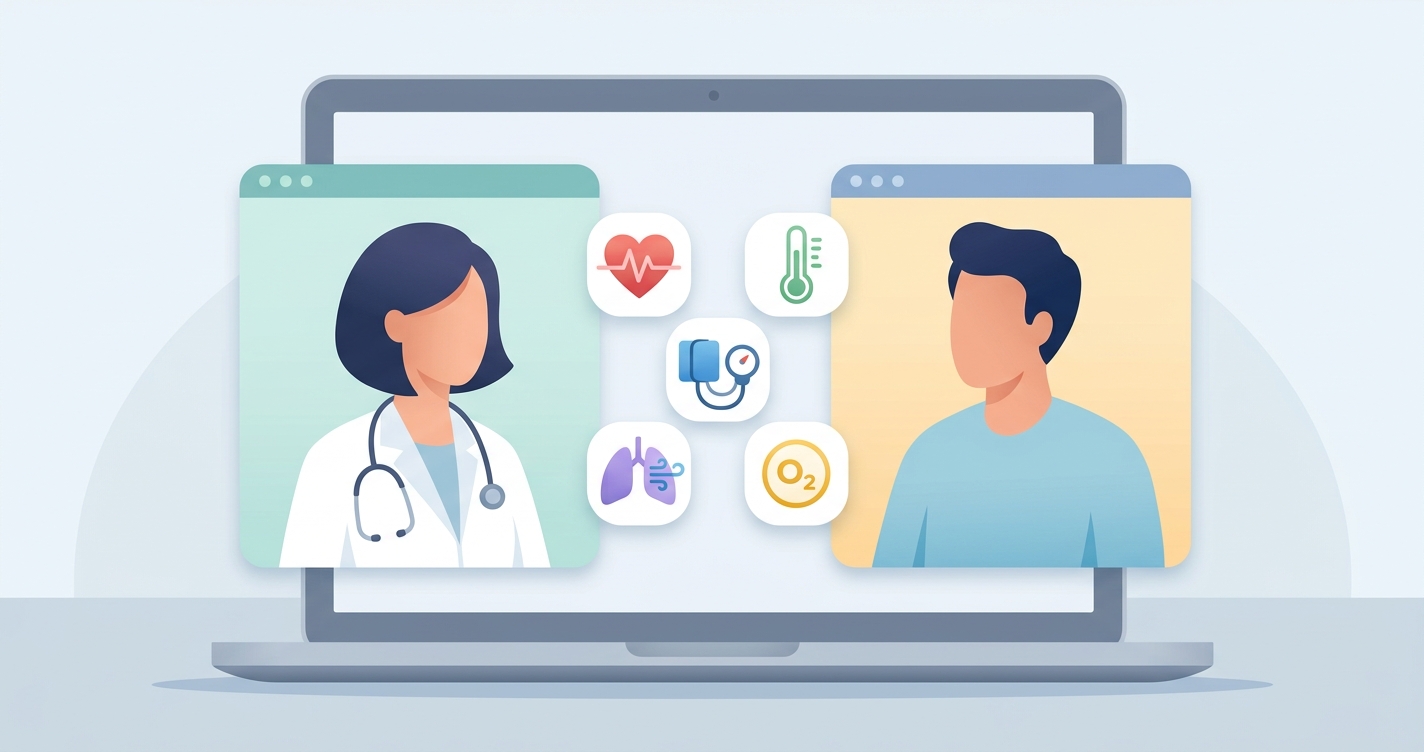
Specialty clinics are increasingly shifting their virtual care strategies from episodic, urgent needs to longitudinal management of chronic conditions. This evolution necessitates a more sophisticated approach to remote encounters, one that integrates objective clinical data into the virtual visit workflow. As telehealth stabilizes as a permanent fixture in care delivery, the focus has turned to enhancing the clinical quality and diagnostic depth of these remote appointments. For specialists managing complex patient panels, the ability to gather vital signs during a televisit is proving to be a critical component for effective remote follow-up care.
"By 2025, an estimated 71 million Americans are expected to use remote patient monitoring, representing about 26% of the population. This adoption is driven by the need for better chronic disease management, a key function of specialty clinics."
- IntuitionLabs, "Remote Patient Monitoring in the United States: 2025 Landscape Report" (2023)
The core role of data in specialty clinic televisit vitals follow up
The primary challenge for specialists in a remote setting is bridging the physical distance to make an informed clinical assessment. While patient-reported symptoms are essential, objective data from vital signs provide a more complete picture of a patient's physiological status. Incorporating real-time, clinical-grade vital signs into a specialty clinic televisit vitals follow up transforms the encounter from a subjective conversation into a data-driven clinical assessment. This is particularly crucial for managing conditions where subtle physiological changes can indicate a significant shift in health status, such as in cardiology, endocrinology, and pulmonology. The ability to track trends in heart rate, blood pressure, respiratory rate, and other key metrics over time allows clinicians to make more proactive and precise treatment adjustments without requiring an in-person visit. Research from The Permanente Journal has shown that access to such data improves clinical decision-making and can lead to better patient outcomes.
| Feature | Traditional In-Person Follow-Up | Televisit with Vitals Capture | | :--- | :--- | :--- | | Clinical Data | Vitals captured at a single point in time in a clinical setting. | Real-time vitals captured in the patient's home environment, allowing for trend analysis. | | Patient Experience | Requires travel, time off work, and potential exposure in waiting rooms. | High convenience, reduced travel burden, and increased access to specialists. | | Operational Efficiency | Higher overhead, rigid scheduling, and physical room capacity limits. | Increased patient throughput, flexible scheduling, and lower operational costs. | | Data Context | "White coat" effect can skew blood pressure and heart rate readings. | Vitals are taken in a familiar setting, providing more representative baseline data. |
Key applications in specialty care
The integration of vital signs into virtual follow-ups is not a one-size-fits-all approach. Different specialties use this capability to address specific clinical needs.
- Cardiology: For post-discharge follow-ups or managing chronic heart failure, remote monitoring of blood pressure, heart rate, and oxygen saturation is critical. It allows cardiologists to adjust medications and intervene before a patient's condition deteriorates, potentially reducing hospital readmissions by up to 38% according to some studies.
- Endocrinology: Managing diabetes often involves tracking how blood glucose levels affect cardiovascular metrics. Televisit vitals, combined with CGM data, give endocrinologists a holistic view of a patient's metabolic health, enabling finer control over treatment plans.
- Pulmonology: For patients with COPD or asthma, tracking respiratory rate and oxygen saturation during a virtual follow-up can help pulmonologists assess the effectiveness of inhaler therapies and other treatments, especially in response to environmental triggers in the patient's home.
Industry Applications
Cardiovascular disease management
Cardiology practices are using televisit vitals to create more continuous care models. Following a procedure like a stent placement or for ongoing management of hypertension, a virtual follow-up that includes a real-time blood pressure reading provides invaluable data. Dr. Michael McConnell, a cardiologist and telehealth researcher, has noted that this data stream helps clinicians titrate medications more effectively than relying on sporadic, in-clinic readings.
Post-Operative Follow-Up
Surgical specialties are adopting televisit vitals for post-operative checks. A virtual visit two weeks after a procedure can be significantly enhanced with vital signs data to screen for potential complications like infection (indicated by elevated heart rate) or hemodynamic instability. This approach reduces the need for patients, who are still recovering, to travel for a short check-in.
Chronic respiratory care
For pulmonology, the ability to measure respiratory rate during a televisit is a significant advancement. This data helps clinicians assess a patient's work of breathing and response to therapy in real-time, offering clues about their underlying pulmonary function that a simple conversation cannot.
Current research and evidence
The evidence base supporting the use of remote monitoring and televisit vitals is growing. A 2022 systematic review published in The Permanente Journal by healthcare practitioners found that remote patient monitoring (RPM) platforms lead to more data-driven clinical decisions and improved patient self-management. The study highlighted that while challenges like technology barriers and data overload exist, the benefits are substantial. Similarly, FAIR Health's "Telehealth Trends: February 2024" report indicates that while overall telehealth use has stabilized, the acuity and complexity of cases managed remotely are increasing, driven by technologies that provide clinical data like vital signs. This trend is most pronounced in specialties that manage chronic conditions, where regular, data-rich follow-ups are standard practice.
The future of televisit vitals in specialty clinics
The trajectory for specialty care involves deeper integration of virtual tools that offer clinical-grade data. The technology is moving toward more seamless, software-based solutions that can capture vital signs using the camera on a patient's existing device, such as a smartphone or laptop. This removes the barrier of requiring patients to own or operate separate peripheral devices. As these technologies mature and their data becomes more integrated into EHR workflows, the specialty clinic televisit vitals follow up will become a standard component of care. This will enable a more proactive, personalized, and efficient model for managing chronic disease, shifting the focus from reactive, in-person visits to continuous, data-enabled remote care.
Frequently asked questions
Q: How are vital signs captured during a televisit? A: Vital signs can be captured through various methods. Some approaches use connected peripheral devices like blood pressure cuffs or pulse oximeters that transmit data to the virtual visit platform. Newer, software-only methods use the camera on the patient's smartphone or computer to measure metrics like heart rate and respiratory rate via remote photoplethysmography (rPPG).
Q: Is the data from televisit vitals accurate enough for clinical decisions? A: Yes, when using technologies designed for clinical use. Many systems are engineered to produce data with a level of accuracy comparable to traditional in-clinic devices. The key is for health systems to select platforms that have validated their technology against clinical standards. The context of the reading, taken in the patient's home environment, can also provide valuable insights that are different from in-clinic measurements.
Q: What is the primary benefit for specialty clinics? A: The main benefit is the ability to make data-driven clinical decisions during a remote follow-up. This enhances the quality of care, improves efficiency by allowing clinicians to see more patients, and provides a more convenient experience for patients managing chronic conditions. It allows for the collection of objective data between in-person visits, supporting proactive treatment adjustments.
As specialty clinics continue to evolve their virtual care programs, the integration of objective clinical data is the next logical step. Technologies that enable the capture of vital signs during a televisit are addressing this need, paving the way for a more robust and effective model of remote care. Circadify is at the forefront of this space, offering solutions that seamlessly integrate camera-based vitals capture into telehealth workflows. To learn more about implementing these capabilities in your health system, explore our clinical workflows and request a demo at circadify.com/solutions/telehealth.