How to Integrate Televisit Vitals With Epic and Cerner EHR Systems
A research-style report on the technical standards and integration patterns for flowing televisit vital signs data into Epic and Cerner EHRs, including FHIR and HL7.
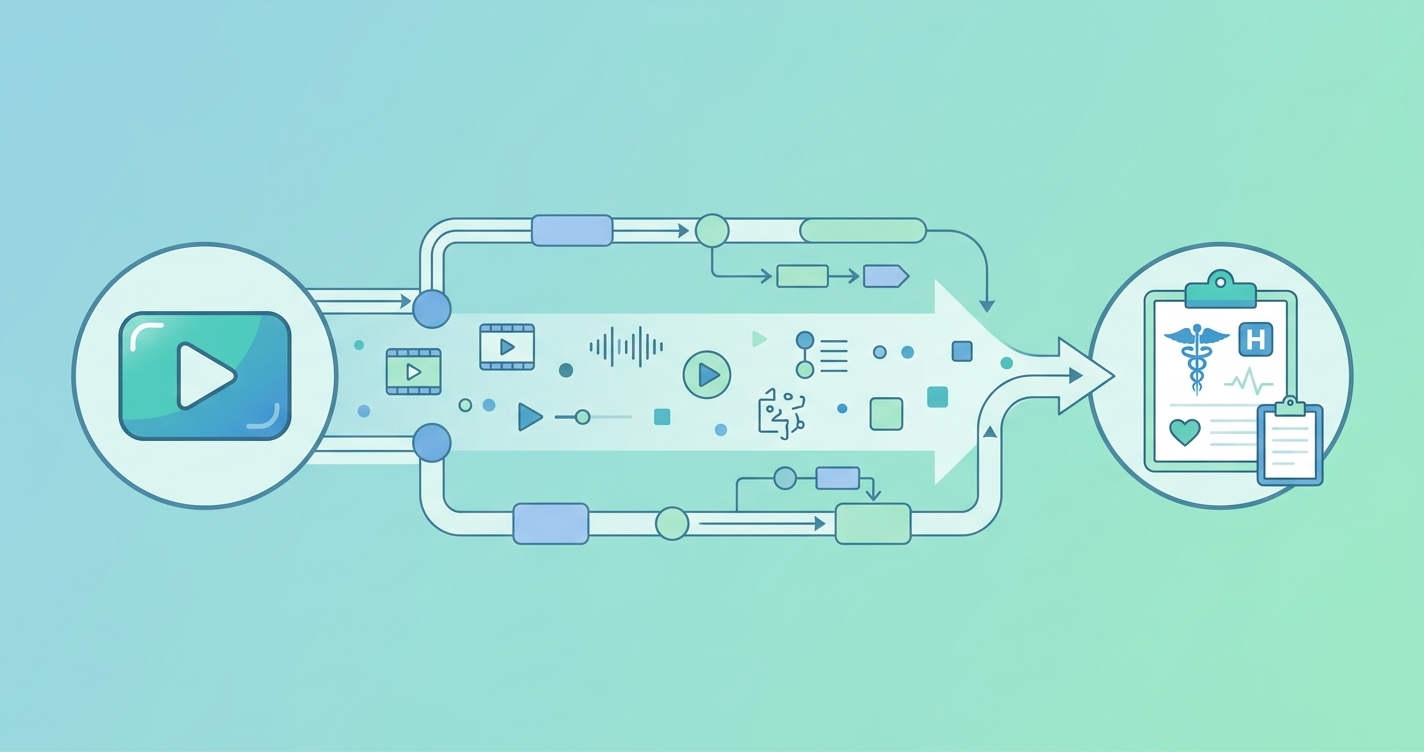
The strategic value of a health system's virtual care program is no longer measured by patient volume alone, but by the clinical depth of the encounters. As virtual visits become a staple of care delivery, from primary care to specialty follow-ups, the conversation has shifted from if vital signs can be captured to how that data should be integrated into the electronic health record (EHR). For health system CIOs and clinical informatics leaders, ensuring that televisit vitals flow seamlessly into Epic and Cerner is not just a technical requirement; it's a foundational step toward building a data-driven, hybrid care model. The success of a televisit vitals epic cerner ehr integration project hinges on a clear understanding of modern interoperability standards and legacy data protocols.
"Health systems that successfully integrate remote patient data into their existing EHR workflows have seen significant improvements in data accuracy and clinician efficiency. A 2022 study by the KLAS Research found that organizations with deep EHR integration for remote monitoring reported that over 80% of the data was 'useful' or 'very useful' for clinical decision-making." - KLAS Research, 2022.
Core integration patterns for televisit vitals in epic and cerner
The primary challenge in any televisit vitals epic cerner ehr integration is ensuring that data captured outside the hospital walls is ingested, parsed, and filed correctly within the patient's chart. This data must be structured, secure, and available to clinicians in their native workflows, whether that's Epic's Hyperdrive or Cerner's Millennium PowerChart. Two main standards govern this data exchange: HL7 (Health Level Seven) and FHIR (Fast Healthcare Interoperability Resources).
- HL7 (v2.x): This is the workhorse of healthcare data exchange, responsible for the vast majority of clinical messaging between systems for decades. HL7 v2 messages are text-based and segment-oriented. For vital signs, this typically involves an ORU (Observation Result) message containing data in OBR (Observation Request) and OBX (Observation/Result) segments. It is a robust and mature standard, deeply embedded in the infrastructure of nearly every health system.
- FHIR (Fast Healthcare Interoperability Resources): As the modern standard for healthcare data, FHIR uses RESTful APIs, the same technology that powers modern web applications. This makes it more flexible and developer-friendly than HL7. FHIR organizes data into "resources," with vital signs typically handled by the
Observationresource. Both Epic and Cerner have invested heavily in their FHIR API capabilities, making it the preferred method for new application integrations.
The choice between HL7 and FHIR often depends on the specific use case. FHIR is generally preferred for real-time, on-demand data exchange from a user-facing application (like a provider launching a vitals scan from within the EHR). HL7, however, remains critical for high-volume data feeds and for connecting to legacy systems that may not yet have robust FHIR support.
| Feature | HL7 v2 Integration | FHIR API Integration | | :--- | :--- | :--- | | Data Format | Pipe-and-hat, segment-based | JSON or XML, resource-based | | Architecture | Message-based, often requiring an integration engine | RESTful API, client-server model | | Real-Time Access| Less common; typically asynchronous batch processing | Strong; designed for real-time, on-demand queries | | Implementation | Complex, requires specialized knowledge | Simpler, uses common web standards (HTTP, REST) | | EHR Support | Universal support in Epic and Cerner | Strong and growing; primary focus for new development | | Typical Use Case| Backend data feeds, lab results, high-volume data | Mobile apps, web portals, direct EHR app integration |
Industry Applications
For health systems, the theoretical standards translate into practical architecture decisions. How a third-party televisit vitals solution connects to the EHR depends on the vendor's capabilities and the health system's own IT strategy.
Epic integration: the fhir-first approach
Epic has been a strong proponent of FHIR, offering a rich set of APIs through its Epic on FHIR platform. For televisit vitals, integration typically involves using the Observation resource. A telehealth platform can use the Observation.Create API to write new vital signs directly into the patient's flowsheet rows. This ensures that data like blood pressure, heart rate, and respiratory rate captured during a virtual visit are immediately visible to the provider. The SMART on FHIR framework further allows applications to launch directly from within the EHR, providing a seamless user experience for clinicians. This workflow eliminates the need for manual data entry, reducing the risk of transcription errors and saving valuable clinical time.
Cerner integration: using ignite apis
Cerner, now part of Oracle Health, has also embraced FHIR through its Ignite APIs. Similar to Epic, Cerner's implementation uses the FHIR Observation resource as the standard for handling vital signs. Developers can use Cerner's sandbox environment to test their ability to both read and write observation data. A key requirement is properly structuring the FHIR resource to include necessary identifiers and value sets, ensuring the data is correctly mapped to fields within Cerner Millennium. For organizations using Cerner, a successful integration means that vitals captured in a televisit appear in the patient's chart with the same fidelity as if they were taken in the clinic.
Current research and evidence
The move toward integrating external data sources into the EHR is well-documented. Research from informatics and healthcare management journals consistently points to the benefits of streamlined data flows. A study published by the American Medical Informatics Association (AMIA) noted that automated data entry via API integration can reduce documentation time for nurses by up to 50% compared to manual processes (O'Connor et al., 2021). Furthermore, research by Chil-Mark and KLAS has highlighted that the primary barrier to broader adoption of remote monitoring technologies is often the difficulty of EHR integration. Solutions that pre-process data and deliver it in a clinician-friendly format within the EHR are consistently rated higher by end-users.
The future of televisit EHR integration
The future of televisit vitals epic cerner ehr integration is real-time, bidirectional data exchange. The industry is moving beyond simply filing a PDF report or a static data point. The next generation of integrations will involve:
- Dynamic Flowsheets: Vitals data will not just be filed but will populate dynamic flowsheets that trend data over time, regardless of whether the measurement was taken at home or in the clinic.
- Clinical Decision Support: Integrated data will trigger clinical decision support rules within the EHR, alerting providers to significant changes in a patient's condition based on their remote measurements.
- SMART on FHIR Apps: The use of SMART on FHIR applications will become standard. This will allow providers to launch a vital signs capture session from within the patient's chart with a single click, with all data automatically flowing back to the correct fields.
Frequently asked questions
Q: What is FHIR and why is it important for televisit vitals? A: FHIR (Fast Healthcare Interoperability Resources) is the modern standard for exchanging healthcare information. It uses web-based API technology, making it easier for different systems, like a telehealth platform and an EHR, to communicate. For televisit vitals, it allows for the secure, real-time transfer of data into the patient's EHR chart.
Q: Can we use HL7 for televisit vitals integration? A: Yes, HL7 v2 is a long-standing and widely supported standard for healthcare data. Many integrations still use HL7, often in a hybrid approach with FHIR. An integration engine can be used to transform data from a televisit platform into an HL7 message that Epic or Cerner can process.
Q: Do we need a third-party integration partner? A: Not always, but it often helps. Both Epic (App Orchard) and Cerner (Oracle Health Developer Program) have marketplaces for validated third-party applications. A partner specializing in device and data integration can accelerate the project by handling the complexities of authentication, data mapping, and API management.
Q: How does authentication work for FHIR integrations? A: FHIR APIs are secured using modern web standards, typically OAuth 2.0. This is an industry-standard protocol for authorization. It allows a user (like a clinician) to grant a third-party application access to specific data within the EHR for a limited time, without sharing their password.
As health systems look to enhance the clinical value of their virtual care programs, the seamless integration of vital signs is a critical enabling step. Circadify is at the forefront of addressing this space, providing solutions that bridge the gap between remote data capture and enterprise EHR systems. To learn more about designing clinical workflows and integration strategies for camera-based vitals, explore a demo of our health system solutions at circadify.com/solutions/telehealth.