How to Train Providers on Camera-Based Vitals in Telehealth
Effective training is critical for provider adoption of camera-based vital signs in telehealth. Discover key strategies for building a successful training program.
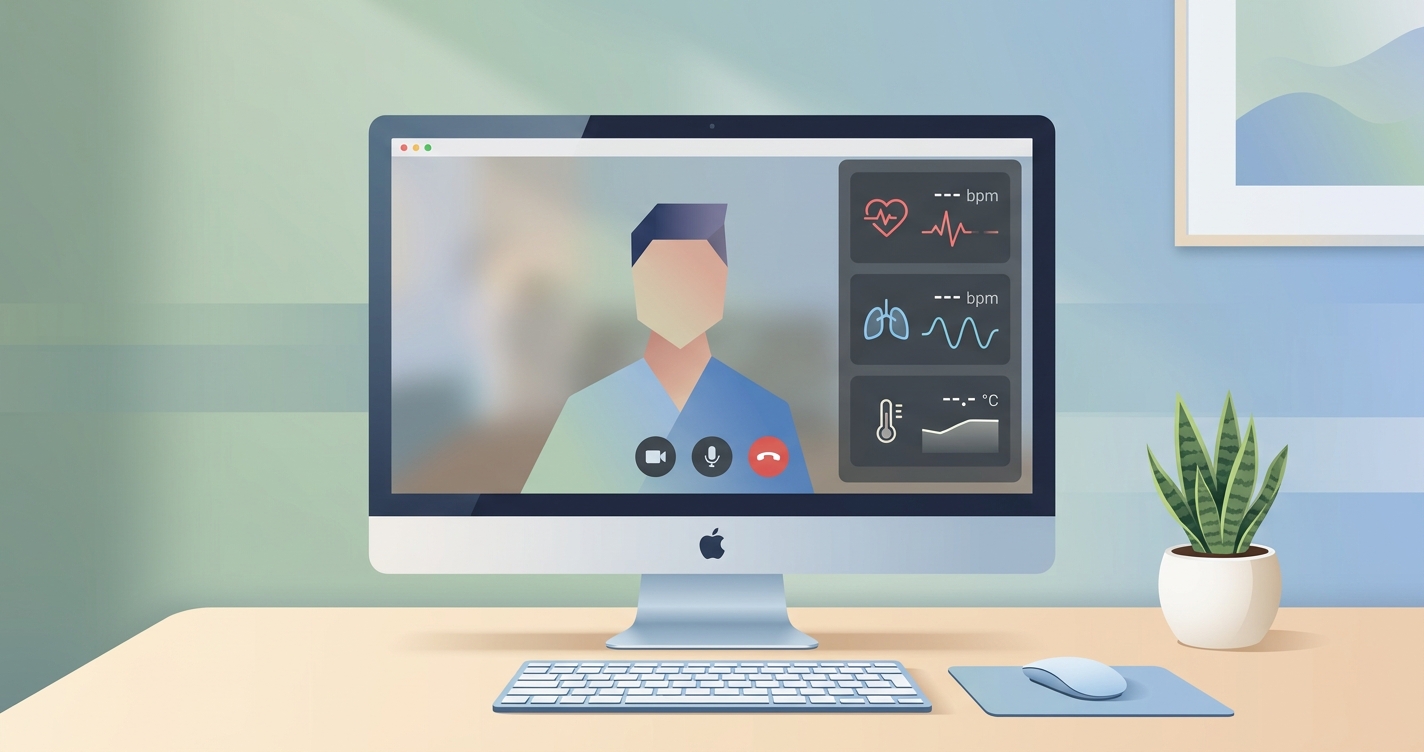
The expansion of virtual care has permanently altered the delivery of healthcare, moving beyond simple video calls to incorporate sophisticated clinical data capture. As health systems integrate camera-based technology to measure vital signs like heart rate and respiratory rate during televisits, a new challenge emerges: preparing providers to use these tools effectively. Simply deploying the technology is not enough; a structured approach is needed to train providers on camera-based vitals in telehealth to ensure clinical adoption, data quality, and improved patient outcomes. This requires a shift in thinking from technology implementation to clinical workflow integration, focusing on the human factors that drive success.
"A 2021 study found that telehealth adoption is significantly associated with the type of telehealth education providers receive, including vendor, online, written instructions, and on-the-spot training. Lack of training is a recognized barrier to telehealth adoption among healthcare providers."
- Telehealth Education: Impact on Provider Experience and Adoption, National Institutes of Health (NIH), 2021
Training providers on camera-based vitals in telehealth
Successfully integrating camera-based vital signs into virtual care hinges on comprehensive provider training. This goes beyond basic software tutorials. The goal is to build clinical confidence and proficiency, ensuring the technology becomes a seamless part of the provider's diagnostic toolkit. Effective training programs address not just the "how-to" but the "why," grounding the technology in the context of improving clinical quality and patient safety. To train providers on camera vitals in telehealth, organizations must develop a curriculum that covers the underlying technology, clinical workflow adjustments, and patient communication strategies.
The curriculum should begin with the fundamentals of photoplethysmography (PPG), the science behind most camera-based measurements. Providers do not need to be engineers, but a high-level understanding of how the technology works, analyzing subtle changes in light reflection from the skin to detect blood flow, builds trust and helps them troubleshoot potential issues. It also enables them to explain the process confidently to patients, which is crucial for gaining consent and cooperation. The training must also clearly define the technology's scope, including which vital signs can be measured and their expected accuracy in various clinical scenarios.
Traditional vs. camera-based vitals: new skills for telehealth
| Skill Category | Traditional Telehealth (Video/Audio Only) | Telehealth with Camera-Based Vitals | | :--- | :--- | :--- | | Patient Assessment | Relies on subjective patient reporting and visual cues. | Augments subjective data with objective physiological measurements. | | Technical Setup | Basic A/V check: "Can you see and hear me?" | Technical coaching: Guiding patients on lighting, camera distance, and stability. | | Data Interpretation | Focus on verbal history and observable symptoms. | Interpretation of real-time data streams (e.g., heart rate variability). | | Clinical Workflow | Linear conversation flow. | Includes a dedicated "capture phase" requiring patient instruction. | | Patient Communication| Explaining limitations of a remote exam. | Explaining the purpose and process of data capture to build trust. |
Core components of a training program
A successful training program is multifaceted, blending different learning modalities to accommodate provider schedules and learning styles.
- Didactic Learning: Foundational modules explaining the science of rPPG, device-specific instructions, and data privacy/security protocols.
- Simulation and Drills: Hands-on practice in a sandbox environment. This allows providers to get comfortable with the software interface and practice guiding mock "patients" through the capture process.
- Peer-to-Peer Education: using clinical champions who have successfully integrated the technology into their practice to mentor their colleagues.
- Workflow-Specific Guides: Quick-reference job aids and checklists for specific clinical workflows, such as nursing triage or post-discharge follow-ups.
- Ongoing Support: Establishing clear channels for providers to ask questions and report technical issues.
Industry Applications
The approach to training will vary based on the clinical context. Health system leaders must tailor the program to meet the needs of different departments.
Primary and urgent care
In high-volume settings, training should focus on speed and efficiency. Providers need to learn how to incorporate a vitals check into a standard 15-minute televisit without disrupting the flow. The emphasis here is on rapid assessment and identifying red flags that may require an in-person escalation.
Specialty and chronic care
For specialties like cardiology or endocrinology, the training is more focused on longitudinal data. Providers need to understand how to use trend data from multiple virtual visits to manage chronic conditions. The training would cover data interpretation, including how to spot subtle but significant changes over time.
Nursing and clinical support staff
Nurses and medical assistants are often the first point of contact in a virtual visit. Their training should empower them to manage the technical setup and patient coaching for the vitals capture, freeing up the physician or advanced practice provider to focus on clinical decision-making. This aligns with a team-based care model and optimizes clinician time.
Current research and evidence
The importance of training in the adoption of new health technologies is well-documented. Research based on the Technology Acceptance Model (TAM) consistently shows that "perceived ease of use" and "perceived usefulness" are primary drivers of adoption. A 2021 study published by PLOS Digital Health on physician telemedicine uptake confirmed that a lack of adequate training was a significant barrier. When providers feel unprepared or when the technology feels cumbersome, they are less likely to use it, regardless of its potential benefits. Therefore, to effectively train providers on camera vitals in telehealth, the training must directly address these factors by demonstrating the clinical value (usefulness) and simplifying the operational workflow (ease of use).
The future of provider training for virtual care
As camera-based diagnostics evolve to include more advanced measurements like blood pressure and blood oxygen saturation, provider training will need to adapt continuously. The future of training will likely involve more sophisticated simulation tools, perhaps using AI-driven virtual patients that can present a variety of technical and clinical challenges. Furthermore, training will become more integrated into residency and continuing medical education programs, establishing camera-based assessment as a core competency for all clinicians. The goal is for the technology to become as standard and intuitive as a digital stethoscope, enabling providers to deliver higher-quality, data-informed care to every patient, regardless of their location.
Frequently asked questions
Q: How long does it take to train a provider on camera-based vitals? A: Basic proficiency can often be achieved in a single 60-90 minute session that includes both didactic learning and hands-on practice. However, true mastery and seamless workflow integration may take several weeks of consistent use, supported by peer coaching and accessible reference materials.
Q: What is the biggest challenge in training providers on this new technology? A: The primary challenge is often not the technology itself but overcoming inertia and changing established habits. Providers are busy, and any new step in the workflow can feel like a burden. The training must compellingly answer the "what's in it for me and my patient?" question, emphasizing gains in clinical insight and efficiency.
Q: How do you measure the effectiveness of the training program? A: Effectiveness can be measured through a combination of metrics: provider adoption rates (how many providers are using the tool regularly), data quality (rates of successful vitals capture), provider satisfaction surveys, and, ultimately, clinical outcomes and quality metrics.
The successful deployment of any new clinical technology is as much about people as it is about software. By investing in a robust and thoughtful training program, health systems can empower their providers, improve the quality of virtual care, and unlock the full potential of camera-based diagnostics. Circadify is at the forefront of this transformation, working with health systems to address these challenges with scalable, EHR-integrated solutions. To learn more about designing clinical workflows for camera-based vitals, you can request a health system demo at circadify.com/solutions/telehealth.