Is my elderly mom's video doctor visit really checking her heart?
Explore how video doctor visits can now capture essential vital signs like heart rate using only the device camera, ensuring comprehensive care for elderly patients.
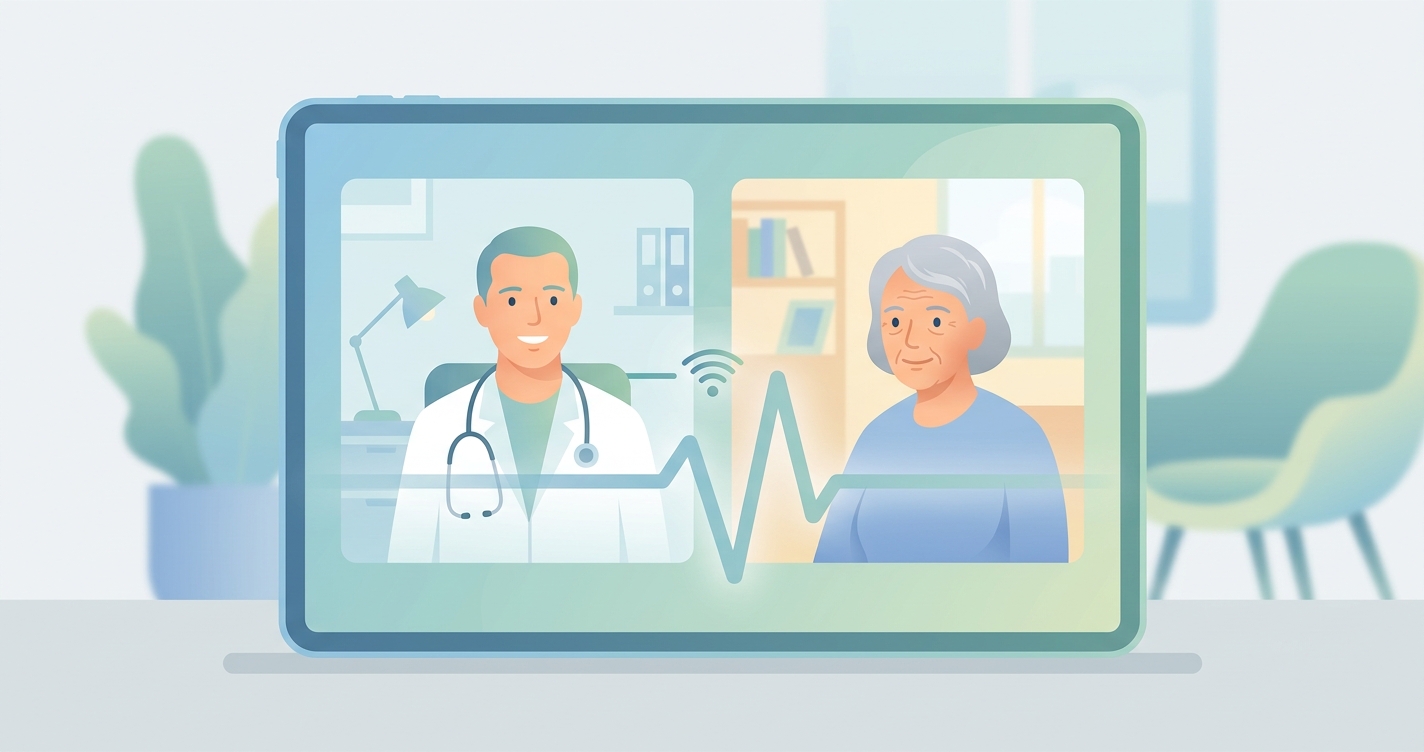
The shift to virtual healthcare has been a lifeline for many, especially for providing consistent care to elderly parents. Yet, as a caregiver, it's natural to wonder if a video call can truly substitute for an in-person visit. You might ask yourself, "Is the doctor really getting the full picture of my mom's health through a screen?" Specifically, how can they check her heart and other crucial indicators without any physical instruments? The concern is valid, but technology is rapidly closing this data gap. The ability to measure vital signs in video doctor visits is no longer a future concept; it's a clinical reality being deployed by health systems today.
"The global Remote Patient Monitoring (RPM) market was estimated at $14 billion in 2023 and is projected to reach $41.7 billion by 2028, growing at a compound annual growth rate of 20.1%."
How vital signs in video doctor visits are measured
The technology that enables a doctor to measure vitals through a video camera is called remote photoplethysmography (rPPG). While the name is complex, the principle is straightforward. It works by using the standard camera on a smartphone, tablet, or computer to detect subtle, imperceptible changes in the color of a person's skin.
Here is a breakdown of the process:
- Each time the heart beats, it pumps blood through the body. This creates a pulse of blood that travels through the vessels just beneath the skin.
- Blood absorbs light. As the volume of blood in these vessels increases and decreases with each heartbeat, the amount of light reflected by the skin changes.
- These variations in reflected light are invisible to the naked eye. However, a digital camera's sensor is sensitive enough to pick them up.
- Sophisticated algorithms analyze the video feed of the patient's face in real time. They isolate the tiny color changes caused by blood flow from other "noise" like changes in room lighting or small movements.
- By analyzing the frequency and pattern of these changes, the system can calculate key vital signs, primarily heart rate and respiratory rate.
This process is entirely software-based and requires no special equipment or wearables for the patient. It uses the same foundational principle as the pulse oximeters that clip onto a fingertip, but it does so remotely and without contact.
| Parameter | Traditional In-Person Vitals | Video-Based Vitals (rPPG) | | --- | --- | --- | | Method | Manual measurement by a clinician using physical instruments. | Algorithmic analysis of video stream from a standard camera. | | Equipment | Stethoscope, sphygmomanometer (blood pressure cuff), thermometer, pulse oximeter. | Smartphone, tablet, or computer with a camera. No other hardware needed. | | Patient Burden | Requires physical presence, can cause anxiety ("white-coat syndrome"). | Can be done from the comfort of home, reducing patient stress. | | Data Capture | Data is often manually entered into the Electronic Health Record (EHR). | Data can be captured digitally and integrated directly into the EHR. |
Clinical applications for geriatric telehealth
For elderly patients, who often manage multiple chronic conditions and face mobility challenges, integrating vital signs in video doctor visits has significant implications for the quality and continuity of care.
Routine check-ups and follow-up
For regular appointments, obtaining a baseline set of vitals like heart rate and respiratory rate provides the clinician with objective data to supplement the patient's subjective reporting. This adds a layer of clinical confidence to assessments of medication tolerance or general well-being.
Post-Discharge Monitoring
The period after a hospital stay is critical. Video-based vitals allow for more frequent and convenient check-ins to ensure the patient is recovering as expected. A stable heart rate and respiratory rate can be key indicators that a patient is not developing common post-discharge complications.
Chronic condition management
Managing conditions like congestive heart failure or COPD requires ongoing monitoring. While rPPG does not replace in-hospital diagnostics, it provides trend data over time. A clinician can track a patient's resting heart rate or respiratory rate across multiple virtual visits, spotting patterns that may warrant an in-person evaluation or a change in the treatment plan.
Current research and evidence
The accuracy of this technology is a primary concern for clinical adoption. Multiple studies have validated the performance of camera-based measurements against traditional medical devices. A 2023 study published in a journal by the Multidisciplinary Digital Publishing Institute (MDPI) focused specifically on patients with cardiovascular disease. The research, led by W.P.M.H. Brekelmans and colleagues, found a high degree of agreement between the rPPG-derived pulse rate and measurements from an electrocardiogram (ECG), concluding it is a viable method for remote monitoring.
Researchers consistently find that under the right conditions, good lighting and minimal patient motion, the accuracy for heart rate is often within 3-5 beats per minute of a standard ECG reading. Similarly, respiratory rate measurements show strong correlation with data from contact-based sensors. While the technology is sensitive to factors like poor lighting and excessive movement, ongoing advancements in machine learning algorithms are making the systems more robust and adaptable to real-world conditions.
The future of remote geriatric care
The capability to measure vital signs in video doctor visits is foundational for the future of virtual geriatric care. As the technology matures, the range of measurable biomarkers is expanding. The next frontier includes contactless measurement of blood pressure, oxygen saturation, and heart rate variability (HRV), which can provide insights into a patient's stress levels and autonomic nervous system function.
For health systems, the ability to seamlessly integrate this objective data into the patient's electronic health record (EHR) during a virtual visit is transformative. It turns a standard video call into a clinically meaningful, data-rich encounter. This enhances diagnostic confidence, enables more proactive care management, and ultimately improves the quality and accessibility of care for elderly patients everywhere.
Frequently asked questions
Q: Can this technology really replace a nurse checking vitals in person?
A: In many routine situations, it can provide the necessary data for a clinical assessment. For emergent or complex cases, an in-person visit remains essential. Think of it as a powerful new tool that adds crucial information to a virtual visit, making it more comprehensive than a simple conversation.
Q: Does my mom need any special equipment for this to work?
A: No. That is the primary advantage of this technology. It uses the existing camera on her smartphone, tablet, or laptop. The health system's telehealth platform has the software integrated, so no action is required from the patient other than joining the video call.
Q: Is the video data from the visit saved or stored to get the vitals?
A: No. The process happens in real time. The algorithms analyze the video stream live to extract the physiological signals. The video itself is not stored or recorded for this purpose, and the process is designed to be compliant with patient privacy regulations like HIPAA. Only the resulting vital sign data (e.g., "Heart Rate: 72 bpm") is transmitted to the clinician and saved in the medical record.
The evolution of telehealth is about more than just convenience; it's about enriching the clinical value of every remote encounter. Knowing that your mother's physician can gather objective data like her heart rate during a video call can provide significant peace of mind. For providers and health systems, the ability to capture this data is becoming a new standard of care. Circadify is at the forefront of this shift, providing the technology to integrate seamless, camera-based vital signs into any telehealth workflow. To learn more about how these solutions enhance clinical confidence and patient outcomes, explore our work with leading health systems at circadify.com/solutions/telehealth.