
Can a camera from my phone tell my doctor if my fever is dangerous for my baby?
A clinical informatics review of phone camera fever detection accuracy, pediatric thermal limits, and how temperature signals fit into televisit vitals workflows.
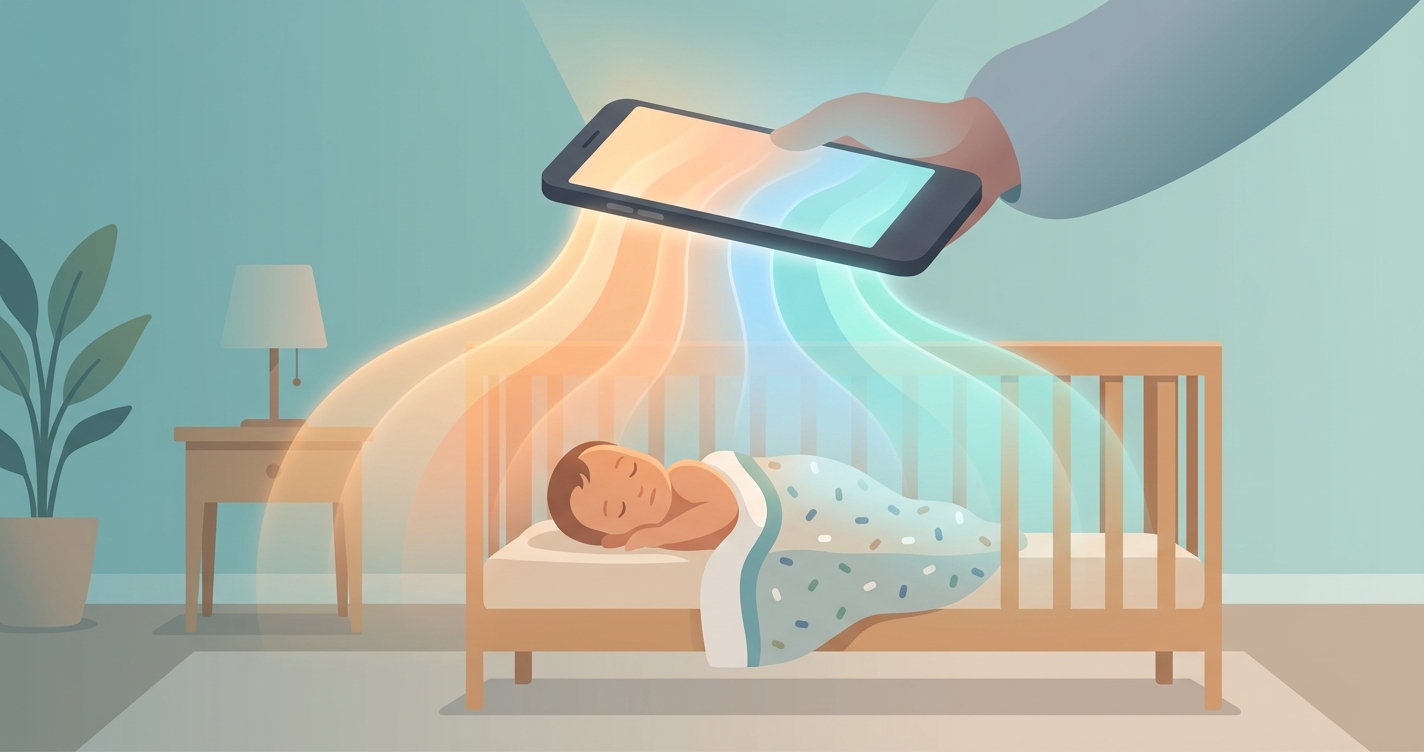
When a parent points a phone at a feverish infant at 2 a.m. and asks whether the reading is safe, they are asking a question that clinical informatics teams now have to answer at scale. Phone camera fever detection has moved from a pandemic-era curiosity to a feature parents expect inside virtual care apps, yet the gap between a consumer thermal snapshot and a clinically defensible temperature remains wide. For health system CIOs and virtual care program directors building pediatric televisit pathways, the relevant work is not deciding whether cameras can sense heat, but defining where camera-derived temperature signals can be trusted, where they trigger escalation, and how they enter the record without creating liability.
A 2023 evaluation of a popular smartphone thermal camera attachment reported a mean bias of -1.42 degrees C against a reference thermometer, with 95 percent limits of agreement stretching from -4.44 to +1.60 degrees C, an error margin an order of magnitude wider than clinical fever screening tolerates.
What phone camera fever detection actually measures
The phrase phone camera fever detection covers at least three distinct technologies, and conflating them is the first mistake informatics teams make during vendor review. The first is a clip-on thermal infrared camera that captures emitted radiation from the skin surface. The second is software that estimates temperature from a standard RGB camera feed, often paired with facial detection. The third, less obvious, repurposes a phone's internal sensors rather than its lens. A 2023 University of Washington project called FeverPhone, led by researchers in the UbiComp Lab, used the device's existing battery temperature sensors and touchscreen as crude thermistors, reaching an average error near 0.23 degrees C, inside the roughly 0.5 degrees C window clinicians consider acceptable. That result is promising, but it required skin contact with the screen, not a contactless camera shot across a crib.
The clinical problem is that pediatric fever decisions hinge on tenths of a degree and on context. A surface skin reading is not a core temperature. Ambient air, sweat, recent crying, blankets, and the angle of the lens all shift a thermal estimate. For an infant under three months, where a rectal temperature of 38.0 degrees C is the threshold that often mandates an in-person sepsis workup, a tool that under-reads by more than a degree is not a convenience, it is a missed escalation.
How camera and non-contact methods compare for pediatric fever
The table below summarizes how the main contactless and near-contact temperature approaches perform against the needs of a pediatric televisit, drawing on peer-reviewed accuracy data discussed later in this report.
| Method | Reported accuracy vs reference | Pediatric sensitivity concern | Best clinical role | | --- | --- | --- | --- | | Clip-on smartphone thermal camera | Mean bias around -1.42 C, wide limits of agreement | High false-negative risk in infants | Visual triage cue only, not a numeric vital | | RGB camera plus software estimation | Variable, environment dependent | Unvalidated for under-1 age group | Screening flag pending confirmation | | Phone internal sensor (contact, e.g. FeverPhone) | About 0.23 C average error | Requires skin contact, limited infant testing | Emerging home estimate with confirmation | | Non-contact infrared forehead thermometer | Sensitivity 0.81 overall, 0.66 under age 1 | Sensitivity drops sharply in young infants | Home screen with secondary check above 38 C | | Reference rectal or tympanic thermometer | Clinical standard | Standard of care | Confirmatory and escalation decisions |
Two patterns stand out for informatics planning:
- Accuracy degrades exactly where stakes are highest. Every contactless method loses sensitivity in the youngest infants, the group for whom a missed fever carries the most danger.
- Specificity tends to hold up better than sensitivity. These tools are more likely to miss a real fever than to invent one, which shapes how they should be wired into triage logic.
Industry applications for camera-based temperature in virtual care
Temperature is rarely the only signal a televisit needs, and the practical value of phone camera fever detection rises when it sits alongside camera-based heart rate, respiratory rate, and behavioral cues captured in the same session. The integration question is where the signal should live and what it is allowed to do.
Pediatric triage and nurse-led pathways
In nurse triage workflows, a camera-derived temperature is most useful as a structured prompt rather than a logged vital. A flagged elevated reading can route a midnight call to a higher acuity queue, prompting the nurse to ask about feeding, lethargy, and rash. The numeric value stays advisory until a validated device or in-person check confirms it.
Documentation and EHR handling
Clinical informatics teams should treat estimated temperatures as a separate data class from device-validated vitals. Tagging the source, method, and confidence prevents an unconfirmed camera estimate from being read later as a measured rectal temperature. This provenance discipline matters most in pediatrics, where downstream clinicians make admission decisions from the chart.
Home monitoring and chronic follow-up
For older children in post-discharge or chronic care follow-up, where the question is trend rather than a first sepsis rule-out, a contactless estimate carries less risk. A rising pattern over several days can justify a clinician outreach even if any single reading lacks precision.
Current research and evidence
The evidence base on contactless pediatric temperature is maturing but still cautious. An observational study published in 2022 found that non-contact forehead infrared thermometers reached a sensitivity of 0.81 and specificity of 0.98 for detecting fever at or above 38.0 degrees C in children overall, but sensitivity fell to 0.66 for infants under one year and 0.76 for ages one to six. The authors recommended a secondary measurement whenever a reading exceeded 38 degrees C, a recommendation that translates directly into a confirmation step in any virtual workflow.
A separate 2022 method-comparison study of children aged five and under reported 95 percent limits of agreement greater than 1 degree C for the non-contact devices tested, with one device showing fever sensitivity as low as 12.5 percent. On the smartphone side, the 2023 thermal-camera evaluation cited above documented random error far outside diagnostic tolerance, while a parallel line of work on machine-learning calibration of smartphone infrared cameras improved systematic bias yet left persistent random error in place. The FeverPhone study from the same year showed that contact-based internal sensing can approach clinical thresholds, suggesting the near-term winners may combine sensing modalities rather than rely on a lens alone.
The consistent thread across this literature is that contactless temperature is acceptable for screening and trend detection but should not stand alone for the infant fever decisions that drive escalation. Parents found non-contact methods more acceptable than axillary measurement, which supports adoption, but acceptability is not accuracy.
The Future of phone camera fever detection
The trajectory points toward multimodal estimation rather than a single magic reading. Combining a thermal or RGB estimate with camera-based heart rate, respiratory rate, and motion or behavioral analysis lets a model weigh a borderline temperature against other signs of physiologic stress, improving the value of an individually noisy measurement. Expect three developments to shape pediatric televisit programs over the next few years:
- Confidence-scored outputs that tell the clinician how much to trust a given reading, rather than a bare number.
- Tighter calibration routines that account for ambient temperature, distance, and skin region, reducing the bias documented in current studies.
- Regulatory clarity that separates wellness screening claims from diagnostic claims, which will determine how readings can be documented and billed.
For health systems, the design principle is durable regardless of how the hardware evolves: contactless temperature belongs in the triage and screening layer, with a mandatory confirmation gate before it influences an infant escalation decision.
Frequently asked questions
Can a phone camera reliably tell if my baby's fever is dangerous?
Not on its own. Current contactless and smartphone-camera methods lose sensitivity precisely in young infants, where a missed fever is most dangerous. They are useful as a screening prompt, but a confirmed measurement with a validated thermometer should drive any decision about an infant fever at or above 38 degrees C.
How accurate are smartphone thermal cameras compared with clinical thermometers?
A 2023 evaluation found a popular thermal-camera attachment ran about 1.4 degrees C low on average with very wide variation. By contrast, a contact-based smartphone approach reported roughly 0.23 degrees C average error. Accuracy depends heavily on the method, distance, and environment.
How should clinical informatics teams document a camera-derived temperature?
Treat it as a distinct data class with source, method, and confidence tagged, separate from device-validated vitals. This prevents an unconfirmed estimate from later being misread as a measured core temperature during an admission decision.
Is contactless temperature good enough for older children in follow-up care?
For trend monitoring in older children, where the goal is tracking change rather than a first sepsis rule-out, contactless estimates carry less risk and can justify clinician outreach when a pattern rises, even if a single reading is imprecise.
Circadify is building toward this multimodal future, capturing camera-based vital signs inside the virtual visit without patient wearables and routing them into EHR workflows with the provenance and confirmation gates pediatric care demands. Health systems evaluating where temperature and other camera-derived signals fit into family-health pathways can review the clinical workflows and request a demonstration at circadify.com/solutions/telehealth.