Post-Discharge Virtual Monitoring: Adding Vitals to Follow-Up Visits
Explore how post-discharge virtual monitoring with vital signs capture is transforming follow-up care, reducing hospital readmissions, and improving patient outcomes for health systems.
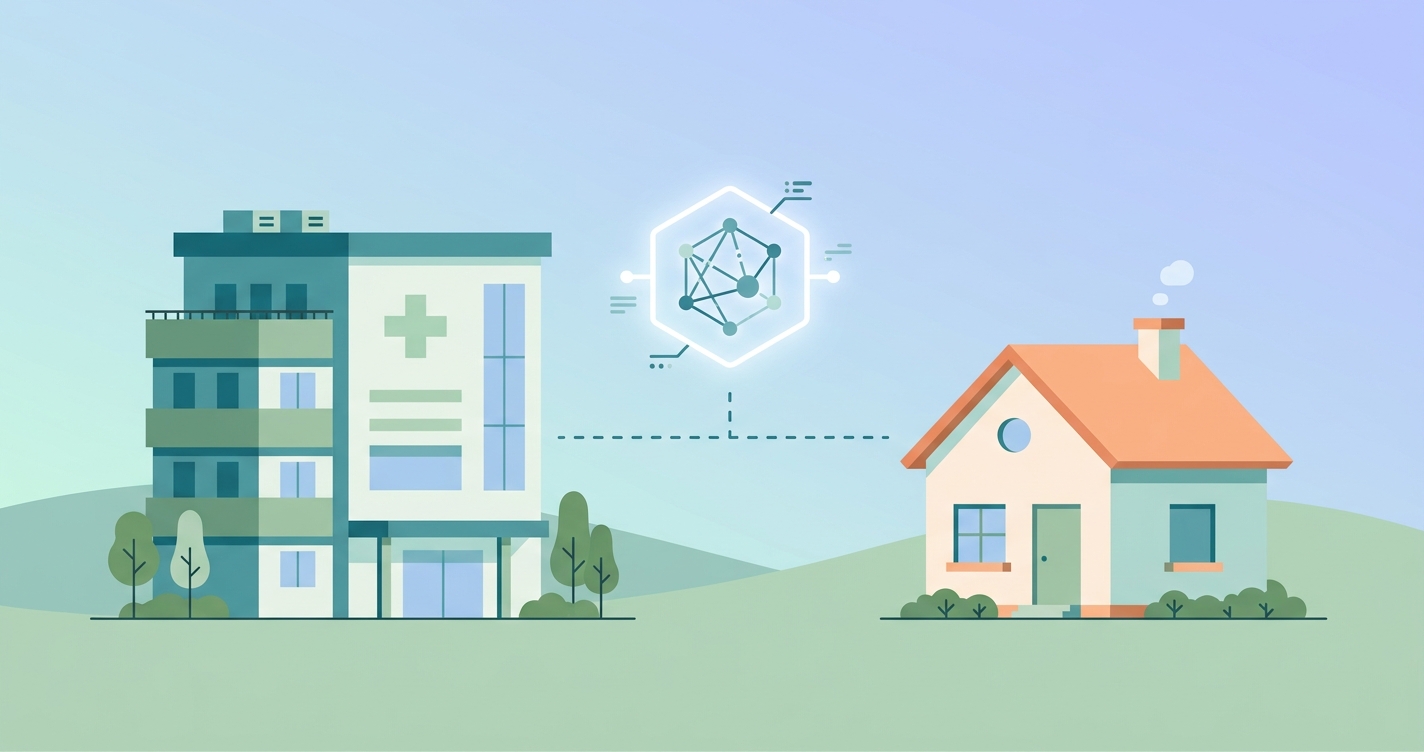
The transition from hospital to home is a critical period for patients, fraught with the risk of complications and readmission. For health systems, managing this post-discharge phase effectively is a cornerstone of value-based care, directly impacting clinical outcomes and financial performance. While virtual follow-up visits have become a standard of care, their clinical depth has often been limited by the absence of objective patient data. The integration of post discharge virtual monitoring vitals is fundamentally changing this equation, enabling providers to make more informed, timely decisions for their patients.
"A retrospective study of a remote patient monitoring (RPM) program found a 30% absolute reduction in 30-day readmissions for enrolled patients." - The Permanente Journal (2020)
Enhancing post-discharge follow-up with virtual vitals
Traditionally, a post-discharge follow-up has consisted of a phone call or a simple video chat, where clinicians rely on subjective patient reporting. This model leaves significant gaps in a provider's ability to detect early signs of deterioration. The addition of post discharge virtual monitoring vitals provides an objective data stream that complements the patient's narrative. By capturing key biometrics like heart rate, respiratory rate, and blood pressure during a standard televisit, clinicians can identify subtle but significant changes that might indicate a pending complication. This capability is particularly crucial for patients recovering from major surgery or managing chronic conditions like heart failure or COPD, where vital sign fluctuations are leading indicators of trouble. Research from institutions like the University of Virginia Medical Center has shown that robust RPM programs can reduce 30-day readmissions to below 10% for high-risk patient populations. Integrating vitals capture directly into the virtual visit workflow removes the friction associated with separate, asynchronous RPM device programs and provides immediate, actionable data in the context of a live clinical conversation.
| Monitoring Method | Data Type | Implementation Complexity | Patient Burden | Clinical Actionability | | :--- | :--- | :--- | :--- | :--- | | Phone Call Follow-Up | Subjective | Low | Low | Low | | Standard Video Visit | Subjective | Low | Low | Low-Moderate | | Asynchronous RPM (Wearables/Devices) | Objective | High | Moderate-High | High (Delayed) | | Synchronous Virtual Visit with Vitals | Objective & Subjective | Moderate | Low | High (Immediate) |
- Early Detection: Real-time vitals can flag early signs of common post-discharge complications, such as infection (elevated heart rate), respiratory distress (changes in breathing rate), or hemodynamic instability.
- Improved Medication Management: Objective data helps clinicians assess a patient's response to medication adjustments made at discharge, allowing for quicker titration and reducing adverse events.
- Enhanced Patient Engagement: When patients can see and discuss their vital signs with their provider, it reinforces their engagement and understanding of their own recovery process.
- Efficient Triage: Nursing teams managing post-discharge calls can use vitals data to more accurately triage patients, escalating care to physicians when necessary or providing reassurance and education for stable patients.
Industry Applications
Cardiovascular Care
For patients discharged after a cardiac event, such as a heart attack or heart failure exacerbation, close monitoring is critical. A study highlighted by Medical Economics found that RPM for cardiac patients can reduce 30-day hospital readmissions by 50%. Using post discharge virtual monitoring vitals allows cardiology teams to track heart rate and blood pressure, titrate medications like beta-blockers and ACE inhibitors, and assess for signs of fluid retention, all within a virtual visit.
Post-Surgical Recovery
Following major surgery, the risk of infection, blood clots, and respiratory complications is elevated. Virtual visits that incorporate vitals capture enable surgical teams to monitor a patient's recovery trajectory. A stable respiratory rate and heart rate provide assurance, while deviations can prompt closer investigation or an in-person evaluation, preventing a full-blown crisis that would result in a readmission.
Chronic obstructive pulmonary disease (copd)
COPD patients are susceptible to exacerbations post-discharge. Monitoring respiratory rate during a virtual follow-up can provide early warning signs of worsening lung function. Studies have demonstrated that RPM for COPD patients can lead to a significant decrease in hospitalizations and emergency room visits, with some research showing a 65% decrease in hospitalizations.
Current research and evidence
The evidence base supporting the use of technology in post-discharge monitoring is growing rapidly. Researchers are Validating the reduction in readmissions. Quantifying the operational and economic benefits. A 2020 prospective cohort study published in the journal JMIR mHealth and uHealth focused on high-risk post-discharge patients and found that remote health monitoring was effective in reducing hospital readmissions. The study's authors, led by Dr. H. M. B. E. Herath, noted that continuous monitoring allows for timely intervention.
Similarly, researchers like Daniel Polsky at Johns Hopkins Carey Business School are exploring advanced applications, using machine learning to analyze remotely collected data to predict readmission risk more accurately. This body of research consistently points toward a future where objective data is a standard component of all virtual care interactions, especially in high-stakes scenarios like the post-discharge period.
The future of post-discharge monitoring
The trend is clear: virtual care will continue to evolve from a conversational tool to a data-rich clinical encounter. The future of post discharge virtual monitoring vitals lies in seamless integration and intelligent analysis. As camera-based technologies that require no patient wearables become more widespread, the ability to capture vitals will be a universal feature of virtual visit platforms. The next frontier will involve applying AI and machine learning to this data, not just to alert clinicians to red flags, but to predict complications before they even occur. This proactive model will enable health systems to allocate resources more effectively, focusing intensive interventions on the highest-risk patients while safely and efficiently managing the majority in a virtual setting.
Frequently asked questions
Q: How does adding vitals to a virtual visit work without extra devices? A: Modern technology uses a science called remote photoplethysmography (rPPG). The patient's camera can detect subtle, imperceptible changes in the color of their skin, which correspond to the blood flow from their heartbeat. Sophisticated algorithms then translate this signal into measurements like heart rate and respiratory rate.
Q: Is this type of vitals capture accurate enough for clinical decisions? A: The technology is designed to provide clinical-grade data to inform, not replace, clinical judgment. It offers an objective data point where previously there was only subjective information. Leading solutions are developed and tested to meet rigorous standards for accuracy, providing a reliable basis for triage and assessment during a virtual encounter.
Q: What is the main benefit for a health system to adopt this technology? A: The primary benefit is a reduction in costly and clinically undesirable hospital readmissions. By enabling providers to detect and act on early signs of patient deterioration, health systems can improve patient outcomes, enhance care quality, and succeed under value-based care models.
As health systems seek to optimize post-discharge care, bridging the data gap in virtual follow-up visits is a critical next step. At Circadify, we are focused on solving this challenge by embedding seamless, clinical-grade vital signs capture into the virtual care workflow. To learn more about how your organization can enhance its post-discharge programs, explore our health system solutions and clinical workflows at circadify.com/solutions/telehealth.