
How to Reduce No-Shows With Virtual Visit Vitals Capture
Virtual care leaders can reduce telehealth no-shows by making video visits clinically richer through faster, EHR-integrated virtual visit vitals capture.
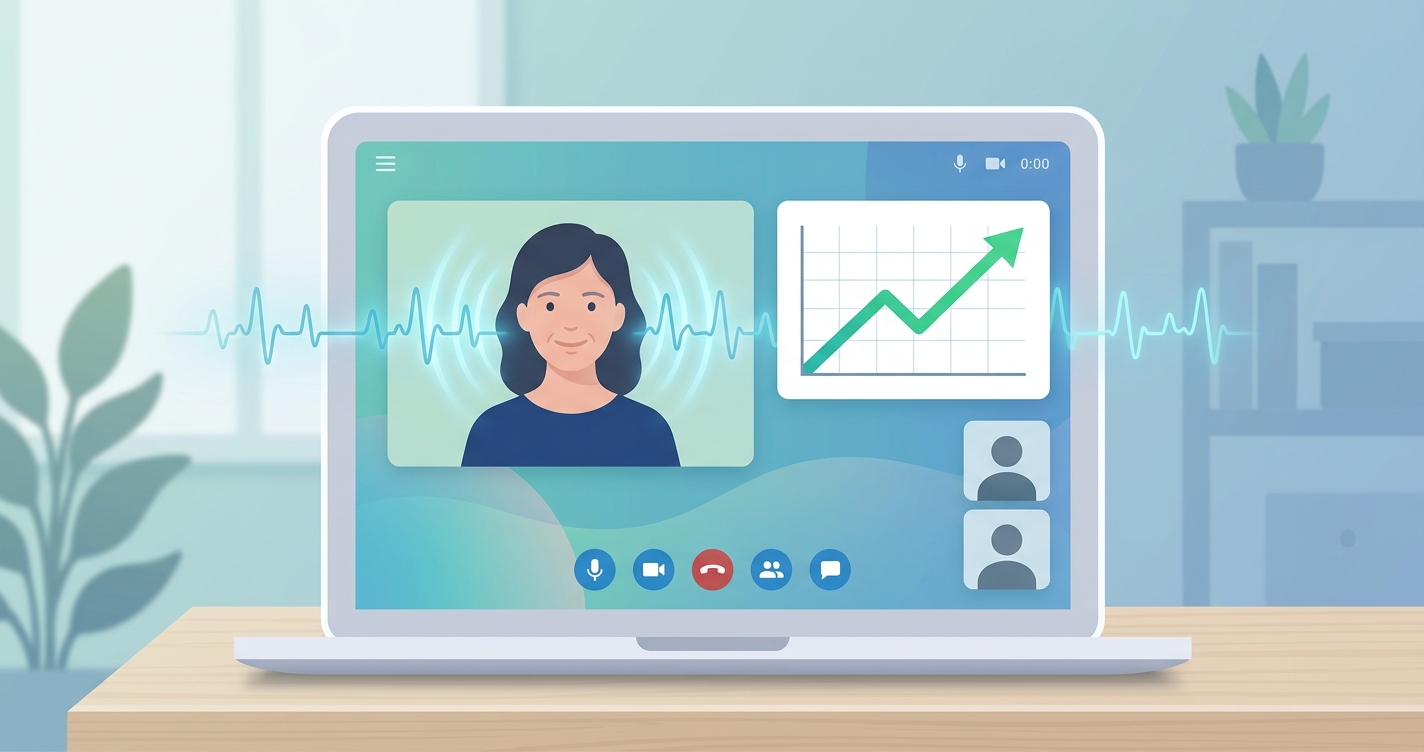
A no-show is not a single missed appointment. For a virtual care program operating at scale, it is a unit of wasted clinical capacity, a gap in a chronic disease workflow, and a quiet signal that the patient did not perceive enough value in the encounter to keep it. Virtual care directors have spent years proving that a video visit can carry a clinical conversation. The next operational frontier is using the depth of that visit to reduce telehealth no-shows by giving patients a reason to show up that a phone call alone never offered. When a video visit can capture clinical-grade vital signs, the encounter stops feeling like a conversation and starts feeling like care, and that perception shift moves attendance numbers.
A 2023 retrospective cohort study published in PMC found a telemedicine no-show rate of 12 percent versus 25 percent for in-person visits across data from March 2020 to December 2022, confirming that the modality itself lowers non-attendance before any added clinical depth.
Why richer virtual visit vitals capture helps reduce telehealth no-shows
The relationship between clinical depth and attendance is more direct than most program scorecards capture. Patients triage their own time. When a video visit is perceived as a downgraded version of an in-person appointment, where the clinician cannot check a blood pressure, listen to a concern with objective data, or confirm that something is or is not wrong, the visit becomes easy to skip. When the same visit can produce a heart rate, respiratory rate, blood pressure estimate, and stress indicators directly from the camera, the patient experiences the encounter as complete care rather than a placeholder.
This is where virtual visit vitals capture intersects with attendance economics. A systematic review and meta-analysis published in PMC concluded that telehealth models implemented since 2020 deliver a moderate reduction in the risk of patient non-attendance compared with in-person care. The modality advantage is real but not unlimited. Programs that add measurable clinical value to each video visit extend that advantage instead of letting it erode as the novelty of telehealth fades.
There is also a workflow effect. Contactless vitals adoption removes the friction that drives some virtual no-shows in the first place. A patient who does not own a blood pressure cuff, cannot find a thermometer, or struggles to pair a home device may avoid a visit they expect to feel incomplete. Camera-based capture eliminates that pre-visit anxiety because the patient needs nothing beyond the device they are already using to join the call.
Comparing approaches to video visit attendance
Virtual care directors weighing how to lift video visit attendance generally evaluate four levers. The table below compares them on the dimensions that matter to a program operating at volume.
| Approach | Effect on no-shows | Patient effort required | Clinical value added | Scalability across programs | |----------|-------------------|------------------------|----------------------|----------------------------| | Automated reminders only | Modest, plateaus quickly | Low | None | High | | Patient-owned home devices | Variable, depends on adherence | High | High when used | Low to moderate | | Financial penalties for missed visits | Small, risks patient churn | Low | None | Moderate | | Camera-based virtual visit vitals capture | Sustained, compounds with value perception | Minimal | High in every visit | High |
The pattern is consistent. Levers that only nudge behavior, such as reminders and penalties, show diminishing returns. An August 2024 MGMA poll found that 37 percent of medical groups reported rising no-show rates despite more automated reminders, which tells program leaders that the reminder lever is largely exhausted. Levers that change the underlying value of the visit, by contrast, keep working because they address the reason patients skip rather than the symptom.
Industry applications
Chronic disease management
Hypertension, heart failure, and diabetes programs depend on regular data, not occasional snapshots. When patients in these cohorts know a video visit will produce real numbers their clinician acts on, the visit becomes part of their disease management rather than an optional check-in. The global remote patient monitoring market, estimated at 14 billion dollars in 2023 and projected to reach 41.7 billion by 2028 according to industry analysis, reflects how much value health systems already place on continuous physiological data. Virtual visit vitals capture brings a portion of that value into the scheduled encounter itself.
Behavioral health
Behavioral health represented 67 percent of telehealth encounters among commercially insured patients in 2024, yet some behavioral health populations show higher no-show rates than the telehealth average. Capturing stress indicators and heart rate variability remotely gives clinicians an objective anchor in a service line that has historically relied entirely on subjective report, which can reinforce patient perception that the virtual session is clinically serious.
Primary care and triage
For primary care and nursing triage, the ability to read vitals during the call changes the disposition decision. A patient who might otherwise be told to come in, adding a second appointment they could miss, can often be managed completely in the virtual encounter. Fewer downstream appointments means fewer downstream no-show opportunities.
Current research and evidence
The evidence base supports the connection between virtual care depth, patient engagement telehealth strategy, and attendance, while making clear that modality alone is not a complete solution.
- A 2023 retrospective cohort study in PMC reported telemedicine appointments were significantly more likely to be completed than in-person appointments, with a 12 percent versus 25 percent no-show gap.
- A separate analysis using data from January 2021 to April 2023 found narrower rates of 5.2 percent for telemedicine versus 6.6 percent for in-person, showing the advantage persists even in well-run in-person programs.
- A systematic review and meta-analysis in PMC concluded telehealth produces a moderate reduction in non-attendance risk, while noting heterogeneity across specialties and populations.
- Research on rural behavioral health in Louisiana found telehealth no-shows reached 17 percent against 13 percent in person, attributed to barriers like unstable housing and unreliable internet, a reminder that depth and access must be addressed together.
- A 2024 study reported patient satisfaction with telemedicine and remote monitoring rising from 80 percent to 95 percent, which correlates with the sustained engagement that lowers attrition.
The throughline across these studies is that telehealth lowers no-shows by default, but the size and durability of that effect depend on whether the visit feels clinically worthwhile. Vitals capture is one of the most direct ways to make it feel that way.
The future of virtual visit vitals capture
Three shifts will shape the next phase. First, contactless vitals adoption will move from differentiator to expectation, much as video quality did. Patients who experience camera-based capture in one program will expect it everywhere, and programs without it will see attendance erode toward the in-person baseline. Second, vitals data captured during the visit will flow directly into the EHR and into population health workflows, so the value of each attended visit compounds beyond the encounter. Third, as physician telehealth use continues to climb, with 71.4 percent of physicians reporting weekly telehealth use in 2024 according to AMA data, the volume of virtual encounters will make even small per-visit improvements in attendance materially significant to system finances and clinical outcomes.
The programs that treat no-shows as a value problem rather than a reminder problem will pull ahead. Reminder fatigue is real and measurable. Clinical value is durable.
Frequently asked questions
Does telehealth actually reduce no-shows compared to in-person visits?
Yes, the evidence is consistent. A 2023 PMC cohort study found a 12 percent telemedicine no-show rate versus 25 percent in person, and a meta-analysis confirmed a moderate reduction in non-attendance. The effect is strongest when the virtual visit delivers real clinical value rather than functioning as a downgraded conversation.
How does virtual visit vitals capture change attendance specifically?
It changes the patient's perception of the visit's worth. When a patient knows a video visit will produce a blood pressure, heart rate, and other vitals their clinician acts on, the encounter is harder to dismiss as skippable. It also removes pre-visit friction for patients who lack home monitoring devices.
Will adding vitals capture create more no-shows by complicating the visit?
Camera-based capture is designed to require minimal patient effort, since it uses the same device the patient already uses to join the call with no wearables or cuffs to set up. Removing equipment dependencies generally reduces friction rather than adding it.
Are reminders still worth using?
Reminders remain a useful baseline, but their returns have plateaued. An August 2024 MGMA poll found 37 percent of groups saw rising no-shows despite more automated reminders. Reminders address forgetting; vitals capture addresses perceived value, and the two work best together.
Circadify is addressing this space directly, helping health systems capture clinical-grade vital signs in every virtual visit through EHR-integrated, camera-based technology that requires no patient wearables. Virtual care directors who want to model the attendance and ROI impact for their own programs can request a health system demo and clinical workflow review at circadify.com/solutions/telehealth.