Your Televisit Vitals Implementation Timeline (In 90 Days)
A 90-day project plan for implementing televisit vitals across a health system. Learn how to sequence IT integration, workflow redesign, and clinical pilots.
The expansion of remote care delivery has exposed a structural flaw in modern population health strategy. Health systems have largely optimized the video connectivity of virtual care. The challenge that remains is clinical depth. Providers conducting remote consultations still lack real-time objective physiological data. Introducing camera-based measurement technology solves this clinical gap but creates a new operational hurdle. For chief information officers and virtual care program directors, the risk is not the technology itself but the integration. Moving a new clinical tool from procurement to a live, enterprise-wide deployment requires a structured televisit vitals implementation timeline. A compressed 90-day schedule is realistic when IT, clinical informatics, and administrative teams execute in parallel rather than sequentially. Without a rigid schedule, health systems risk stalling in the pilot phase indefinitely.
"Achieving full end-user adoption of new clinical systems is considered a major roadblock by 64% of healthcare professionals, highlighting the critical need for coordinated workflow redesign rather than pure technology deployment." (HIMSS Analytics, Healthcare Information and Management Systems Society, 2024)
Structuring your televisit vitals implementation timeline
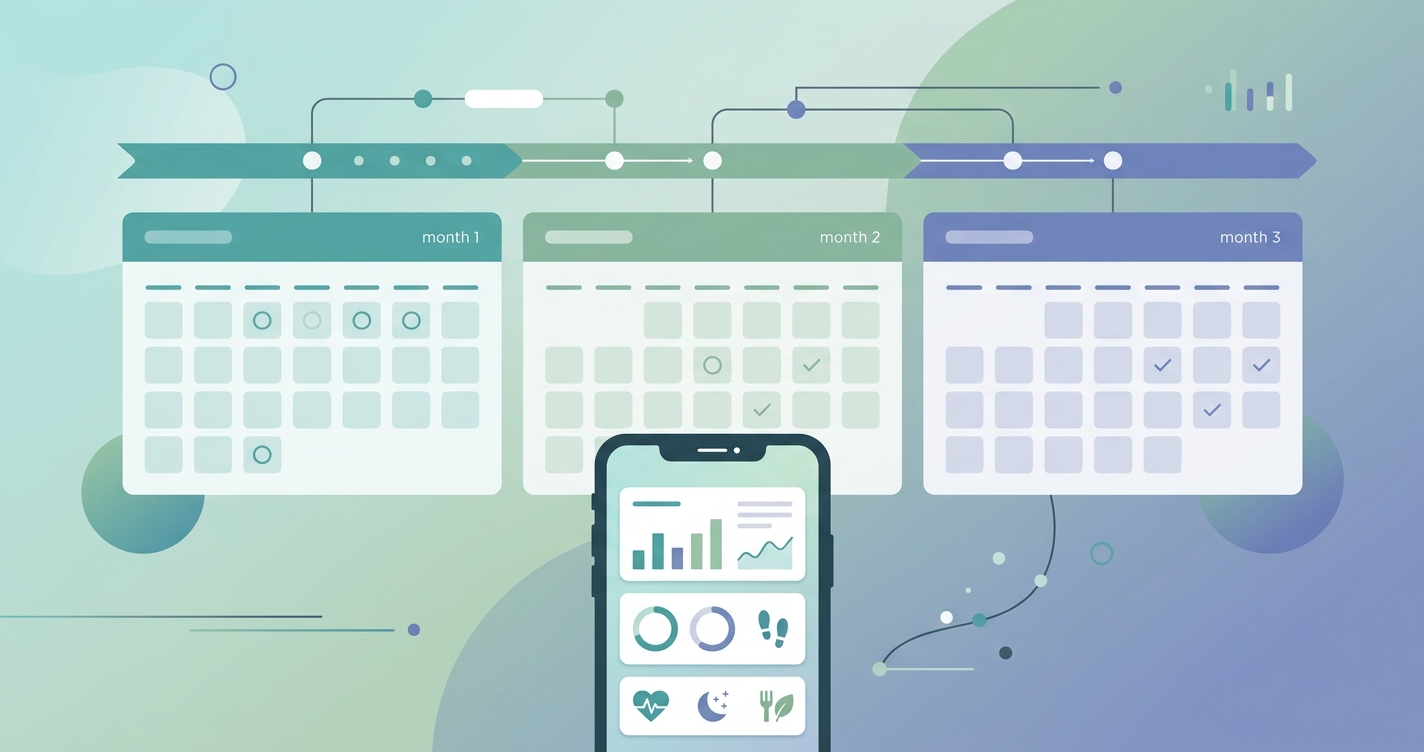
Deploying camera-based measurement tools requires a phased approach. Treating the rollout purely as an IT installation guarantees clinical friction. Instead, a successful 90-day plan balances technical integration with clinical validation.
Phase 1: Security, Architecture, and EHR Integration (Weeks 1-2)
The first two weeks dictate the technical success of the entire project. This phase belongs to the enterprise architecture and cybersecurity teams.
- Security review: Camera-based systems process physiological data using facial tracking. Security teams must verify that no video streams are stored or transmitted outside the local device environment. The architecture must comply with all health data privacy regulations.
- Electronic health record integration mapping: Determine how the physiological data will flow from the remote session into the core clinical system. Teams should utilize modern FHIR or HL7 interfaces to ensure the data lands in the correct flowsheet without requiring the provider to perform manual data entry.
- Infrastructure testing: Validate the bandwidth requirements and device compatibility across the standard hardware issued to providers. The IT department must ensure the hospital networks will not block the real-time data packets generated by the measurement software.
Phase 2: Clinical Informatics and Workflow Redesign (Weeks 3-4)
Once the technical foundation is secure, clinical informatics teams must design the encounter. Technology that adds clicks to a provider's day will face intense resistance.
- Encounter mapping: Identify exactly when the measurement occurs during the video visit. Will the medical assistant initiate the capture during the rooming process, or will the physician trigger it during the consultation?
- Protocol development: Define the clinical protocols for managing abnormal readings. If a patient registers a high respiratory rate remotely, the system needs a standard operating procedure for clinical escalation.
- Documentation standards: Establish how the data is labeled in the chart. Remote photoplethysmography readings must be clearly distinguished from standard in-clinic measurements to maintain data integrity.
Phase 3: Targeted Pilot and Usability Testing (Weeks 5-8)
A controlled pilot exposes the gap between designed workflows and actual clinical practice. A camera-based vitals project plan is only theoretical until patients interact with it.
- Clinic selection: Choose one primary care clinic and one specialty clinic for the initial pilot. This split provides data on both high-volume screening and specialized monitoring.
- Provider training: Conduct targeted training sessions focusing on patient instruction. The provider must know how to guide the patient to sit still, ensure proper lighting, and position the camera at eye level.
- Patient communication: Develop standard scripts for providers to explain the technology to patients. Clear communication reduces patient anxiety about the camera analyzing their vital signs.
- Feedback loops: Establish a daily virtual huddle for pilot users to report friction points. Clinical informatics teams should adjust the software configuration based on this real-time feedback.
Phase 4: Enterprise Go-Live and Optimization (Weeks 9-12)
The transition from a controlled pilot to a system-wide event requires robust support structures and aggressive performance monitoring.
- Phased activation: Roll out the capability by department rather than executing a system-wide activation all at once.
- Command center support: Establish a virtual command center for the first two weeks of the broad rollout. Providers need immediate technical support when they encounter a patient with an incompatible device.
- Metric tracking: Monitor utilization rates at the provider level. Identify clinicians who are consistently avoiding the tool and provide targeted retraining.
- Workflow refinement: After 30 days of broad use, review the data flow and eliminate any redundant documentation steps that providers are performing manually out of habit.
Camera-based vitals vs. traditional home devices
When designing a project plan, health systems must compare the operational overhead of software-based measurement against traditional hardware distribution.
| Feature | Camera-Based Vitals | Traditional RPM Hardware | | :--- | :--- | :--- | | Logistics | Zero hardware distribution required | Procurement, shipping, and retrieval | | Patient Requirement | Standard smartphone or computer | Dedicated cuffs, monitors, and hubs | | Maintenance | Software updates managed centrally | Battery replacement and device calibration | | Data Flow | Real-time transmission during the visit | Asynchronous syncing, often requiring an app | | Cost Structure | Software licensing model | Capital expenditure for hardware inventory | | Implementation Speed | Rapid deployment across all service lines | Slower rollout gated by supply chain delays |
Clinical applications for virtual care rollout
Different clinical specialties require specific configurations within the rollout plan.
Primary and urgent care
In urgent care settings, speed is the primary metric. The workflow must allow the patient to complete the measurement while waiting in the virtual queue. By the time the provider joins the screen, the baseline physiological data should already populate the chart. This immediate availability of data changes the nature of the triage process, allowing the clinician to make faster routing decisions.
Cardiology and chronic disease management
For cardiology, longitudinal tracking is more valuable than a single snapshot. The rollout plan here must include patient education on conducting measurements at consistent times under stable lighting conditions. The clinical informatics team needs to build dashboards that allow cardiologists to view trends in heart rate and other available metrics over time, rather than just the discrete values from the current encounter.
Behavioral health integration
Psychiatry and behavioral health present unique use cases for remote physiological measurement. While a primary care doctor looks at heart rate to assess cardiovascular status, a behavioral health specialist can use changes in heart rate to observe autonomic nervous system arousal during a therapy session. The rollout plan for these departments should focus on passive monitoring capabilities, allowing the clinician to track physiological stress markers without disrupting the conversation.
Current research and evidence
The shift toward contactless measurement is supported by recent clinical usability studies. A 2024 study published in JMIR Formative Research by researchers at the US Department of Veterans Affairs evaluated the usability of remote photoplethysmography in telehealth settings. The research team tested a camera-based vital sign feature within the VA Video Connect platform, which uses remote photoplethysmography to analyze subtle color changes in the skin caused by cardiovascular activity (Garvin et al., US Department of Veterans Affairs, 2024).
The study involved usability testing with twenty VA providers and thirteen patients. The findings indicated high satisfaction, with both groups rating the tool as highly useful and easy to operate. Notably, the study found that older veterans were able to navigate the technology without significant technical assistance. This research confirms that when implemented correctly, camera-based measurement does not create an operational burden for older adult populations or the clinicians serving them. The Veterans Affairs pilot serves as a validated model for structuring a health system go-live.
The future of virtual visit vitals capture rollout
The next phase of remote care integration will move beyond discrete vital sign capture and toward continuous, ambient physiological monitoring during the encounter. As the technology matures, health systems will stop treating software-based measurement as a separate application and begin embedding it directly into the native video infrastructure.
Future implementation timelines will likely shrink from 90 days to 30 days as application programming interfaces become standardized across major electronic health record vendors. The focus of the project plan will shift entirely away from technical integration and concentrate exclusively on clinical pathway optimization. Capturing physiological data over video will become as standard as configuring a new medication order set.
Frequently asked questions
How much IT resourcing is required for a 90-day rollout? The heaviest IT lift occurs in the first two weeks for security review and EHR integration mapping. After the initial configuration, the burden shifts to the clinical informatics team to manage workflow design and user training.
Do patients need to download an app to use camera-based measurement? No. The most effective implementation models utilize web-based interfaces embedded directly into the health system's existing patient portal or telehealth link. This eliminates the friction of secondary app downloads.
How do we handle patients with poor internet connections during the pilot? Your implementation plan must include a fallback protocol. If the bandwidth is insufficient to support the camera analysis, the system should gracefully degrade to a standard video visit, and the provider should rely on traditional visual assessment and patient-reported symptoms.
Should medical assistants or physicians initiate the measurement? This depends entirely on your clinical model. High-volume primary care clinics typically assign this task to medical assistants during the virtual rooming process. Specialty clinics often prefer the physician to initiate the scan during the active consultation to observe the patient concurrently.
Health systems are transitioning from basic video connectivity to true clinical measurement. Circadify provides the infrastructure to integrate contactless physiological data directly into your existing telehealth workflows. If your organization is preparing for a new rollout, visit circadify.com/solutions/telehealth to schedule an implementation planning session.