The Hidden Risk of Missing Vitals in Virtual Care
An analysis of the clinical liability and diagnostic risks associated with conducting virtual care visits without objective vital sign data.
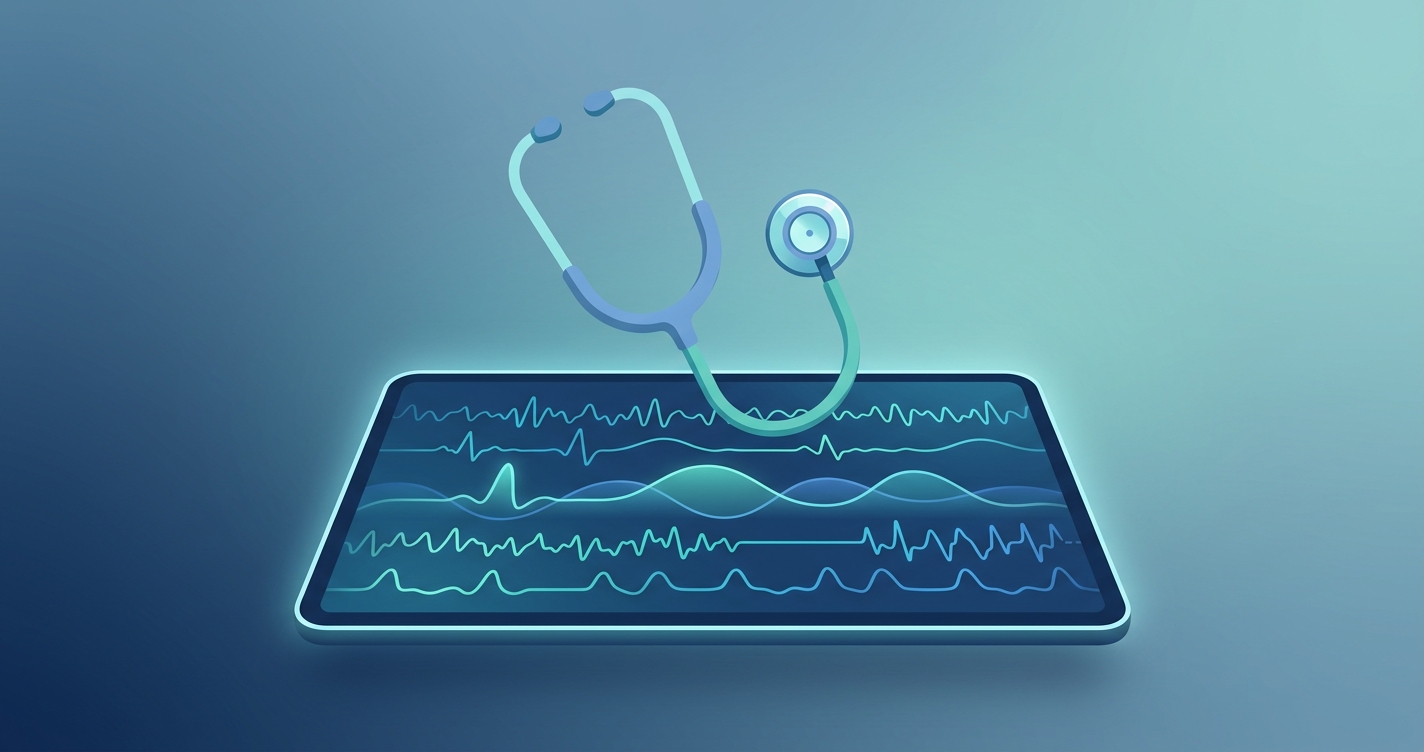
Virtual care architecture has matured past the basic video connectivity challenges of early telehealth adoption. Yet, as remote encounter volumes stabilize across health systems, clinical informatics teams face a structural vulnerability: the persistent reliance on subjective patient narratives rather than objective physiological data. Understanding the risk of missing vitals virtual care models carry is essential for clinical informatics teams tasked with protecting patient safety. The operational reality is that conducting synchronous visits without standard clinical assessment tools creates a measurable diagnostic blind spot. Health systems can no longer treat the video stream alone as a complete encounter. Providers forced to make triage and treatment decisions without baseline heart rate, respiratory rate, or blood pressure face heightened liability and diagnostic uncertainty.
"Failures in patient assessment, including delays in ordering diagnostic tests and establishing a differential diagnosis without objective clinical data, are cited in 74 percent of diagnostic error claims associated with telehealth encounters."
- The Doctors Company, Strategies for Effective Patient-Assisted Telehealth Assessments (2021)
The structural flaw in remote diagnostics
In a physical clinical setting, objective data gathering is the prerequisite to medical decision making. A patient does not see a physician before a medical assistant captures their blood pressure, heart rate, and respiratory rate. This physiological baseline anchors the entire encounter. When assessing the risk of missing vitals virtual care environments operate with a fundamental data deficit. The remote provider is functionally blind to the physiological markers that typically drive clinical reasoning.
This missing data forces a behavioral shift in how medicine is practiced remotely. Clinical reasoning is traditionally taught as a deductive process that requires a complete dataset. The absence of vital signs forces a provider into an inductive reasoning model, guessing the physiological state based on superficial visual cues. This cognitive shift increases the cognitive load on the physician and dramatically increases the probability of diagnostic anchoring, where a provider fixates on the patient's self-reported narrative rather than looking for objective contradictory evidence. When assessing the risk of missing vitals virtual care programs must acknowledge that they are asking physicians to practice a fundamentally different, and riskier, form of medicine.
Providers compensate for the lack of objective measurements by relying heavily on patient self-reporting, visual estimations of distress, and extended interviewing. While these techniques have clinical value, they lack the precision required for accurate differential diagnosis. A patient experiencing early sepsis may look tired on a low-resolution video feed, but an objective respiratory rate of twenty-four breaths per minute would immediately trigger emergency protocols. Without that number, the provider might incorrectly diagnose a mild viral infection.
| Assessment Metric | Traditional In-Person Care | Patient-Reported Virtual Vitals | Objective Virtual Vitals Capture | | :--- | :--- | :--- | :--- | | Data Source | Clinical hardware operated by staff | Home devices or manual counting | Automated remote technology | | Clinical Confidence | High | Low to Moderate | High | | EHR Integration | Direct electronic transfer | Manual entry by patient or provider | Automated API integration | | Liability Exposure | Standard baseline | Elevated due to unverifiable inputs | Reduced through objective logging | | Workflow Friction | Baseline operational standard | High friction for patient | Low friction, invisible to patient |
Key vulnerabilities of missing objective data include:
- Over-prescription of broad-spectrum antibiotics due to the inability to objectively differentiate viral from bacterial presentations.
- Unnecessary emergency department escalation driven by clinical uncertainty rather than confirmed physiological distress.
- Delayed diagnosis of acute conditions that present with subtle hemodynamic shifts, such as early-stage sepsis or decompensating heart failure.
- Increased liability exposure when poor clinical outcomes result from decisions made without baseline physiological parameters.
- Compromised medication management workflows, particularly for titrating cardiac or hypertensive medications without recent, verified baseline measurements.
High-risk clinical scenarios and industry applications
The absence of routine vital sign collection impacts different clinical pathways in varying ways. Certain specialties and workflows carry a disproportionate amount of diagnostic risk when objective data is removed from the encounter.
Primary care and acute triage
Primary care providers handle the widest variety of undifferentiated symptoms. When a patient presents virtually with fatigue, dizziness, or shortness of breath, the differential diagnosis is vast. Without blood pressure or oxygen saturation data, providers frequently default to defensive medicine. They either prescribe broad-spectrum antibiotics to cover unlikely bacterial infections, or they unnecessarily route the patient to a physical emergency department to avoid liability. Both outcomes increase the total cost of care and degrade the patient experience.
Chronic disease exacerbation
For populations managing heart failure, chronic obstructive pulmonary disease, or hypertension, subtle physiological shifts often precede severe clinical events. Virtual check-ins for these patients are dangerously incomplete without vital signs. A provider adjusting hypertension medication without a verified blood pressure reading, or evaluating a heart failure patient without an objective respiratory rate, operates outside of evidence-based protocols. The reliance on patient-owned home blood pressure cuffs introduces further risk, as these devices are rarely calibrated and patients frequently report inaccurate numbers.
Behavioral health and somatic symptoms
Behavioral health encounters are highly suited for virtual delivery, yet they are not immune to the risks of missing physiological data. Psychiatric patients frequently present with somatic symptoms that mimic physical illness, such as panic attacks presenting as tachycardia and chest pain. Without the ability to objectively measure heart rate and respiratory rate, remote behavioral health providers struggle to confidently rule out acute physiological distress.
Current research and evidence
The clinical community has begun to quantify the exact risks associated with incomplete virtual assessments. Research consistently points to the physical examination gap as a primary driver of remote diagnostic errors.
A comprehensive analysis of diagnostic error claims by The Doctors Company in 2021 revealed the precise mechanisms of telehealth failures. The researchers found that failures in patient assessment were present in seventy-four percent of diagnostic error claims originating from telehealth encounters. Specifically, the inability to gather objective clinical data led directly to delays in ordering necessary diagnostic tests and failures to establish an accurate differential diagnosis.
Further research published in JAMA Network Open in 2022, co-authored by Dr. Bart M. Demaerschalk at the Mayo Clinic, evaluated the overall diagnostic concordance between video telemedicine and in-person visits. While the study found high general concordance, the researchers explicitly noted severe limitations for specialties and specific complaints that rely heavily on physical examinations and objective vital signs. When providers cannot measure the patient, their diagnostic confidence statistically drops.
Data from CRICO, a medical malpractice insurer for the Harvard medical community, reinforces these clinical findings. Their Candello claims database indicates that forty-five percent of all telehealth medical malpractice claims involve the misdiagnosis of serious conditions, including cancer, stroke, and infections. These are conditions where early physiological warning signs, such as elevated resting heart rate or abnormal respiratory patterns, are frequently the first indicators of systemic disease.
A 2020 study published in BMJ Quality & Safety highlighted the limitations of assessment tools that operate without physical findings. The research demonstrated that symptom checkers correctly identified the appropriate level of care in only fifty-seven percent of cases, compared to over seventy percent for physicians operating with complete clinical data. While symptom checkers are automated, the underlying principle applies directly to virtual provider visits: the absence of objective measurement severely degrades triage accuracy.
The future of virtual care vital signs
Health systems are recognizing that the current iteration of virtual care is clinically unsustainable for high-acuity presentations. The future of telehealth architecture centers on closing the data gap without increasing the hardware burden on the patient. Distributing consumer-grade wearables or shipping heavy diagnostic kits to every patient is economically unviable and creates massive logistical friction.
Instead, clinical informatics teams are turning to software-based vital sign capture. Innovations in remote photoplethysmography and computer vision allow health systems to extract vital signs directly from the standard video feed of a smartphone or tablet. By analyzing the subtle light absorption changes in a patient's face, these systems can generate heart rate, respiratory rate, and other parameters in real-time.
This transition from subjective patient reporting to automated, camera-based objective data collection fundamentally alters the risk profile of remote care. Providers regain their physiological baseline, enabling safer triage decisions, more accurate diagnoses, and reduced liability exposure.
Frequently asked questions
What are the main liability risks of conducting virtual visits without vital signs?
The primary liability risk involves the misdiagnosis or delayed diagnosis of acute conditions. Without a physiological baseline, providers may overlook subtle signs of deterioration, leading to adverse patient outcomes and subsequent malpractice claims based on incomplete clinical assessments.
Why are patient-reported vitals considered a clinical risk?
Patient-reported vitals rely on uncalibrated home hardware and manual techniques, both of which introduce high rates of user error. Clinical algorithms and provider decisions based on inaccurate self-reported data can result in incorrect medication dosing or inappropriate triage routing.
Which clinical specialties face the highest diagnostic risk in virtual care?
Primary care, urgent care, and cardiology face significant risks because these specialties frequently manage undifferentiated symptoms or complex chronic diseases where blood pressure, heart rate, and respiratory rate are critical for accurate differential diagnosis.
How do health systems solve the missing data problem in telehealth?
Leading health systems are moving away from hardware-dependent remote monitoring and adopting camera-based vital sign technology. This software approach extracts vital signs from the patient's existing smartphone camera during the virtual visit, seamlessly feeding objective data into the provider's electronic health record workflow.
Health systems are actively restructuring their telehealth architectures to eliminate these diagnostic blind spots and reduce clinical liability. Circadify is addressing this space by enabling providers to capture camera-based vital signs directly within the existing virtual care workflow, requiring no additional hardware for the patient. For clinical informatics and quality improvement teams seeking to mitigate risk and evolve their virtual care infrastructure, explore the health system demo and clinical workflows at Circadify.