How Accurate Are Virtual Vitals for Patients Over 65?
Examines the accuracy and validation evidence of camera-based virtual visit vitals for older adults and the impact on health system virtual care programs.
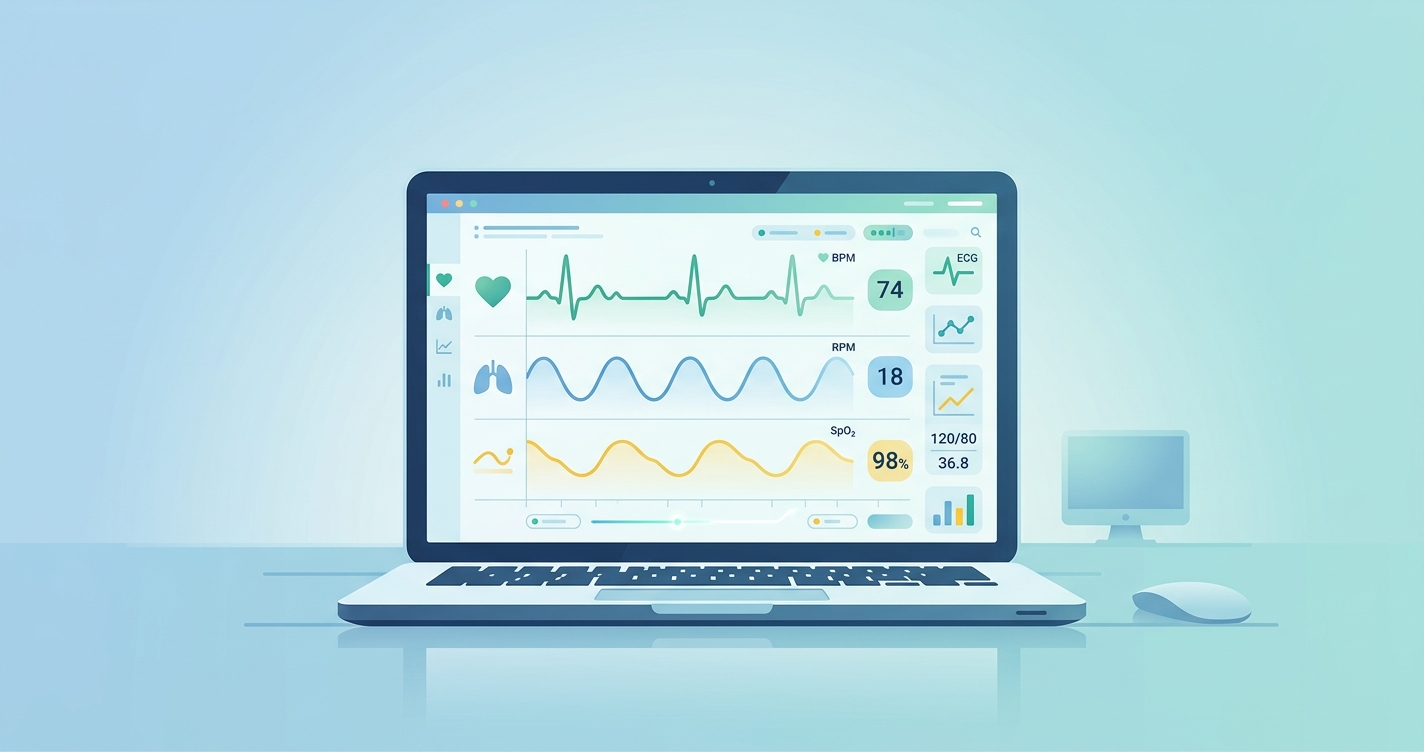
The strategic expansion of telehealth has shifted from simple video interactions to clinically rich remote encounters. For health systems managing large geriatric populations, this transition requires reliable physiological data. Capturing vital signs remotely has traditionally relied on patient-owned hardware, presenting logistical and adherence hurdles for older patients who may struggle with device pairing, cuff sizing, or battery management. As remote photoplethysmography (rPPG) software matures, clinical informatics teams are evaluating its viability as an enterprise-grade solution to eliminate these hardware barriers. The central question for virtual care program directors is no longer whether contactless measurement is technically possible, but rather the virtual visit vitals accuracy older adults can reliably achieve under real-world conditions. Understanding this accuracy is critical for scaling remote care programs effectively.
"In clinical validation studies involving adult populations with cardiovascular disease, camera-based pulse rate monitoring has demonstrated a mean absolute error of just 1.061 beats per minute compared to standard ECG measurements, proving its viability for clinical observation." , Jing Wei Chin et al., The Chinese University of Hong Kong (2024)
Evaluating virtual visit vitals accuracy older adults rely on
For clinical informatics teams, adopting camera-based vitals requires rigorous validation, especially when treating patients over 65. Older adults often present with complex physiological profiles, including decreased arterial compliance, irregular heart rhythms like atrial fibrillation, and diminished peripheral perfusion. These factors can complicate both traditional hardware-based measurements and optical capture methods. Ensuring the virtual visit vitals accuracy older adults experience is comparable to clinical-grade hardware is critical for managing chronic conditions like hypertension, heart failure, and chronic obstructive pulmonary disease (COPD).
rPPG technology operates by analyzing micro-color changes in facial skin caused by each cardiac cycle. Standard device cameras, operating in ambient light, can capture these signals without requiring the patient to attach a cuff or probe. However, older populations introduce specific variables such as distinct skin elasticity, varied skin tones, and potential motion artifacts during a consultation.
Physiological changes in aging skin, such as the loss of collagen and thinning of the epidermis, can theoretically impact how light absorbs and reflects off the microvascular bed. Modern rPPG algorithms must be trained on diverse, age-stratified datasets to account for these changes. Furthermore, elderly patients may have tremors or difficulty maintaining a perfectly still posture during a video call. Advanced computer vision techniques are required to track facial regions of interest continuously, compensating for movement and ensuring the signal-to-noise ratio remains high enough for clinical extraction.
To determine enterprise readiness, health systems must evaluate how contactless solutions perform across these variables compared to legacy methods.
| Measurement Modality | Patient Setup Requirement | Integration with EHR | Accuracy Constraints for Older Adults | | :--- | :--- | :--- | :--- | | In-Clinic Hardware | High (requires travel, scheduling) | Direct and immediate via localized hardware | Minimal (clinical gold standard for all ages) | | Patient-Owned Cuffs/Monitors | Moderate (requires device, training, internet) | Asynchronous or requires manual verbal entry | Cuff placement errors, forgotten calibration, white coat hypertension | | Contactless Camera Vitals (rPPG) | Low (uses existing smartphone/tablet camera) | Automated via telehealth platform API | Poor home lighting conditions, severe motion tremors |
When assessing rPPG software for geriatric populations, virtual care leaders must balance operational benefits with clinical realities:
- Contactless capture eliminates the need for shipping hardware to patients, reducing procurement and reverse-logistics costs for the health system.
- Patients over 65 do not need to learn new device interfaces; the vital signs are extracted using the camera that is already active for the video consultation.
- Continuous signal processing can account for minor movements, though heavy motion artifacts from conditions like Parkinson's disease remain a technical hurdle.
- Validation requires testing across diverse skin tones and varying ambient lighting environments commonly found in patient homes, ensuring health equity across all patient demographics.
- Algorithms must demonstrate resilience against common cardiovascular medications that might alter resting heart rates or peripheral blood flow in older demographics.
Industry applications for geriatric telehealth
Integrating rPPG into health system infrastructure opens several clinical pathways for managing older populations, shifting the paradigm from episodic to continuous observation.
Chronic care management
Managing chronic cardiovascular and respiratory conditions requires consistent data. For a 75-year-old patient with congestive heart failure, missing a vital sign reading due to hardware failure or user error delays clinical intervention. Camera-based measurement allows care teams to capture heart rate and respiratory rate directly through the virtual interface, standardizing the data collection process during regular check-ins. This seamless integration ensures that physicians have the objective data they need to titrate medications accurately without waiting for an in-person follow-up.
Post-operative remote monitoring
Following surgical procedures, older patients are highly vulnerable to complications such as infection or cardiac events. Transitioning these patients to home care involves intensive monitoring. Virtual visits equipped with optical vital sign capture enable remote nursing teams to assess physiological stability without requiring the patient to manipulate complex equipment. Monitoring respiratory rate remotely is particularly beneficial for identifying early signs of pneumonia or adverse reactions to opioid-based pain management.
Behavioral health integration
Geriatric behavioral health often intersects with physiological decline. Collecting vital signs during psychiatric or cognitive assessments provides a fuller picture of the patient's immediate state. Contactless measurement is particularly valuable here, as it does not interrupt the conversational flow or cause additional anxiety for patients experiencing cognitive decline or dementia. It allows providers to monitor physiological stress responses passively while focusing entirely on the patient's behavioral presentation.
Skilled nursing facility (snf) triage
In skilled nursing facilities, transferring a patient to an emergency department is a high-cost, high-stress event. When an on-call physician is evaluating a resident remotely, having immediate access to vital signs via the facility's existing tablet or telehealth cart can prevent unnecessary hospital readmissions. Contactless vitals allow the attending staff to obtain readings quickly, even if the patient is uncooperative with traditional blood pressure cuffs or pulse oximeters.
Current research and evidence
The clinical community is actively validating rPPG technology to ensure it meets diagnostic standards for complex populations. A 2024 study by Jing Wei Chin and colleagues at The Chinese University of Hong Kong evaluated rPPG-enabled contactless pulse rate monitoring in patients with confirmed cardiovascular disease. Analyzing over 800 samples from adults with varying stages of cardiac compromise, the researchers found strong agreement with standard ECG measurements, reporting a mean absolute error of 1.061 bpm and a Pearson correlation of 0.962. This data is highly relevant for health systems, as it demonstrates the technology's resilience in patients whose cardiovascular profiles mirror those of the general Medicare population.
Furthermore, a comprehensive 2023 review by Alora Brown and researchers at Ghent University examined remote photoplethysmography for health assessment. The research team noted that while older adults often exhibit higher stress susceptibility, rPPG provides a non-invasive method for accurately measuring clinical biomarkers. The review highlighted that rPPG solutions utilizing ambient light and standard cameras are increasingly capable of capturing reliable physiological signals. However, the researchers emphasized the ongoing need for algorithms to account for the unique vascular characteristics of aging skin and the presence of multi-morbidity.
Blood pressure estimation via camera remains an active area of investigation. While heart rate and respiratory rate have achieved high accuracy thresholds, blood pressure requires complex pulse transit time calculations or pulse wave analysis. Recent validation efforts targeting older adults with varied blood pressure ranges indicate moderate to high agreement for identifying hypertensive trends. However, continuous exact calibration-free measurement is still undergoing rigorous clinical trials to meet the stringent protocols required for replacing traditional sphygmomanometers in diagnostic settings.
The future of virtual vitals for older adults
As algorithms improve, the dependency on patient-owned hardware will continue to decrease. The next phase of virtual care infrastructure will focus heavily on passive, ambient monitoring. For patients over 65, this means telehealth encounters will automatically yield a complete physiological panel simply by the patient looking at their screen.
Health systems are already moving toward deep EHR integration, where rPPG data flows directly into the patient's chart with appropriate metadata indicating the capture modality. This structural shift will allow clinical informatics teams to build predictive models based on longitudinal data captured entirely through software. The emphasis will remain on inclusive validation, ensuring that predictive models and vital sign extraction perform equally well across all age brackets, skin tones, and living environments.
Future iterations of rPPG will likely incorporate advanced machine learning models that can filter out severe motion artifacts, making the technology viable for older adults with neurological conditions. Additionally, as camera hardware in consumer tablets and smartphones improves, the raw optical data available for processing will yield even higher fidelity physiological signals, further closing the gap between in-clinic and at-home assessments.
Frequently asked questions
How does lighting affect camera-based vital signs in older adults? rPPG technology relies on detecting subtle color variations in the skin caused by blood flow. While modern algorithms are highly resilient, extreme low light or heavy backlighting can degrade the signal. Most clinical-grade systems include real-time feedback mechanisms to prompt the provider or patient to adjust lighting before capturing the measurement, ensuring the environment is suitable for data extraction.
Are contactless vitals integrated directly into the EHR? Yes, enterprise-grade rPPG solutions are designed to integrate seamlessly into existing telehealth workflows and Electronic Health Records. When a provider captures a reading during a video visit, the data is structured and written to the EHR via standard APIs (such as FHIR), avoiding manual data entry errors and preserving clinical context.
Can rPPG replace standard blood pressure cuffs for seniors? Currently, rPPG is highly effective for heart rate, respiratory rate, and identifying broad physiological trends. While camera-based blood pressure measurement is advancing rapidly and showing strong predictive accuracy for categorizing hypertension, clinical guidelines still widely recommend cuffs for definitive diagnosis until cuffless validation protocols are universally standardized for older populations.
Is patient privacy maintained during optical measurement? Absolutely. The video feed is processed in real-time, often on the edge (the user's device) or securely in a temporary cloud environment without storing the actual video imagery. Only the extracted physiological data points are transmitted and stored in the health record, maintaining strict HIPAA compliance and protecting patient privacy.
For health systems looking to standardize physiological data collection without the logistical friction of patient hardware, Circadify provides enterprise-ready rPPG infrastructure. By embedding contactless vital sign capture directly into existing virtual care workflows, clinical informatics teams can ensure reliable data collection for their most vulnerable populations. Explore how our technology supports rigorous clinical validation, EHR integration, and scalable deployment at circadify.com/solutions/telehealth.