What Virtual Visit Vitals Capture Means for Diabetes Care
How virtual visit vitals capture for diabetes supports chronic care telehealth, remote heart rate monitoring, and structured diabetes virtual follow-up at scale.
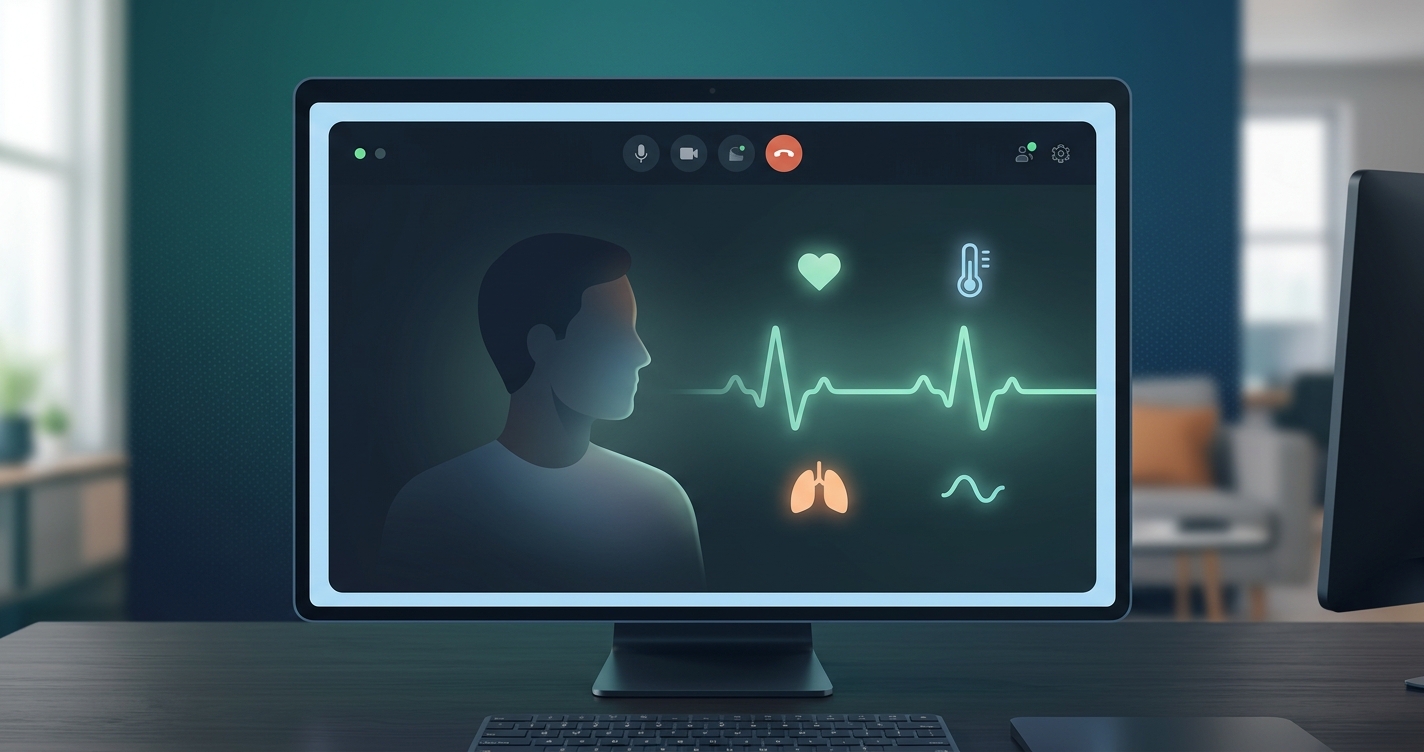
Diabetes management runs on numbers, and most of those numbers go missing the moment a patient logs into a video visit instead of walking into a clinic. The glucose log may travel with the patient, but the blood pressure, heart rate, and respiratory rate that frame every diabetes decision usually do not. For virtual care program directors building chronic disease pathways, this gap is the difference between a video conversation and a clinical encounter. Virtual visit vitals capture for diabetes closes that gap by pulling objective physiological data into the same telehealth workflow already in use, without asking the patient to own or operate a separate device.
A meta-analysis spanning 75 studies and more than 106,000 patients found that telehealth technologies notably improve both blood pressure and blood glucose control, with remote programs reducing HbA1c and fasting glucose across diverse chronic care populations.
Why virtual visit vitals capture for diabetes changes the encounter
Type 2 diabetes rarely travels alone. Hypertension, cardiovascular risk, and autonomic changes ride alongside it, which is why a diabetes follow-up has always been a multi-vital assessment rather than a single glucose check. When that follow-up moves to video, the clinician historically loses the supporting measurements and is left interviewing the patient about symptoms instead of reading data. Capturing vitals during the visit restores the clinical context that makes a remote diabetes review defensible.
Camera-based measurement using remote photoplethysmography (rPPG) is the mechanism gaining traction here. The technique reads subtle color changes in facial skin caused by blood volume shifts, then derives heart rate, respiratory rate, and related cardiovascular signals from standard video. Because it works through the same camera already running the visit, chronic care telehealth vitals can be captured passively during the conversation rather than as a separate task that depends on patient equipment.
The practical contrast for program directors is between three operating models for getting a diabetes patient's vitals into a virtual encounter.
| Capture model | What it measures | Patient burden | Data continuity | Scale economics | |---|---|---|---|---| | Camera-based capture in the visit | Heart rate, respiratory rate, cardiovascular signals during the call | None beyond facing the camera | Captured every visit, into the EHR | Software-based, scales across the panel | | Patient-owned home devices | Blood pressure, glucose, weight if patient buys and uses them | High; setup, adherence, supplies | Inconsistent; depends on engagement | Device logistics and replacement costs | | In-person vitals only | Full clinic vitals on visit day | Travel and scheduling | Episodic, weeks or months apart | Limited by clinic capacity |
The models are not mutually exclusive. Many diabetes programs pair a home glucose meter with camera-derived cardiovascular vitals so the encounter carries both the metabolic and the hemodynamic picture. The point for planning is that camera capture removes the adherence dependency that undermines so many remote monitoring rollouts.
Key reasons this matters for diabetes specifically:
- Diabetes follow-up cadence is frequent, so passive capture compounds into a dense longitudinal record rather than scattered snapshots.
- Remote heart rate monitoring during routine visits can surface resting tachycardia or rhythm concerns linked to autonomic neuropathy.
- Blood pressure context matters in nearly every diabetes visit because of overlapping cardiovascular and renal risk.
- No-wearable capture reaches the older and lower-income patients who carry disproportionate diabetes burden but lower device adoption.
Industry applications across the diabetes pathway
Routine diabetes virtual follow-up
The highest-volume use case is the scheduled follow-up between A1c checks. These visits often default to a verbal status update. Adding in-visit vitals lets the clinician anchor medication titration and lifestyle counseling to measured heart rate and respiratory data, turning a check-in into a documented assessment. For diabetes virtual follow-up at panel scale, the workflow consistency is what makes the program auditable.
Hypertension co-management
Because most diabetes patients also carry a blood pressure target, virtual visits double as hypertension touchpoints. Remote programs have shown meaningful pressure reductions; one cited one-year remote monitoring effort lowered mean systolic pressure from 152 to 132 mmHg in stage-2 hypertension patients. Capturing cardiovascular vitals inside the diabetes visit lets a single encounter serve both conditions instead of fragmenting care across separate programs.
Risk stratification and triage
Camera vitals chronic disease workflows also support nursing triage and population health teams who need to decide which patients require escalation. A resting heart rate or respiratory rate captured at every visit feeds the same risk models that previously relied only on lab values and claims, giving care managers an earlier signal between scheduled labs.
Current research and evidence
The evidence base splits cleanly between the clinical value of remote chronic care and the measurement accuracy of the camera method, and both deserve honest framing.
On chronic care outcomes, remote patient monitoring and telehealth consistently improve glycemic and blood pressure control. Beyond the 106,000-patient meta-analysis noted above, retrospective cohort work has linked remote monitoring to improved hypertension outcomes at scale. The evidence is not uniformly positive: a nurse-delivered telehealth trial in a fee-for-service setting reported in AJMC did not significantly lower HbA1c versus self-monitoring, a reminder that reimbursement structure and workflow design shape results as much as the technology does.
On measurement, rPPG accuracy is strongest for pulse-based metrics. A clinical validation study in cardiovascular disease patients (approved September 2023) found strong agreement between rPPG-derived pulse rate and ECG, with a mean absolute error of roughly 1.06 bpm and a Pearson correlation of 0.962. A February 2024 scoping review reported good to very strong agreement between smartphone PPG resting heart rate and electrocardiography under controlled conditions. Blood pressure is the harder target. A Singapore General Hospital study running from March 2023 through June 2024 across 200 patients found its rPPG model performed best on diastolic prediction, with a mean absolute percentage error of about 7.5 percent, while other non-contact applications reported only moderate blood pressure accuracy. In July 2024, researchers published formal recommendations for evaluating PPG-based blood pressure algorithms, calling for defined participant numbers and demographic representation.
The takeaway for program directors is to weight camera capture toward heart rate and respiratory metrics where agreement is well documented, treat camera-derived blood pressure as a screening signal pending stronger validation, and pair the technology with home cuffs where a precise pressure number drives a clinical decision. Diverse skin tone representation, motion, and lighting remain open validation requirements across the field.
The future of virtual visit vitals capture for diabetes
The direction of travel points toward the vital sign becoming an invisible byproduct of the visit rather than a separate measurement event. Three shifts are worth planning around.
- EHR-native data flow. As capture integrates directly into the chart, vitals from a diabetes video visit will populate the same flowsheets as clinic vitals, making remote and in-person encounters comparable for quality reporting.
- Longitudinal trend analysis. Frequent passive capture generates dense time series, so the clinical value moves from any single reading toward trend detection across a patient's diabetes journey.
- Tighter validation standards. The 2024 reporting recommendations signal that health systems will soon expect documented accuracy by metric and by population before enterprise deployment, which favors programs that validate before they scale.
For diabetes programs, the realistic near-term win is not replacing every home device. It is ensuring that every virtual follow-up carries objective cardiovascular context, so a remote encounter is no longer a clinical compromise.
Frequently asked questions
What vitals can be captured during a diabetes video visit? Camera-based capture using rPPG reliably derives heart rate and respiratory rate from standard video, with research showing strong agreement against ECG for pulse. It can also produce cardiovascular screening signals. Glucose still requires a meter or sensor, so most diabetes programs combine camera-derived cardiovascular vitals with patient-reported glucose data.
Is camera-based blood pressure accurate enough for diabetes management? Heart rate and respiratory accuracy from rPPG are well supported, but camera-derived blood pressure remains moderate in current studies and is best treated as a screening signal. Where a precise pressure value drives medication changes, programs typically pair camera capture with a validated home cuff.
Does virtual visit vitals capture require patients to own wearables? No. The core advantage for chronic care telehealth vitals is that capture runs through the device already in the visit. This reaches older and lower-income diabetes patients who carry high disease burden but lower wearable adoption, removing the adherence dependency that undermines device-based programs.
How does in-visit vitals capture improve diabetes follow-up? It restores the objective context a clinician loses on video. Frequent diabetes follow-ups become dense longitudinal records of cardiovascular trends, supporting hypertension co-management, earlier triage, and documentation that holds up for quality reporting rather than relying on verbal status updates.
Circadify is building toward this model with camera-based vital sign capture designed to fit existing telehealth and EHR workflows for chronic disease programs. Virtual care program directors planning a diabetes cohort can review the clinical workflows and request a chronic care pilot plan at circadify.com/solutions/telehealth.