Virtual Visit Vitals in 2026: CMS Quality Measures and Reimbursement Updates
Analysis of 2026 CMS guidance on virtual visit vitals, eCQM telehealth eligibility, and reimbursement updates for health system leaders.
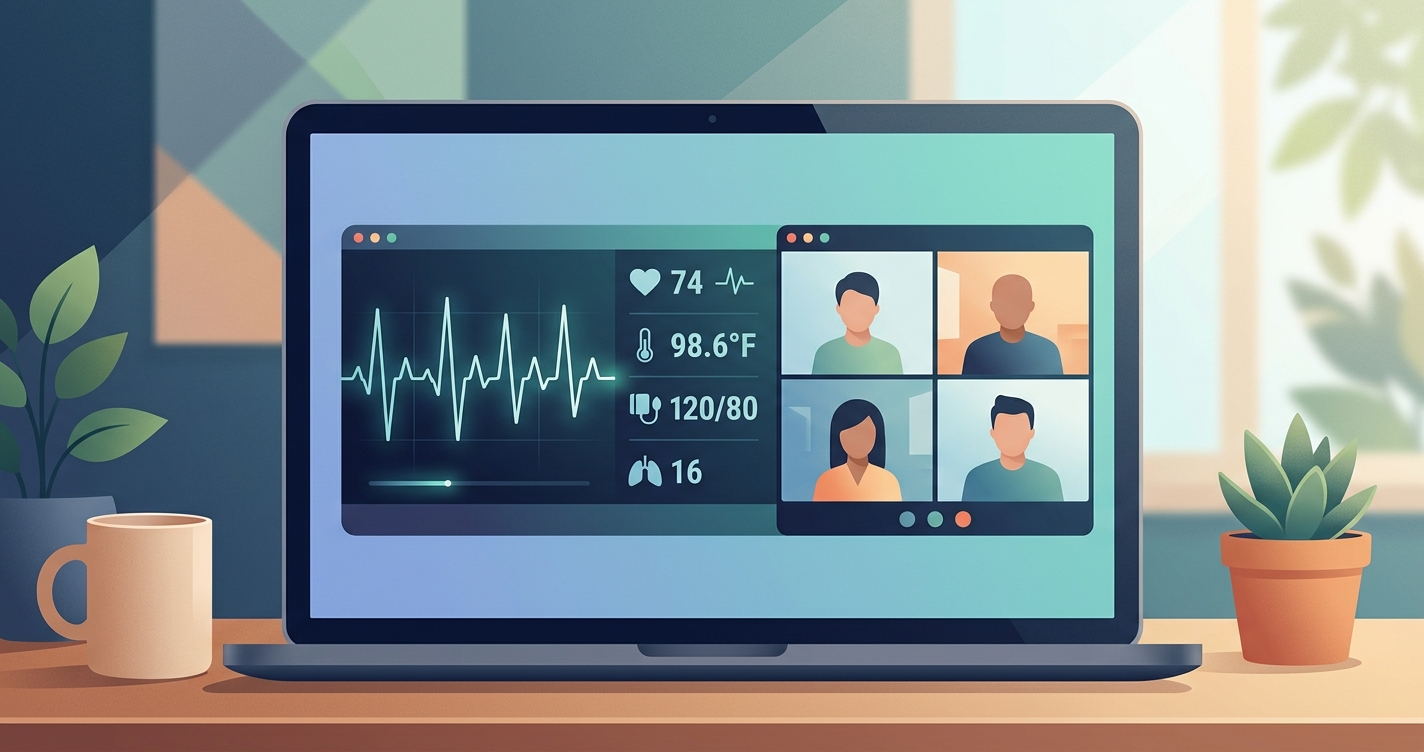
The strategic framework for virtual care within U.S. health systems is undergoing a significant transformation. For years, the primary challenge was scaling telehealth programs to meet patient demand. Now, the focus has shifted from volume and access to clinical quality and outcomes. The Centers for Medicare & Medicaid Services (CMS) is formalizing this shift through updated guidance for 2026, directly linking telehealth encounters, including the collection of vital signs, to quality measurement and, consequently, reimbursement. For health system CIOs, virtual care directors, and clinical informatics leaders, understanding these changes is critical for future-proofing virtual care strategy and revenue.
According to the Centers for Medicare & Medicaid Services (CMS) in its 2025 guidance, "For the 2026 performance period, CMS is continuing its policy to include telehealth encounters in the specifications of most electronic clinical quality measures (eCQMs) where it is clinically appropriate."
The 2026 evolution of virtual visit vitals, CMS quality measures, and reimbursement
The CY 2026 Physician Fee Schedule (PFS) Final Rule codifies a new era for telehealth. By proposing to make many temporary pandemic-era provisions permanent, CMS is signaling that virtual care is a permanent and integral component of the healthcare delivery system. A key component of this integration is the inclusion of telehealth encounters in the denominator of many electronic Clinical Quality Measures (eCQMs). This policy change has profound implications for virtual visit vitals CMS quality measures reimbursement strategies.
Previously, many health systems treated virtual visits as a separate track from in-person care, partly because the data captured during these encounters was often insufficient for quality reporting. Without objective clinical data like vital signs, a virtual visit was clinically limited. The 2026 rules challenge this paradigm. By including telehealth in eCQMs, CMS is stating that a virtual visit should be capable of meeting the same quality standards as an in-person one. This makes the ability to capture clinical-grade vital signs during a virtual encounter not just a "nice-to-have" feature but a core component of a high-performing, financially sustainable virtual care program. The ability to document vitals can directly impact performance on measures related to hypertension, diabetes, and other chronic conditions that are central to CMS quality programs.
| Feature | Pre-2026 Approach | 2026 Integrated Model | | :--- | :--- | :--- | | eCQM Eligibility | Telehealth encounters often excluded or in a gray area for quality reporting. | Telehealth encounters are explicitly included in the denominator for most eCQMs. | | Reimbursement Basis | Primarily fee-for-service based on the encounter CPT code. | Fee-for-service encounter plus performance on value-based quality metrics. | | Data Capture | Subjective patient reporting and basic audio/video interaction were standard. | Objective data capture, including vital signs, is necessary to meet quality measure criteria. | | Supervision | Virtual supervision rules were often temporary and subject to change. | Virtual direct supervision via real-time audio and video is proposed to become permanent. | | Strategic Focus | Scaling access and patient volume. | Demonstrating clinical quality, improving outcomes, and maximizing quality-based reimbursement. |
Industry applications for health systems
The updated CMS guidance creates specific imperatives for different leadership roles within a health system.
For health system cios
The technology strategy must now prioritize the integration of clinical data from virtual encounters into the EHR. CIOs need to evaluate and deploy platforms that can capture objective data like vital signs without adding friction to the patient or provider experience. The key is finding solutions that are EHR-integrated and don't rely on patient-owned wearables, which create data fragmentation and equity issues. The focus must be on creating a unified data stream where vitals from a virtual visit are as reliable and accessible as those from an in-person appointment.
For virtual care program directors
Clinical workflows are the most critical point of adaptation. Program directors must redesign virtual visit workflows to include a standardized step for vital signs capture. This involves:
- Establishing protocols for which visit types require vitals.
- Training providers and nursing staff on how to use camera-based or other contactless vitals capture technology.
- Developing patient communication scripts to explain the process and its importance for their care.
- Monitoring compliance and its impact on quality measure performance.
For clinical informatics teams
The work of clinical informatics teams becomes central. They must ensure that the data captured during virtual visits is correctly mapped to the appropriate fields in the EHR. This allows the data to be pulled into eCQM reporting engines accurately. This team will be responsible for validating that telehealth encounters are correctly flagged and that the associated clinical data, including vitals, contributes to the numerator for relevant quality measures.
Current research and evidence
The foundation for these changes is laid out in official publications from CMS. The "Telehealth Guidance for Electronic Clinical Quality Measures (eCQMs) for Eligible Clinician 2026 Quality Reporting," published by CMS, provides the definitive source for these policies. Research from institutions analyzing the impact of telehealth has consistently shown that while virtual care improves access, its clinical depth can be limited without objective data points. A 2021 study by researchers at the University of California, San Francisco, noted that the lack of vitals signs was a key barrier to diagnostic certainty in many virtual encounters. The new CMS rules directly address this gap by creating financial and quality incentives to solve it.
Furthermore, CMS is introducing new health equity measures as part of its quality metrics. The ability to capture vitals for all patients, regardless of whether they have access to personal health devices, is a critical component of an equitable virtual care strategy. Solutions that work on standard smartphones and laptops help ensure that all patient populations can contribute to and benefit from high-quality virtual care.
The future of telehealth quality measurement
Looking ahead, the line between virtual and in-person care will continue to blur from a quality measurement perspective. CMS's 2026 guidance is a clear indicator that payment models will increasingly reward health systems that can prove the clinical quality of their virtual programs. The collection of virtual visit vitals CMS quality measures reimbursement will become an inseparable trio. Systems that invest in the technology and workflows to capture reliable, clinical-grade vital signs during every virtual encounter will be best positioned to succeed in this new environment. The future of telehealth reimbursement is not about the visit itself, but the measurable quality it delivers.
Frequently asked questions
Q: Do eCQMs directly pay us for collecting virtual visit vitals? A: Not directly. eCQMs are measures of quality. However, your performance on these measures is a key factor in the Merit-based Incentive Payment System (MIPS) and other value-based care programs that determine your overall Medicare reimbursement. Capturing vitals helps you successfully report on these measures for your telehealth encounters.
Q: What CPT codes are relevant for vitals capture reimbursement? A: While the virtual visit itself is billed with standard evaluation and management (E&M) codes, the technology for vitals capture often falls under Remote Physiologic Monitoring (RPM). Relevant CPT codes include 99453 (device setup), 99454 (16 days of data transmission), and 99457 (20 minutes of clinical time).
Q: Is patient consent required for these remote services? A: Yes. For services like RPM, documented patient consent is a mandatory prerequisite for billing. This consent should be obtained before any monitoring services begin.
Q: Do we need specific technology to meet these new measures? A: CMS does not mandate a specific technology. However, to meet the criteria for many eCQMs in a telehealth setting, you need a reliable and scalable method to capture objective clinical data. Relying on patient-reported information is often insufficient. Therefore, investing in validated, contactless vital signs technology becomes a strategic necessity.
As health systems align their virtual care programs with these evolving quality and reimbursement landscapes, the need for integrated, clinically robust technology is clear. Circadify is addressing this space with technology designed to integrate clinical-grade vital signs capture into existing telehealth workflows. To see how this can align with your quality and reimbursement strategy, explore our solutions for health systems at circadify.com/solutions/telehealth.