What can a doctor actually tell from a video health check?
Explore the expanding telehealth vitals capabilities, from camera-based heart rate to AI-driven analysis, and what it means for the future of virtual care.
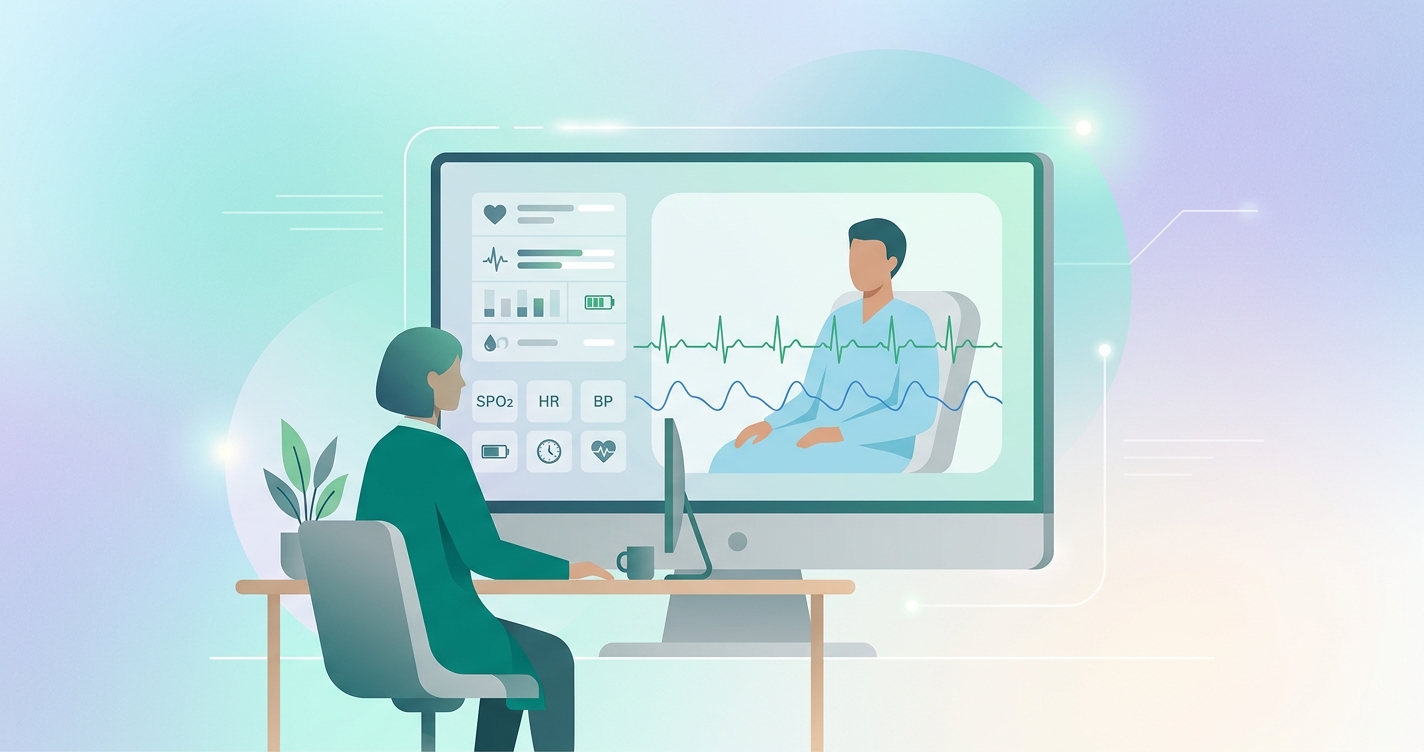
The strategic value of a health system's virtual care program is no longer measured by volume alone, but by the clinical depth of each encounter. For years, a video visit was primarily a conversation, a subjective exchange of information limited by the lack of physical data. A doctor could see a rash or hear a cough, but the fundamental quantitative metrics of an in-person visit remained out of reach. This created a persistent data gap, forcing clinicians to make assessments with an incomplete picture and often requiring a follow-up in-person visit for basic measurements. That paradigm is now shifting as new technology fundamentally expands what a doctor can determine from a video feed.
"The ability to measure physiological parameters from a distance, without any contact with the human body, is one of the major recent breakthroughs in sensing. Computer vision systems can analyze video streams from standard cameras to extract vital signs such as heart rate, respiratory rate, and even blood pressure." - W. K. Al-Azzawi et al., Journal of Medical Engineering & Technology, 2023.
Deepening clinical insight: the rise of telehealth vitals capabilities
The core challenge of the traditional televisit is the absence of objective data. Clinicians rely on patient-reported information, which can be inaccurate or incomplete. The expansion of telehealth vitals capabilities is addressing this challenge head-on. By using the standard cameras already built into laptops, tablets, and smartphones, health systems can now capture key physiological data during a virtual visit. This technology is not a futuristic concept; it is being deployed and validated in clinical settings today.
The primary method behind this innovation is remote photoplethysmography (rPPG). In simple terms, rPPG technology uses a video camera to detect minuscule changes in the color of a person's skin. These changes, invisible to the human eye, correspond to the pulsing of blood through the capillaries. Advanced algorithms, often powered by artificial intelligence, analyze this video feed to translate those subtle color shifts into a real-time heart rate and heart rate variability (HRV). Similar computer vision techniques can analyze chest movements to calculate respiratory rate. This transforms the patient's camera from a simple communication device into a clinical data-gathering tool.
| Feature | Standard Televisit | Vitals-Enabled Televisit | | :--- | :--- | :--- | | Data Source | Patient self-reporting, visual observation | Camera-based sensing, patient-reporting | | Objective Data | None | Heart Rate, Respiratory Rate, Heart Rate Variability | | Clinical Insight | Subjective assessment, basic triage | Objective baseline, longitudinal tracking, risk stratification | | Workflow | Conversation and visual inspection | Data capture, automated documentation, clinical decision support |
Industry Applications
The integration of vital signs capture into virtual visits has profound implications across various clinical domains. It moves the encounter from a simple consultation to a more robust clinical assessment.
Chronic disease management
A significant portion of healthcare costs is tied to the management of chronic conditions like hypertension, heart failure, and diabetes. Vitals-enabled televisits allow for more frequent and convenient check-ins with objective data.
- Cardiology: Remotely tracking heart rate and HRV can help cardiologists monitor a patient's response to medication or identify early signs of decompensation.
- Pulmonology: Measuring respiratory rate provides a key indicator of respiratory distress for patients with COPD or asthma.
- Endocrinology: While not a direct measure of blood sugar, physiological stress indicators captured via HRV can provide context for glucose fluctuations.
Primary care and triage
For initial consultations and urgent care, quick and accurate triage is critical. Capturing vitals during the initial virtual encounter provides the clinician with a baseline to determine the appropriate level of care. An elevated heart rate or respiratory rate can immediately signal a more serious condition, prompting the clinician to escalate care far earlier than would be possible with a purely conversational visit.
Behavioral Health
The connection between mental and physical health is well-established. Camera-based vitals can provide objective data to support behavioral health assessments.
- Stress and Anxiety: Heart Rate Variability (HRV) is a direct measure of the autonomic nervous system's activity. Lower HRV is often correlated with high levels of stress and anxiety. Tracking this metric can help therapists and psychiatrists quantify a patient's physiological state and monitor the effectiveness of interventions.
- ADHD Medication Management: Clinicians often need to monitor the cardiovascular effects of stimulant medications. A vitals-enabled televisit provides a convenient way to check heart rate remotely during follow-up appointments.
Current research and evidence
The academic and clinical validation of camera-based vitals is a rapidly growing field. A 2023 systematic review by W. K. Al-Azzawi and colleagues confirmed that computer vision techniques can reliably extract a range of vital signs. Research has focused on improving the accuracy of these systems by using deep learning to account for variables like different skin tones, low-light conditions, and patient movement. A pilot usability study with the U.S. Department of Veterans Affairs found high acceptance and perceived usefulness of contactless vital sign measurement among both providers and patients in video telehealth visits. These studies highlight the industry's methodical progression from technical feasibility to demonstrated clinical utility, building the evidence base needed for wider adoption by health systems.
The future of telehealth vitals
The trajectory of telehealth vitals capabilities points toward a future where the virtual visit is as data-rich as an in-person one. The technology is rapidly evolving, with research pushing toward the measurement of more complex parameters.
- Blood Pressure: Several research teams have demonstrated the ability to estimate blood pressure from a video feed, a development that would be transformative for virtual hypertension management. While not yet widely available in commercial-grade solutions, the progress is significant and points to this becoming a standard feature in the coming years.
- Multi-Modal Sensing: Future platforms may combine rPPG with other contactless sensing modalities, such as thermal imaging to detect temperature or radar to measure breathing with even greater precision.
- AI-Driven Insights: As more data is collected, AI algorithms will become more sophisticated, capable of Measuring vitals. Identifying patterns and trends that could predict clinical events before they happen. This proactive capability represents the true promise of data-driven virtual care.
Frequently asked questions
Q: What vital signs can be measured through a camera during a televisit?
A: Current commercially available technology can accurately measure heart rate, heart rate variability (HRV), and respiratory rate. Research and development are actively underway to include other key vitals like blood pressure and oxygen saturation.
Q: How accurate is this technology compared to traditional medical devices?
A: In numerous studies, camera-based measurements for heart rate and respiratory rate have shown a high degree of correlation with traditional contact-based devices like pulse oximeters and ECGs. Accuracy depends on the quality of the algorithm, lighting conditions, and minimizing patient movement during the measurement.
Q: What is the difference between televisit vitals capture and remote patient monitoring (RPM)?
A: While both involve remote data collection, they serve different purposes. RPM typically involves patients using dedicated medical devices (like blood pressure cuffs or glucometers) at home to collect readings over a long period. Televisit vitals capture is an opportunistic measurement taken during a live video appointment, requiring no extra hardware for the patient.
The era of purely conversational telehealth is coming to a close. For health system leaders and clinical informatics teams, the question is no longer if objective data will be part of virtual care, but how to integrate these new telehealth vitals capabilities into their clinical workflows. By bridging the data gap, these technologies promise to enhance clinical decision-making, improve patient outcomes, and solidify the role of telehealth as a core component of modern healthcare delivery. Circadify is at the forefront of this transformation, providing solutions that seamlessly integrate vital signs capture into your existing virtual care platform. To learn more about our approach for health systems, explore our clinical workflows and schedule a demo at circadify.com/solutions/telehealth.