What happens to my heart rate reading after a telehealth appointment ends?
Explore the journey of vital signs data captured during a virtual visit as it integrates into the electronic health record (EHR) and becomes a crucial part of the patient's longitudinal data.
The rapid maturation of virtual care has shifted the focus of health system leaders from simple implementation to clinical optimization. While video consultations provide crucial access, their value is significantly amplified when objective clinical data can be captured and integrated seamlessly. A patient's heart rate, blood pressure, or respiratory rate measured during a telehealth call is more than a momentary data point; it is a vital piece of clinical information. But what happens to that data after the call ends? For providers and health system CIOs, the answer lies in a structured, secure, and interoperable data pathway that ensures this information becomes a persistent and actionable part of the patient's medical history.
"Published studies show that Remote Patient Monitoring (RPM) integration with EHRs can reduce hospital readmissions by up to 38% and improve chronic disease management outcomes by 25%." - Health Recovery Solutions, 2023
The journey of televisit vitals into the patient record
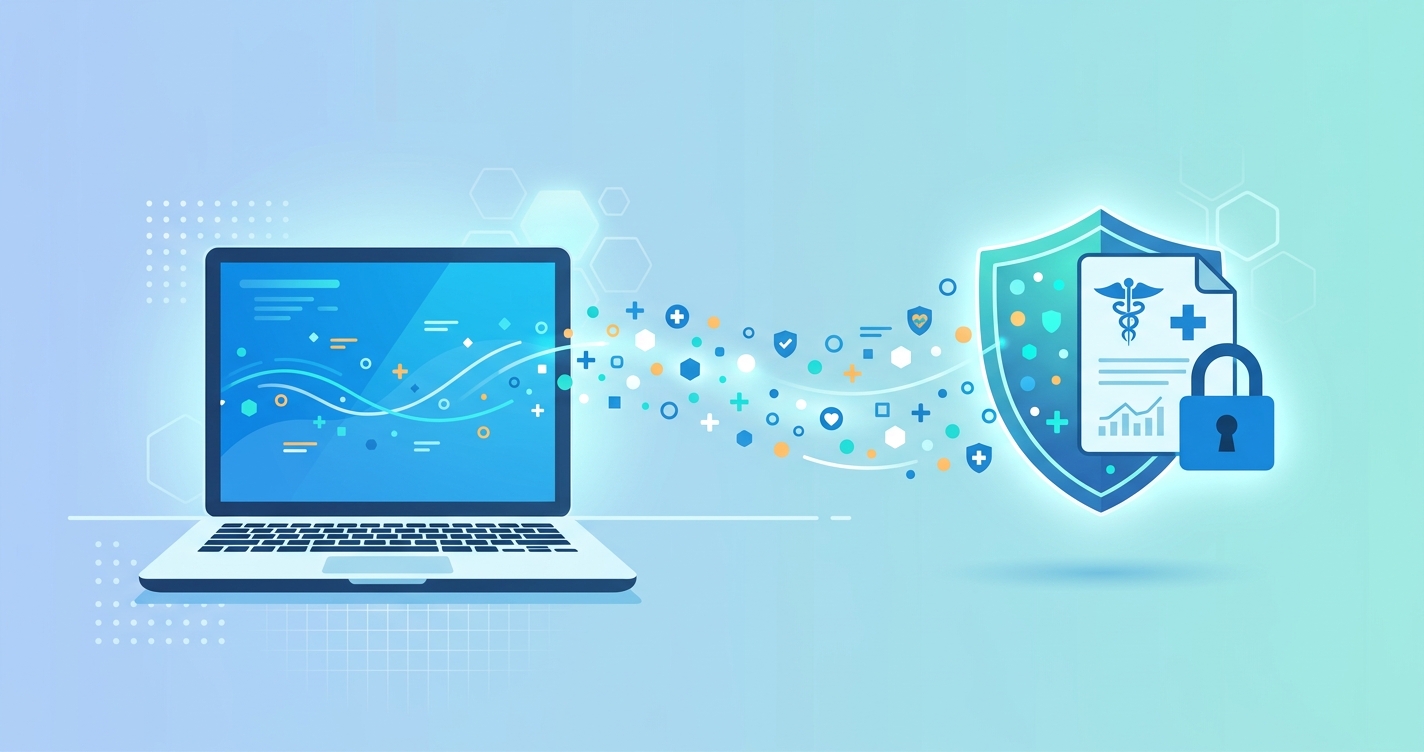
The flow of data from a virtual session into a health system's electronic health record (EHR) is a critical process that transforms a temporary reading into a longitudinal data asset. The ultimate goal is to ensure the televisit vitals in patient record systems are treated with the same clinical gravity as data captured during an in-person visit. This journey involves several distinct technical and procedural stages, governed by rigorous industry standards for security and interoperability.
First, the vital sign is captured via a camera-based or device-based remote monitoring solution integrated into the telehealth platform. This raw data is processed by sophisticated algorithms to produce a clinical measurement. Once validated, the data is packaged into a standardized format. This is where interoperability standards become critical. Standards like HL7 (Health Level Seven) and, more recently, FHIR (Fast Healthcare Interoperability Resources) provide the common language necessary for disparate systems to communicate. FHIR, in particular, uses modern, web-based API approaches to make the exchange of healthcare information faster and more efficient.
The formatted data packet, containing the vital sign, the time of measurement, and other essential metadata, is then transmitted securely to the health system's integration engine. This engine acts as a gateway, routing the information to the correct destination: the patient's EHR. Upon arrival, the data is parsed and filed into the appropriate section of the patient chart, often in a "flowsheet" alongside vitals from other encounters. This ensures that a clinician reviewing the patient's history sees a complete and integrated view of their physiological data over time, regardless of whether the measurement was taken at home or in the clinic.
| Feature | In-Person Vitals Capture | Televisit Vitals Capture | | :--- | :--- | :--- | | Data Source | Medical-grade devices (cuffs, thermometers) in a clinical setting. | Camera-based rPPG, patient-owned devices, or provider-shipped kits. | | Data Entry | Manual entry by clinical staff into the EHR is common. | Automated data flow via API integration. | | Workflow | Standardized, location-dependent process during rooming. | Flexible, can be initiated by patient or provider during a virtual call. | | Data Context | Data is associated with a specific in-person encounter. | Data is linked to a telehealth encounter, requires robust metadata. | | Interoperability | Primarily an internal EHR data-entry process. | Relies heavily on FHIR/HL7 standards for external system communication. | | Patient Role | Passive; patient is measured by a clinician. | Active; patient may need to initiate the scan or use a device. |
Clinical and operational impact of integrated vitals
The integration of televisit vital signs is not merely a technical achievement; it has profound implications for clinical workflows and patient outcomes. By ensuring that data from virtual encounters is captured with clinical-grade accuracy and stored as structured data within the EHR, health systems can unlock significant new value.
Proactive chronic disease management
For patients with conditions like hypertension, congestive heart failure, or COPD, regular monitoring is key to preventing acute exacerbations. Integrated televisit vitals allow care teams to track a patient's status between in-person appointments. A rising trend in blood pressure or heart rate variability can trigger an automated alert to a care manager, who can then intervene with a follow-up call or a medication adjustment. This proactive model, supported by a seamless flow of data into the EHR, helps reduce emergency department visits and hospital readmissions. Research from institutions like the University of Pittsburgh has demonstrated that structured RPM data allows for more timely interventions.
Streamlining clinical workflows
When vital signs are captured automatically during a televisit and flow directly into the EHR, it eliminates the need for manual data entry, which is both time-consuming and prone to error. This frees up valuable time for nurses and medical assistants, allowing them to focus on higher-value tasks like patient education and care coordination. For providers, having immediate access to the latest vitals within the patient's chart during the virtual visit itself supports more efficient and informed clinical decision-making. This workflow efficiency is a key driver for health systems seeking to optimize their virtual care programs at scale.
Enhancing diagnostic accuracy and safety
A comprehensive and longitudinal vitals history provides clinicians with a richer dataset to inform their diagnostic process. A single reading can be an anomaly, but a pattern of readings over time is a powerful clinical signal. By integrating televisit vitals, the televisit vitals in patient record contributes to a more complete and therefore more reliable patient history. This is particularly crucial for identifying gradual-onset conditions or assessing the effectiveness of a new treatment regimen. Furthermore, it enhances patient safety by ensuring decisions are based on a holistic view of the patient's physiological state.
Current research and evidence
The industry's move toward integrated virtual care data is supported by a growing body of evidence. A 2022 study published in JMIR Medical Informatics explored the use of FHIR for transmitting time-series vital signs data for inpatient deterioration detection, highlighting the standard's robustness for real-time data integration. While focused on an inpatient setting, the principles directly apply to remote data. Researchers emphasized that standardized, interoperable data is the foundation for developing more sophisticated predictive analytics that can alert clinicians to patient risk. Similarly, discussions at the HIMSS 2023 Global Health Conference centered on the critical role of data interoperability and secure data-sharing platforms in the future of healthcare delivery, recognizing that telehealth is now a permanent and expanding modality.
The future of integrated televisit vitals
Looking ahead, the integration of televisit vitals into the EHR is the first step toward a more predictive and personalized model of virtual care. As health systems accumulate longitudinal vitals data from remote settings, they can begin to apply machine learning and AI algorithms to identify subtle patterns that may precede a clinical event. This could enable highly personalized interventions and risk stratification across entire patient populations. The future lies not just in capturing the data, but in transforming it into predictive insights that keep patients healthier and out of the hospital. This evolution depends entirely on the foundational work of ensuring every televisit vitals in patient record is structured, secure, and seamlessly integrated.
Frequently asked questions
Q: Is the vital sign data from a video call as reliable as an in-person reading? A: Camera-based vital sign technologies undergo rigorous clinical validation to ensure they meet accuracy standards comparable to traditional devices. When integrated, these readings are treated as valid clinical data points and are stored in the EHR with metadata indicating the source and method of capture for full clinical context.
Q: What security measures are in place to protect my data? A: Patient data from telehealth visits is protected by the same HIPAA regulations that govern in-person health information. Data is encrypted during transmission and at rest, and access is strictly controlled and audited. Interoperability standards like FHIR have security as a core component of their framework.
Q: Can a clinician see my telehealth vitals in real-time? A: Yes. Modern integration architectures are built on APIs that allow for the near-instantaneous transfer of data. This means a clinician can see the vital signs captured during the virtual visit appear in the patient's EHR chart within seconds, enabling immediate clinical assessment.
Q: How does this integrated data improve my care? A: By providing your care team with a more complete and continuous view of your health, integrated vitals help them make more informed decisions. It allows for the early detection of potential issues, better management of chronic conditions, and more personalized treatment plans, whether your visit is virtual or in-person.
The challenge of remote data capture is no longer a technological barrier but an integration opportunity. As leading providers have demonstrated, the ability to seamlessly funnel clinically valid data from a virtual visit into the core patient record is essential for scaling high-quality virtual care. Circadify is at the forefront of addressing this challenge, providing health systems with the tools to embed vital sign capture into their existing clinical workflows. To learn more about achieving seamless EHR integration, explore our solutions for health systems at circadify.com/solutions/telehealth.