Why did my telehealth doctor ask me to look at the camera?
Learn the science behind virtual visit vitals capture and why your telehealth provider uses your device's camera to measure clinical-grade vital signs.
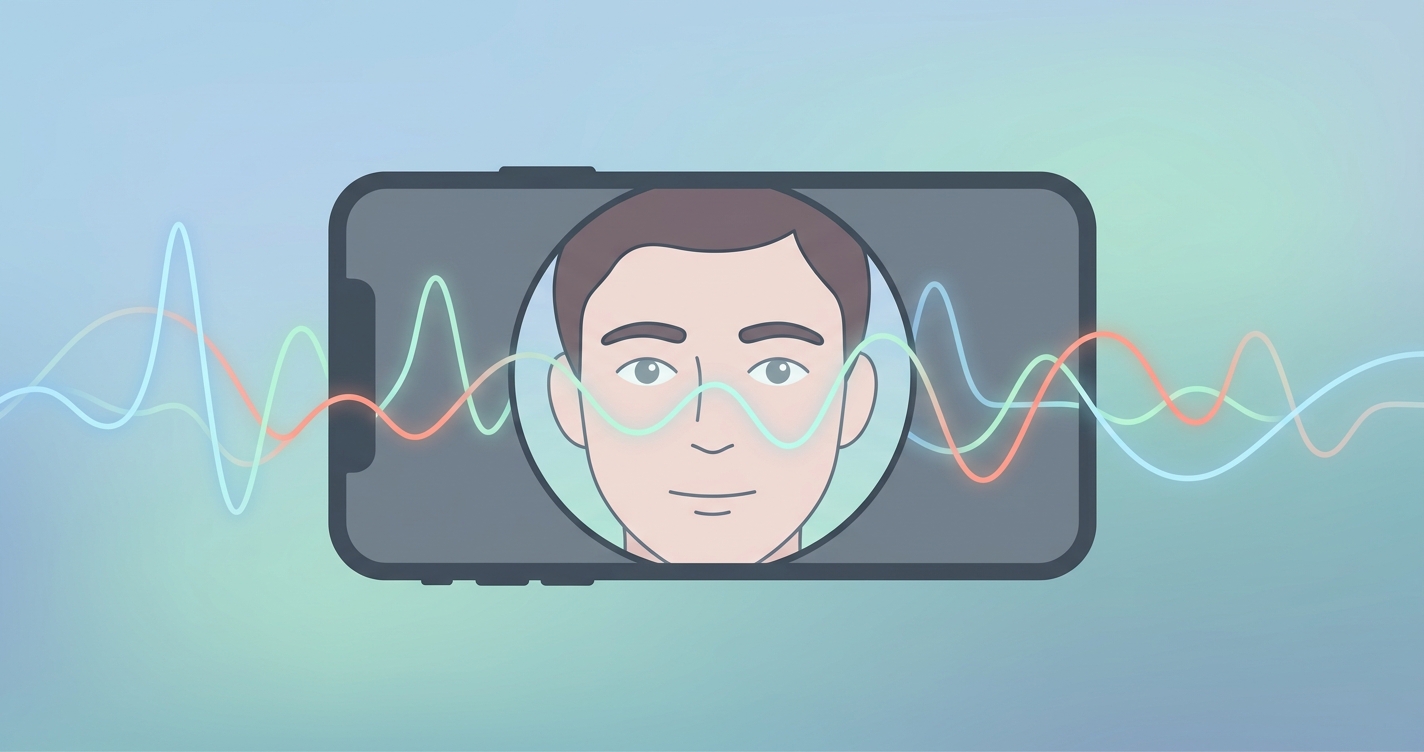
If you've had a video visit with your doctor recently, you may have experienced a curious moment. After discussing your symptoms, the clinician might have asked you to simply stare into your camera for 30 to 60 seconds. While it may feel like a test of your ability to sit still, this is actually a sophisticated clinical step designed to bridge one of the biggest data gaps in virtual care. The provider is collecting your vital signs, and all they need is the video feed from your own device.
"The next frontier in telehealth is not about better video, but better data. Without objective measurements, a virtual visit is often just a conversation. The ability to capture vitals transforms it into a true clinical encounter." - Institute for Health System Innovation, 2023 Report
The technology behind virtual visit vitals capture
The request to look at the camera initiates a process called remote photoplethysmography (rPPG). This is the core technology that powers virtual visit vitals capture. It's a camera-based method that analyzes light reflected from the skin to measure changes in blood volume. The technology relies on a simple principle: human skin is translucent. The camera on your smartphone, laptop, or tablet is sensitive enough to detect the subtle color changes in your face that occur with each heartbeat as blood is pumped through the vessels just beneath the skin. Advanced algorithms and signal processing techniques isolate this cardiovascular pulse signal from other "noise," like changes in room lighting or slight patient movements. From this single video stream, providers can derive a range of physiological measurements, including heart rate, breathing rate, heart rate variability (HRV), and even blood pressure.
| Measurement Method | Data Type | Patient Burden | Clinical Workflow Integration | | :--- | :--- | :--- | :--- | | Subjective Patient Reporting | Symptom description | Low | Manual entry by provider | | Patient-Owned Wearables | Intermittent spot data | High (requires device, setup) | Separate app; data often siloed | | Health System RPM Program | Continuous or spot data | High (requires device, onboarding) | Integrated, but for specific programs | | Camera-Based Televisit Vitals | Real-time clinical data | Very Low (uses patient's device) | Fully integrated into telehealth visit |
This method offers a significant advantage over alternatives. Asking patients to self-report vitals is often imprecise. Relying on peripheral devices like smartwatches or blood pressure cuffs creates friction, the patient must own, find, and properly use the device, and the data often doesn't flow directly into the electronic health record (EHR). By using the patient's existing device camera, the virtual visit vitals capture step becomes a seamless part of the telehealth workflow.
Industry Applications
The integration of camera-based vitals is creating new opportunities for health systems to enhance the clinical quality and operational efficiency of their virtual care programs.
Primary care and urgent care
In these high-volume settings, objective data is key for effective triage and treatment. A virtual visit vitals capture at the start of an encounter provides a baseline that helps clinicians assess the severity of a patient's condition. For example, an elevated resting heart rate or respiratory rate can immediately flag a patient who may require more urgent attention, even if their subjective symptoms seem mild.
Chronic disease management
For patients with conditions like hypertension or congestive heart failure, regular monitoring is essential. Camera-based vitals allow clinicians to get objective measurements during routine follow-up visits without requiring the patient to use a separate monitoring device. This makes it easier to track trends in blood pressure, heart rate, and HRV over time, enabling more proactive adjustments to treatment plans.
Behavioral Health
Objective physiological data is also proving valuable in behavioral health. Heart Rate Variability (HRV) is a direct measure of the autonomic nervous system's activity and a key biomarker for stress and emotional regulation. By capturing HRV during a virtual therapy session, a mental health provider can gain objective insight into a patient's physiological state of stress or relaxation, data that was previously unavailable during remote encounters.
Current research and evidence
The scientific foundation for rPPG technology has been building for over a decade. Early research, such as the foundational work by Wim Verkruysse and colleagues at Wageningen University in 2008, first demonstrated that a simple digital camera could be used to extract a pulse signal from the human face. Since then, numerous studies have focused on refining the algorithms and validating them against clinical-grade medical devices.
Recent research has focused on the technology's performance across diverse populations and real-world conditions. A 2021 study published in Nature Digital Medicine by a team at the University of Toronto compared a smartphone-based rPPG application to standard ECG and arterial line measurements in a critical care setting. The findings showed a high degree of correlation for measuring heart rate and respiratory rate. Similarly, researchers are actively working to ensure the technology performs reliably across all skin tones, a critical step for ensuring equitable care. Studies from researchers like Mohamed Amine Boudhane (2022) have specifically addressed and proposed solutions for mitigating bias related to melanin levels in the skin.
- Heart Rate: Studies consistently show a mean absolute error of less than 3 beats per minute compared to ECG.
- Respiratory Rate: Validation against capnography shows a mean absolute error of approximately 1-2 breaths per minute.
- Blood Pressure: This is a more complex measurement, but ongoing research shows promising results, with some models achieving performance within FDA-recognized standards for non-invasive cuffs.
The future of virtual visit vitals capture
The technology is not static. The future of virtual visit vitals capture extends beyond the current set of measurable biomarkers. Researchers are actively exploring the potential to use video-based analysis to detect other physiological signals. This includes assessing blood oxygen saturation (SpO2), estimating hemoglobin levels, and even detecting early signs of conditions like jaundice or anemia through subtle changes in skin tone. As the algorithms become more powerful and are validated for these new use cases, the simple act of looking at a camera could provide clinicians with a comprehensive, non-invasive snapshot of a patient's health.
Frequently asked questions
Is it secure when my doctor measures my vitals through the camera? Yes. In a clinical-grade system, the video analysis is performed securely. The video stream is processed in real-time, and the vital signs data, not the video itself, is sent to the provider and documented in the electronic health record. The systems are designed to be HIPAA-compliant, ensuring patient privacy.
What kind of camera or phone do I need? You don't need any special equipment. The technology is designed to work with the standard cameras already built into most smartphones, laptops, and tablets. Good, stable lighting on your face is more important than the specific model of your device.
Does this technology work for all skin tones? This is a critical area of ongoing research and development. Early versions of some technologies showed variance in performance with darker skin tones. However, leading medical-grade providers have invested heavily in training their algorithms on diverse datasets to ensure the technology is accurate and equitable for all patients.
The ability to capture objective clinical data is transforming the utility of virtual care. Health systems are now moving to integrate these capabilities to improve clinical quality and operational efficiency. Circadify is at the forefront of this shift, providing solutions that enable virtual visit vitals capture within existing EHR and telehealth platforms. To learn more about our work with health system clinical workflows, explore our solutions for telehealth at circadify.com/solutions/telehealth.