Why does the nurse keep my face still during a telehealth call?
A look into the science of how your virtual care team uses the video camera to measure vital signs like heart rate and blood pressure from your face.
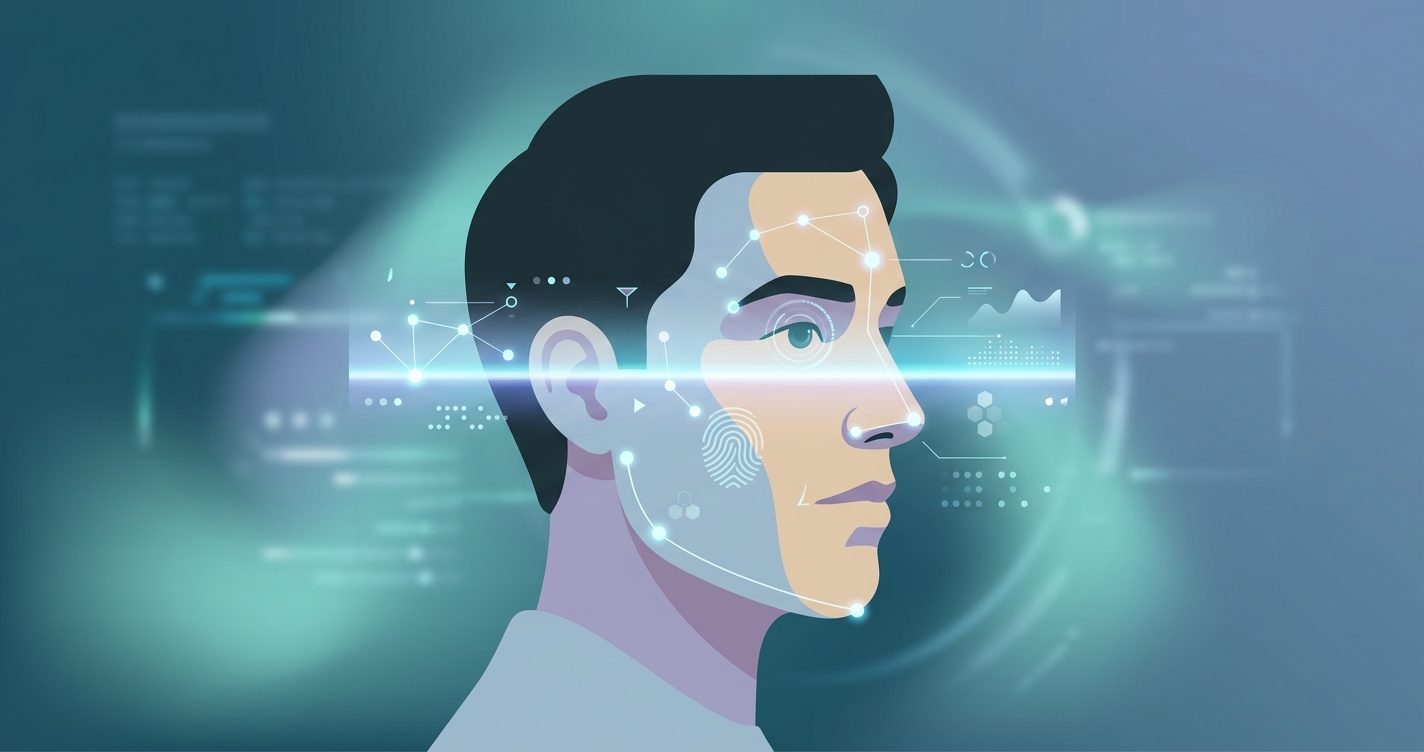
During a telehealth visit, it can be puzzling when a nurse or doctor asks you to hold still and look directly at the camera. This isn't about checking your posture or ensuring you're paying attention; it's a critical part of a new clinical process. Your healthcare provider is using the camera to measure your vital signs. This technology, often working silently in the background of the video feed, transforms a standard smartphone or computer camera into a medical device capable of capturing real-time physiological data. By analyzing imperceptible changes in the light reflected from your skin, the software can calculate your heart rate, respiratory rate, and even your blood pressure. This move toward data-driven virtual care is a significant shift, turning a simple video conversation into a clinically substantive encounter.
"In a study of patients with cardiovascular disease, remote photoplethysmography (rPPG) demonstrated a mean absolute error of just 1.061 beats per minute for heart rate compared to standard ECG measurements, with a Pearson correlation of 0.962, indicating a very strong relationship between the remote measurement and the clinical standard."
The rise of camera-based vitals in telehealth
The core challenge for telehealth has always been the gap between what a clinician can see and hear, and what they can measure. Historically, virtual visits have excelled at providing convenient consultations but have fallen short of a key component of the physical exam: the measurement of vital signs. This has often limited the clinical utility of telehealth, particularly for chronic disease management, post-discharge follow-up, and initial triage. The integration of camera-based vitals telehealth platforms is directly addressing this challenge.
The technology is rooted in a science known as remote photoplethysmography (rPPG). The foundational research in this field was conducted by Wim Verkruysse and his colleagues at the University of California, Irvine, in 2008. They discovered that a standard digital camera could detect the tiny, involuntary changes in skin color caused by the pulsing of blood through the vessels just beneath the surface. As your heart beats, it pushes blood into the capillaries of your face; this increase in blood volume absorbs more light. In between beats, the volume decreases, absorbing less light. While invisible to the naked eye, a video camera's sensor, combined with sophisticated algorithms, can pick up this signal from the reflected light, particularly in the green channel where hemoglobin absorption is strongest. This raw signal is then processed to extract a clean waveform from which vital signs can be calculated. Holding the face still and ensuring good, consistent lighting are crucial for the algorithms to isolate this subtle physiological signal from the "noise" of movement and shadows.
| Technology Aspect | Traditional In-Person Vitals | Camera-Based Vitals (rPPG) | | --- | --- | --- | | Measurement Method | Physical contact (cuff, sensor, stethoscope) | Contactless (analysis of video stream) | | Equipment Required | Sphygmomanometer, pulse oximeter, etc. | Standard camera (smartphone, laptop) | | Patient Action | Remains still for cuff inflation or sensor placement | Remains still, facing the camera | | Data Capture | Manual entry or wired device integration | Automated extraction and EHR integration | | Clinical Setting | In-person clinic, hospital | Remote (home, office), during telehealth call | | Key Limitation | Requires physical presence | Sensitive to motion, poor lighting, skin tone |
Industry Applications
The ability to capture objective clinical data during any video encounter opens up new workflows and improves the quality of virtual care across numerous specialties.
Primary care triage
For initial patient encounters and virtual walk-ins, nurses can get a baseline set of vitals to inform their triage decisions. A slightly elevated heart rate or respiratory rate can provide an early warning sign that a patient's condition may be more serious than their subjective report suggests, helping to prioritize appointments and direct care more effectively.
Chronic disease management
Managing conditions like hypertension or heart failure requires regular monitoring. Camera-based vitals allow clinicians to perform regular, data-rich check-ins without requiring the patient to own or operate a separate medical device like a blood pressure cuff. This lowers the barrier for patients and provides the clinical team with more frequent data points to track trends and adjust treatment plans.
Post-Discharge Follow-up
After a hospital stay, virtual follow-up visits are crucial for catching potential complications early. By including a vital signs assessment in these video calls, providers can better assess a patient's recovery and identify signs of infection, cardiac distress, or other issues that could lead to readmission.
Current research and evidence
The translation of rPPG from a laboratory concept to a clinical tool has been the focus of extensive research. Numerous studies have sought to validate the accuracy of camera-based measurements against clinical-grade medical devices. Researchers at institutions like the University of British Columbia and the University of Washington have been at the forefront of this effort, developing new machine learning models and testing them in diverse patient populations.
- Heart Rate: Accuracy for heart rate is generally very high, often approaching the accuracy of traditional pulse oximeters, especially in controlled conditions with minimal patient movement.
- Respiratory Rate: This is often derived from secondary signals in the rPPG waveform or from subtle chest movements, and studies have shown strong correlation with rates measured by standard capnography or manual counting.
- Blood Pressure: Measuring blood pressure from a camera is the most complex application. It relies on detecting the pulse wave transit time or other subtle waveform features. While initial studies are promising, and some solutions are entering the market, achieving regulatory-grade accuracy across a wide range of blood pressure values and patient demographics remains an active area of intense research and development. Factors like vascular stiffness, age, and existing cardiovascular conditions can all influence the calculations.
The future of camera-based vitals in telehealth
The trajectory for camera-based vitals is toward wider adoption and deeper integration into health system platforms. As the algorithms become more robust and less susceptible to variables like motion and lighting, the technology will become a standard, background feature of most clinical video platforms. The future focus will likely be on expanding the types of biomarkers that can be measured. Researchers are already demonstrating the potential to assess signals related to atrial fibrillation (irregular heart rhythm), blood oxygen saturation (SpO2), and even hemoglobin levels. As these capabilities are validated and receive regulatory clearance, the simple telehealth call will evolve into a sophisticated remote diagnostic tool, fundamentally changing the business and clinical models of virtual care.
Frequently asked questions
Q: Is it secure to have my vitals measured through my camera? A: Yes. The video stream is analyzed in real-time to extract the physiological signal. The vital signs data is then encrypted and sent to your electronic health record, just like any other clinical data. The process adheres to the same HIPAA security and privacy standards as the rest of your telehealth visit.
Q: Can this technology work on any computer or phone? A: Generally, yes. The technology is designed to work with the standard webcams and smartphone cameras that people already own. It does not require specialized hardware. However, the quality of the camera and the stability of the internet connection can impact the ability to acquire a strong signal.
Q: What if I can't hold still enough? A: Clinicians understand that it can be difficult for some patients to remain perfectly still. The software often includes indicators that tell the nurse or doctor if the signal quality is sufficient. They may ask you to reposition yourself, improve the lighting, or simply wait for a moment when you are more settled. If a reading cannot be obtained, they will proceed with the visit and rely on other methods of assessment.
This advancement represents a significant step forward in making virtual care a more complete substitute for certain in-person visits. For health systems, the ability to collect this data within the existing telehealth workflow, without asking patients to buy or use new devices, is a game-changer. Circadify is at the forefront of this space, providing health systems with the tools to integrate clinical-grade, camera-based vitals into their virtual care programs. To learn more about designing clinical workflows and integrating this capability into your EHR, explore our solutions at circadify.com/solutions/telehealth.